
Best Gin Drink Recipes: Classic & Modern Cocktails for 2026
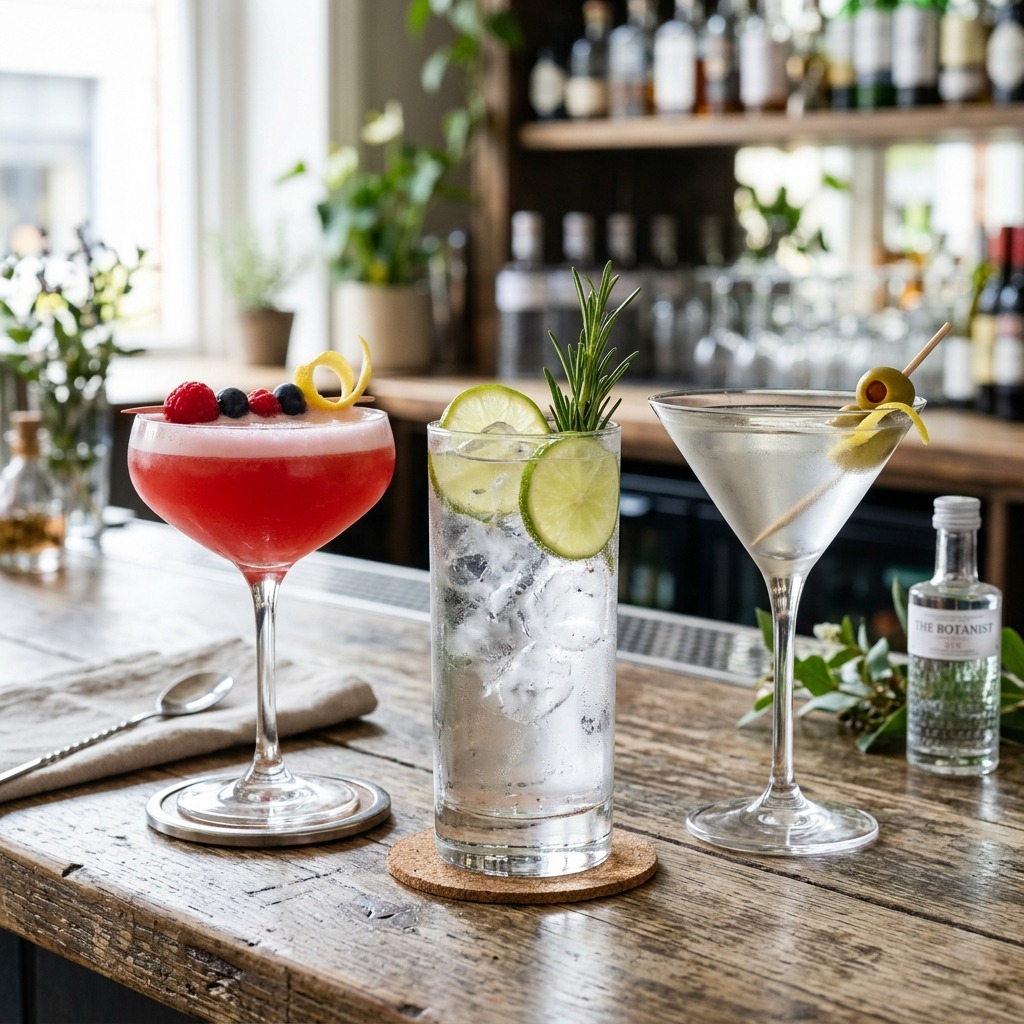
To make a basic gin drink, combine 1.5 oz (45ml) of gin with your chosen mixer tonic water for a G&T, dry vermouth for a Martini, or lemon juice and soda for a Gin Fizz. Add ice, stir or shake depending on the recipe, pour into the correct glass, and garnish. Most gin cocktails take under 5 minutes to prepare.
The gin market is projected to reach $24.51 billion in 2026 (Mordor Intelligence, 2025), and it's not hard to see why. Few spirits can do what gin does: slip seamlessly from a bone-dry Martini to a floral spritzer without missing a beat. Its botanical backbone built on juniper, citrus peel, coriander, and herbs makes it a natural match for dozens of mixers and flavor combinations.
What Do You Need to Know About Gin Before Mixing?
Gin's defining characteristic is juniper the piney, resinous berry that every legal gin must taste of. Beyond that, distillers have near-total creative freedom, which explains why gin ranges from the crisp, dry profile of a London Dry to the soft, floral notes of a contemporary style.
Key gin botanicals and their flavor contributions:
- Juniper berries piney, resinous, classic gin backbone
- Coriander seed citrusy, slightly spicy
- Angelica root earthy, herbal, adds structure
- Citrus peel bright, fresh, aromatic
- Cardamom cassia bark – warm, spiced notes
- Lavender / rose floral, perfumed (common in contemporary gins)
Essential home bartending tools:
- Cocktail shaker (Boston or cobbler style)
- Jigger (for precise measurements)
- Bar spoon (for stirred drinks)
- Strainer (Hawthorne or fine mesh)
- Muddler (for fresh herbs and citrus)
- Highball, rocks, and Martini glasses
How Do You Make the Classic Gin and Tonic Recipe?
The Gin & Tonic originated in British colonial India in the 1860s, where officers mixed quinine used to treat malaria with gin, sugar, water, and lime to make it more palatable. Today, it's the world's most popular gin drink.
Ingredients:
- 45ml (1.5 oz) London Dry gin
- 150ml (5 oz) premium tonic water (chilled)
- Ice (large cubes preferred)
- 1 lime wedge or twist (garnish)
Preparation steps:
- Fill a highball glass to the top with large ice cubes.
- Pour gin directly over the ice.
- Slowly pour chilled tonic water down the side of the glass to preserve carbonation.
- Stir once, gently, with a bar spoon.
- Squeeze the lime wedge over the glass and drop it in or place on the rim.
Quick facts table:
| Detail | Info |
| Prep time | 2–3 minutes |
| Servings | 1 |
| Calories (approx.) | ~150 kcal |
| Glass | Highball |
| Difficulty | Beginner |
Gin & Tonic variations:
- Cucumber & Dill G&T add 2 cucumber slices and a dill sprig
- Pink Peppercorn & Grapefruit use citrus-forward gin, grapefruit tonic, and cracked pink pepper
- Elderflower G&T add 10ml elderflower cordial and a lemon twist
- Low-ABV version – use a 0% botanical spirit and premium tonic for a non-alcoholic spritzer
Pro tips:
- Always use chilled tonic. Warm tonic loses carbonation faster and waters down the drink.
- Larger ice cubes melt slower, keeping the drink cold without over-diluting.
- Match your tonic to your gin light, floral gins pair with Mediterranean tonic; bold, juniper-heavy gins hold up against classic Indian tonic.
What Are the Best Classic Gin Cocktail Recipes?
The Dry Martini
Ingredients:
- 50ml (1.75 oz) London Dry gin
- 10ml (0.35 oz) dry vermouth
- 1 green olive or lemon twist (garnish)
Steps:
- Add gin and vermouth to a mixing glass filled with ice.
- Stir for 30 seconds until well chilled.
- Strain into a chilled Martini glass.
- Garnish with a green olive or lemon twist.
Calories: ~175 kcal | Glass: Martini/coupe | Prep time: 3 minutes
Tip: A "dry" Martini uses less vermouth; a "wet" Martini uses more. Start with a 5:1 ratio (gin to vermouth) and adjust to taste.
The Negroni
Ingredients:
- 30ml (1 oz) gin
- 30ml (1 oz) sweet vermouth
- 30ml (1 oz) Campari
- 1 orange twist (garnish)
Steps:
- Add all ingredients to a mixing glass with ice.
- Stir for 30 seconds.
- Strain into a rocks glass over a large ice cube.
- Express an orange twist over the glass and drop it in.
Calories: ~200 kcal | Glass: Rocks/Old Fashioned | Prep time: 3 minutes
Tip: For a lighter version, swap Campari for Aperol and top with a splash of prosecco (this is the Negroni Sbagliato).
The Gin Fizz
Ingredients:
- 45ml (1.5 oz) gin
- 25ml (0.85 oz) fresh lemon juice
- 15ml (0.5 oz) simple syrup
- 90ml (3 oz) soda water
- Lemon wedge and cherry (garnish)
Steps:
- Shake gin, lemon juice, and simple syrup with ice.
- Strain into an ice-filled highball glass.
- Top with soda water and stir gently.
- Garnish with a lemon wedge and cherry.
Calories: ~160 kcal | Glass: Highball | Prep time: 4 minutes
How Do You Make Modern Gin Drink Recipes?
Gin Basil Smash
A modern classic invented in Hamburg in 2008, the Gin Basil Smash delivers fresh, herbaceous brightness.
Ingredients:
- 45ml (1.5 oz) London Dry gin
- 25ml (0.85 oz) fresh lemon juice
- 15ml (0.5 oz) simple syrup
- 8 fresh basil leaves
- 1 basil leaf (garnish)
Steps:
- Place basil leaves in the bottom of a cocktail shaker.
- Add lemon juice and gently muddle the basil don't over-bruise it.
- Add gin, simple syrup, and ice.
- Shake hard for 10–12 seconds.
- Double-strain into an ice-filled rocks glass.
- Garnish with a fresh basil leaf.
Variation: Swap basil for mint and add a splash of ginger beer for a herbaceous gin mule.
Low-ABV Botanical Gin Spritzer
For a lighter option, this spritzer delivers botanical flavor without the full alcohol hit.
Ingredients:
- 30ml (1 oz) light-style gin (or 0% botanical spirit)
- 20ml (0.7 oz) elderflower cordial
- 90ml (3 oz) sparkling water or light tonic
- 3–4 cucumber slices
- 1 sprig of rosemary
Steps:
- Add cucumber slices and rosemary to a wine glass and press gently with a muddler.
- Fill the glass with ice.
- Add gin and elderflower cordial.
- Top with sparkling water and stir once.
- Garnish with extra cucumber and rosemary.
Calories: ~90 kcal | Prep time: 3 minutes
What Is a Good Mix with Gin? The Complete Mixer Guide
| Mixer | Flavor Profile | Best Paired Gin Drink |
| Tonic water | Bitter, effervescent | Classic Gin & Tonic |
| Dry vermouth | Herbal, dry, slightly floral | Dry Martini |
| Lemon juice | Sharp, bright, citrusy | Gin Fizz, Gin Sour, French 75 |
| Ginger beer | Spicy, sweet, warming | Gin Mule |
| Soda water | Neutral, effervescent | Tom Collins, Gin Rickey |
| Elderflower cordial | Sweet, floral, delicate | Elderflower G&T, Spritzer |
| Campari | Bitter, orange, bold | Negroni |
| Champagne / Prosecco | Crisp, dry, celebratory | French 75, Negroni Sbagliato |
| Grapefruit juice | Tart, refreshing, citrusy | Greyhound, Paloma-style gin drink |
| Cucumber juice | Cool, clean, hydrating | Cucumber Gin Spritzer |
What to mix with gin quick rules:
- Citrus (lemon, lime, grapefruit) brightens gin's botanicals
- Bitters and vermouth add depth and balance
- Ginger and spiced mixers add warmth and contrast
- Floral cordials (elderflower, rose) amplify delicate, contemporary gins
- Avoid overly sweet sodas they tend to overwhelm gin's nuanced flavor
What Should You Drink Gin With? Food Pairing Suggestions
Gin's botanical complexity makes it surprisingly food-friendly. The key is matching the weight and flavor of the drink to the dish.
| Gin Drink | Food Pairing |
| Dry Martini | Oysters, smoked salmon, brined olives |
| Gin & Tonic | Prawn cocktail, cucumber sandwiches, goat cheese crostini |
| Negroni | Charcuterie, aged hard cheese, beef carpaccio |
| Gin Fizz | Light salads, grilled fish, lemon tart |
| Gin Basil Smash | Bruschetta, fresh pasta, caprese salad |
Which Gin Should You Choose for Different Cocktail Recipes?
| Gin Style | Flavor Profile | Best Cocktail Use |
| London Dry | Dry, juniper-forward, crisp | Martini, Negroni, Gin & Tonic |
| Contemporary / New Western | Lighter juniper, floral or fruity | Spritzers, floral cocktails, Elderflower G&T |
| Old Tom | Slightly sweet, malty | Tom Collins, historical cocktails |
| Sloe Gin | Berry-rich, sweet, lower ABV | Sloe Gin Fizz, fruit punches |
| Navy Strength (57%+ ABV) | Bold, intensely botanical | Tiki drinks, spirit-forward cocktails |
Brand recommendations by style:
- London Dry: Tanqueray, Beefeater, Gordon's
- Contemporary floral: Hendrick's, Monkey 47, The Botanist
- Navy Strength: Plymouth Navy Strength, Perry's Tot
- Craft/artisan: Martin Miller's, Four Pillars (Australian), Sipsmith
How Do You Host a Gin Tasting at Home?
A gin tasting doesn't require a bar setup just a few bottles, the right mixers, and a simple structure.
Step-by-step hosting guide:
- Choose 3–4 gins across different styles (e.g., London Dry, contemporary, Old Tom)
- Set up a mixer station with tonic, soda water, elderflower cordial, lemon juice, and bitters
- Prepare a tasting flight serve each gin with a small G&T made with the same tonic so guests can taste the gin's character clearly
- Label each gin with its key botanicals and origin
- Offer food pairings keep it simple: nuts, olives, charcuterie, and fresh citrus
- Let guests build their own cocktail from one or two gin bases after the initial tasting
Bartending techniques to impress guests:
- Demonstrate the twist cut a lemon peel, press it skin-side down over the glass to express the oils, then run it around the rim
- Show the stir vs. shake difference explain that stirred drinks stay crystal-clear; shaken drinks become slightly cloudy and more aerated
- Pre-batch a punch (e.g., a gin fizz punch) so you're not shaking individual drinks all night
What Are the Most Common Mistakes When Making Gin Drinks?
- Over-diluting – too much ice contact time waters down the drink; stir stirred cocktails for 30 seconds max, shake for 10–12 seconds
- Using warm tonic – always chill your tonic before serving; room-temperature tonic loses carbonation immediately
- Choosing the wrong gin for the recipe – a delicate floral gin gets lost in a Negroni; a bold London Dry overwhelms a light spritzer
- Skipping fresh citrus – bottled lemon and lime juice tastes flat; always use freshly squeezed
- Over-muddling herbs – muddling basil or mint too aggressively releases bitter chlorophyll; press gently
- Wrong glass – serving a Martini in a highball or a G&T in a Martini glass affects both temperature and aroma
Storage guide:
- Opened gin bottle: Store upright in a cool, dark place; best consumed within 1–2 years of opening. Gin doesn't age in the bottle like wine.
- Pre-batched gin cocktails (without citrus): Refrigerate in a sealed container for up to 5 days.
- Pre-batched with citrus: Consume within 24–48 hours; citrus oxidizes quickly.
- Do not freeze gin: The botanicals can dull in flavor at very low temperatures.
Frequently Asked Questions
How many calories are in a typical gin cocktail?
A standard gin cocktail contains between 90 and 200 calories depending on the recipe. A simple Gin & Tonic (45ml gin + 150ml tonic) contains roughly 150 kcal. Adding sweet liqueurs, syrups, or juices increases the calorie count. Low-sugar tonic options can reduce a G&T to around 95–110 kcal.
What is the ideal gin-to-tonic ratio for a gin and tonic recipe?
The standard ratio is 1:3 (one part gin to three parts tonic). A 45ml gin with 135–150ml tonic is the most widely recommended proportion. Adjust by going 1:2 for a stronger drink or 1:4 for a lighter, more refreshing serve.
Can you make gin cocktail recipes ahead of time for a party?
Yes batched gin cocktails without citrus (such as a pre-mixed Negroni or stirred Martini base) can be stored in a sealed bottle in the refrigerator for up to 5 days. Add ice, garnishes, and any citrus only at the time of serving to preserve freshness and carbonation.
What is the difference between shaking and stirring a gin drink?
Shaking aerates the drink, making it slightly cloudy and more diluted best for cocktails with citrus juice or egg white (e.g., Gin Fizz, Gimlet). Stirring keeps the drink crystal-clear and less diluted best for spirit-forward cocktails like the Martini and Negroni.
How long has gin been used in cocktail recipes?
The Gin Punch first appeared in England around the 1730s. The Gin & Tonic and Martini both emerged around the 1860s, while the Negroni was created around 1900. Gin has over 280 years of cocktail history, making it one of the most established spirits in mixology.
What is the best gin for a Martini recipe?
London Dry gin styles such as Tanqueray or Beefeater are widely regarded as the best base for a Martini due to their crisp, juniper-forward character that balances cleanly with dry vermouth. Contemporary-style gins with heavy floral or fruit notes tend to make Martinis taste unbalanced.
Is gin gluten-free?
Distilled gin is generally considered gluten-free because the distillation process removes gluten proteins, even if a grain base was used. However, compound gins (where flavors are added post-distillation without redistillation) may carry trace gluten. Those with severe celiac disease should consult the manufacturer.
What is the alcohol content of a standard gin drink?
Most standard gins are bottled at 37.5%–47.3% ABV. A single measure of gin (25–45ml) in a cocktail typically results in a finished drink with 10%–20% ABV depending on dilution and mixer volume. Navy Strength gins exceed 57% ABV and should be used in smaller measures.
What non-alcoholic ingredients can replace gin in cocktail recipes?
Several 0% botanical spirits including Seedlip Spice 94, Monday Gin, and Lyre's Dry London Spirit mimic gin's herbal and citrus profile closely enough to use in recipes like G&Ts and Spritzers. Results vary; these alternatives work best in long, mixer-heavy drinks rather than spirit-forward recipes like the Martini.
How has gin's global market changed in recent years?
The global gin market was valued at approximately $13.9 billion in 2025 and is projected to reach $14.43 billion in 2026 at a compound annual growth rate of 3.8%, according to The Business Research Company (2025). Growth is driven by premiumization, craft distilling, and rising demand for botanically complex spirits across North America, Europe, and Asia-Pacific.
- 45 ml London Dry gin (1.5 oz)
- 150 ml premium tonic water (chilled) (5 oz)
- Ice (large cubes preferred)
- 1 lime wedge or twist (garnish)
- 1 add sugerFill a highball glass to the top with large ice cubes.
- 2
add icePour gin directly over the ice.- 3
mix ingredientsSlowly pour chilled tonic water down the side of the glass to preserve carbonation.- 4
shakeStir once, gently, with a bar spoon.- 5
GarnishSqueeze the lime wedge over the glass and drop it in or place on the rim. - 2