
Boulevardier Drink Recipe: Ingredients, Ratios and Easy Steps
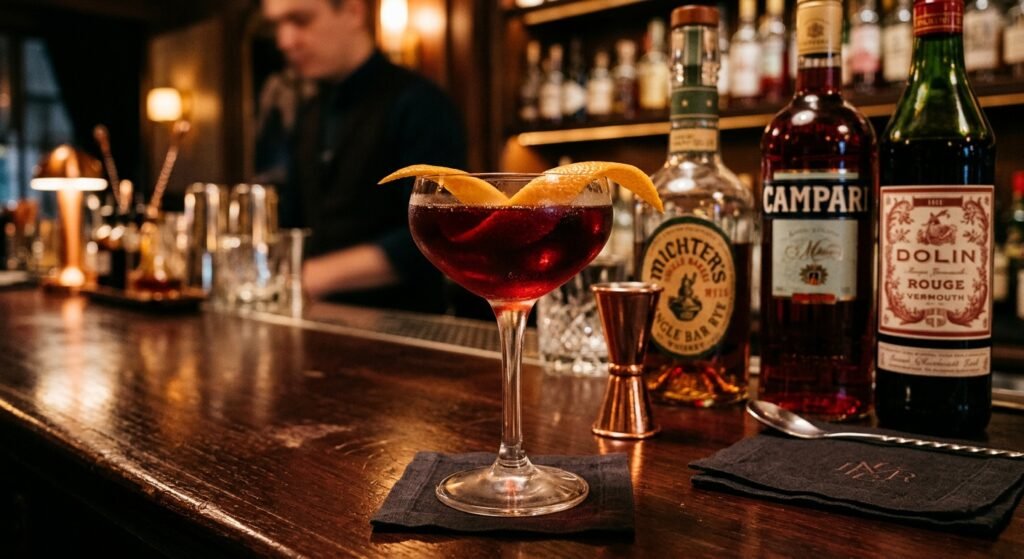
The Boulevardier is a classic whiskey cocktail made with bourbon (or rye), Campari, and sweet vermouth. It is stirred and served up or over ice with an orange twist. Created by Erskine Gwynne in 1920s Paris, it's often called the "bourbon cousin of the Negroni." This bold, bittersweet cocktail is ready in under five minutes.
How to Make a Boulevardier
Combine 1.5 oz bourbon, 1 oz Campari, and 1 oz sweet vermouth with ice. Stir for 20–30 seconds, strain into a chilled glass, and garnish with an orange twist.
What Is a Boulevardier and Where Did It Come From?
The Boulevardier is a stirred cocktail made from equal or near-equal parts bourbon, Campari, and sweet vermouth, first documented in 1927. It was created by American socialite Erskine Gwynne and named after his Paris-based magazine, which celebrated expatriate nightlife and culture in the city.
Who invented the Boulevardier cocktail?
Erskine Gwynne, an American writer with ties to the Vanderbilt family, is credited with creating the Boulevardier while living in Paris during the 1920s. The drink is named after his magazine, The Boulevardier, which chronicled Parisian street life and culture for English-speaking expatriates.
When was the Boulevardier first published as a recipe?
The Boulevardier first appeared in print in 1927, in Harry McElhone's cocktail collection Barflies and Cocktails. McElhone ran Harry's New York Bar in Paris, where the drink is believed to have become a house favorite among Gwynne's circle.
Is the Boulevardier older than the Negroni?
Cocktail historian Ted Haigh, known as "Dr. Cocktail," has claimed the Boulevardier predates the Negroni. This claim is debated among cocktail historians, and no definitive documentation confirms which drink came first both trace back to the early 20th century.
Boulevardier Drink Ingredients
Every Boulevardier relies on just three core components, which means the quality of each one matters more than usual.
| Ingredient | Standard Amount | Role in the Drink |
| Bourbon (or rye) | 1.5 oz | Base spirit; adds warmth and body |
| Campari | 1 oz | Bitter, herbal backbone |
| Sweet vermouth | 1 oz | Adds sweetness and roundness |
| Orange peel | 1 twist | Aromatic garnish |
| Ice | As needed | For stirring and serving |
What tools do I need to make a Boulevardier?
You'll need a mixing glass, a barspoon for stirring, and a strainer (julep or Hawthorne) to separate the ice from the finished drink. A coupe or rocks glass completes the setup no shaker required, since this is a stirred, spirit-forward cocktail.
Traditional Boulevardier Drink Recipe
This version follows the 1927-era formula from Barflies and Cocktails: bourbon, Campari, and sweet vermouth in equal parts, stirred and served up.
Ingredients:
- 1 oz bourbon
- 1 oz Campari
- 1 oz sweet vermouth
- Orange twist, for garnish
Instructions:
- Fill a mixing glass with ice.
- Add the bourbon, Campari, and sweet vermouth.
- Stir for 20–30 seconds until well-chilled.
- Strain into a chilled coupe glass.
- Express the orange peel over the drink and drop it in.
Simple Boulevardier Drink Recipe
For a fuss-free version with minimal tools, stick to the classic 1:1:1 ratio and build it directly in the glass.
Ingredients:
- 1 oz bourbon or rye
- 1 oz Campari
- 1 oz sweet vermouth
- Ice
- Orange peel
Instructions:
- Fill a rocks glass with ice.
- Pour in the bourbon, Campari, and sweet vermouth.
- Stir right in the glass for about 30 seconds.
- Garnish with an orange twist and serve.
Best Boulevardier Drink Recipe
For a more balanced, whiskey-forward pour, use a 1.5:1:1 ratio of bourbon to Campari to vermouth. This keeps the bittersweet flavors of Campari and vermouth intact while letting the bourbon shine through, rather than being overpowered.
Ingredients:
- 1.5 oz bourbon (look for a higher-rye mash bill, like Four Roses Single Barrel or Bulleit)
- 1 oz Campari
- 1 oz sweet vermouth (Carpano Antica Formula or Dolin Rouge)
- Orange twist, for garnish
Instructions:
- Fill a mixing glass with ice.
- Add the bourbon, Campari, and sweet vermouth.
- Stir for 20–30 seconds to properly chill and dilute.
- Strain into a chilled coupe, or pour over fresh ice in a rocks glass.
- Express the orange peel over the drink and garnish.
Why choose 1.5:1:1 over equal parts?
Choose the 1.5:1:1 ratio if you prefer a whiskey-forward sip with the bitterness of Campari still clearly present. Choose the classic 1:1:1 ratio if you want a more balanced, Negroni-like profile where no single ingredient dominates.
Boulevardier Ratio Comparison
Bartenders disagree on the "correct" ratio, and the right one depends on personal taste.
| Ratio (Whiskey:Campari:Vermouth) | Flavor Profile | Best For |
| 1:1:1 | Balanced, Negroni-like | Classic purists |
| 1.5:1:1 | Whiskey-forward, smooth | Most home bartenders |
| 2:1:1 | Strong, spirit-driven | Whiskey lovers |
| 3:2:1 | Bold, Jeff Swoboda style | Bitter-and-bold fans |
Bourbon vs. Rye in a Boulevardier
Both whiskeys work well, but they change the drink's character noticeably.
| Spirit | Flavor Impact | Best Paired With |
| Bourbon | Sweeter, rounder, honeyed | Richer vermouths like Carpano Antica |
| Rye | Spicier, drier finish | Lighter vermouths like Dolin Rouge |
Should I use bourbon or rye in my Boulevardier?
Use bourbon if you want a smoother, sweeter cocktail that leans into caramel and honey notes. Use rye if you prefer a drier, spicier finish that cuts through the sweetness of the vermouth and Campari more sharply.
How Many Calories Are in a Boulevardier?
A standard Boulevardier made with 1.5 oz bourbon, 1 oz Campari, and 1 oz sweet vermouth contains approximately 200–220 calories. This is an estimate based on typical alcohol-by-volume values for each ingredient, and actual calories will vary by brand.
| Metric | Approximate Value |
| Calories per serving | 200–220 kcal |
| ABV after dilution | 28–30% |
| Prep time | 3 minutes |
| Total time | 5 minutes |
| Yield | 1 drink |
Common Mistakes to Avoid
- Skipping the stir time: Under-stirring leaves the drink too strong and under-chilled. Stir for the full 20–30 seconds.
- Using low-quality vermouth: Vermouth is a wine product and oxidizes quickly. A stale bottle will flatten the whole drink.
- Forgetting the orange twist: The citrus oils add aromatics that balance Campari's bitterness don't skip this step.
- Using a warm glass: A room-temperature glass melts ice faster and dilutes the drink prematurely.
- Over-diluting: Stirring too long (over a minute) can water down the flavor. Stick to 20–30 seconds.
Storage and Make-Ahead Tips
Can I make a Boulevardier ahead of time?
Yes, you can batch a Boulevardier ahead of time by combining the bourbon, Campari, and vermouth in a bottle without ice, then refrigerating it. Stir with ice individually when ready to serve, since pre-diluting the batch will make the drink watery.
How long does an opened bottle of sweet vermouth last?
Opened sweet vermouth should be refrigerated and used within 4–8 weeks for best flavor, since it's a fortified wine that oxidizes once exposed to air. Campari and bourbon, by contrast, don't need refrigeration and last far longer once opened.
Substitutions and Variations
- Old Pal: Swap sweet vermouth for dry vermouth for a drier, crisper finish.
- Old Gal: Use blanc vermouth instead of sweet vermouth for a lighter, floral twist.
- Brooklyn-style: Replace Campari with equal parts Amer Picon and maraschino liqueur, and use rye with dry vermouth.
- Lighter version: Reduce the whiskey to 1 oz and top with a splash of soda water for a lower-ABV, longer drink.
- Fruit-infused: Try a strawberry-infused Dolin Blanc vermouth for a seasonal variation.
Serving Suggestions
The Boulevardier pairs well with rich, savory foods that stand up to its bitterness think aged cheddar, charcuterie, or dark chocolate. It also makes a strong aperitif before a heavier meal, much like its cousin the Negroni.
Frequently Asked Questions
How many ounces of bourbon go in a Boulevardier?
A standard Boulevardier uses 1 to 1.5 oz of bourbon, depending on the ratio. The classic 1927 recipe calls for 1 oz, while many modern bartenders prefer 1.5 oz for a more whiskey-forward pour.
How long should I stir a Boulevardier?
Stir a Boulevardier for 20 to 30 seconds. This chills the drink properly and adds just enough dilution to soften the alcohol without watering down the flavor.
What glass is traditionally used for a Boulevardier?
A Boulevardier is traditionally served in a chilled coupe glass when strained up, or in a rocks glass when served over ice. Both presentations are considered classic.
Can I substitute rye for bourbon in a Boulevardier?
Yes, rye is a common substitute for bourbon in a Boulevardier. It produces a spicier, drier version of the drink, while bourbon keeps it sweeter and smoother.
How many calories are in a Boulevardier?
A Boulevardier contains approximately 200 to 220 calories per serving, based on standard measurements of 1.5 oz bourbon, 1 oz Campari, and 1 oz sweet vermouth.
What year was the Boulevardier cocktail invented?
The Boulevardier was first documented in 1927, in Harry McElhone's book Barflies and Cocktails, and credited to Erskine Gwynne.
What is the ABV of a Boulevardier after stirring?
A Boulevardier has an estimated ABV of 28 to 30% after proper dilution from stirring with ice for 20 to 30 seconds.
Is the Boulevardier similar to a Negroni?
Yes, the Boulevardier follows the same 1:1:1 formula as a Negroni but substitutes bourbon or rye for gin, resulting in a warmer, less botanical flavor profile.
Can I batch a Boulevardier for a party?
Yes, combine multiple servings of bourbon, Campari, and sweet vermouth in one bottle and refrigerate without ice. Stir individual portions with ice just before serving to avoid over-dilution.
What's the best orange garnish technique for a Boulevardier?
Cut a wide strip of orange peel, at least 1 inch, and express it over the drink by pinching it skin-side down near the glass to release its citrus oils before dropping it in.
- 1 oz bourbon
- 1 oz Campari
- 1 oz sweet vermouth
- Orange twist, for garnish
- 1 Fill Mixing Glass with IceFill a mixing glass with ice.
- 2
Add Bourbon, Campari, and VermouthAdd the bourbon, Campari, and sweet vermouth.- 3
Stir Until Well-ChilledStir for 20–30 seconds until well-chilled.- 4
Strain into a Chilled CoupeStrain into a chilled coupe glass.- 5
Garnish with Expressed Orange PeelExpress the orange peel over the drink and drop it in. - 2