
Manhattan Drink Recipe: Classic, Easy & Perfect Variations
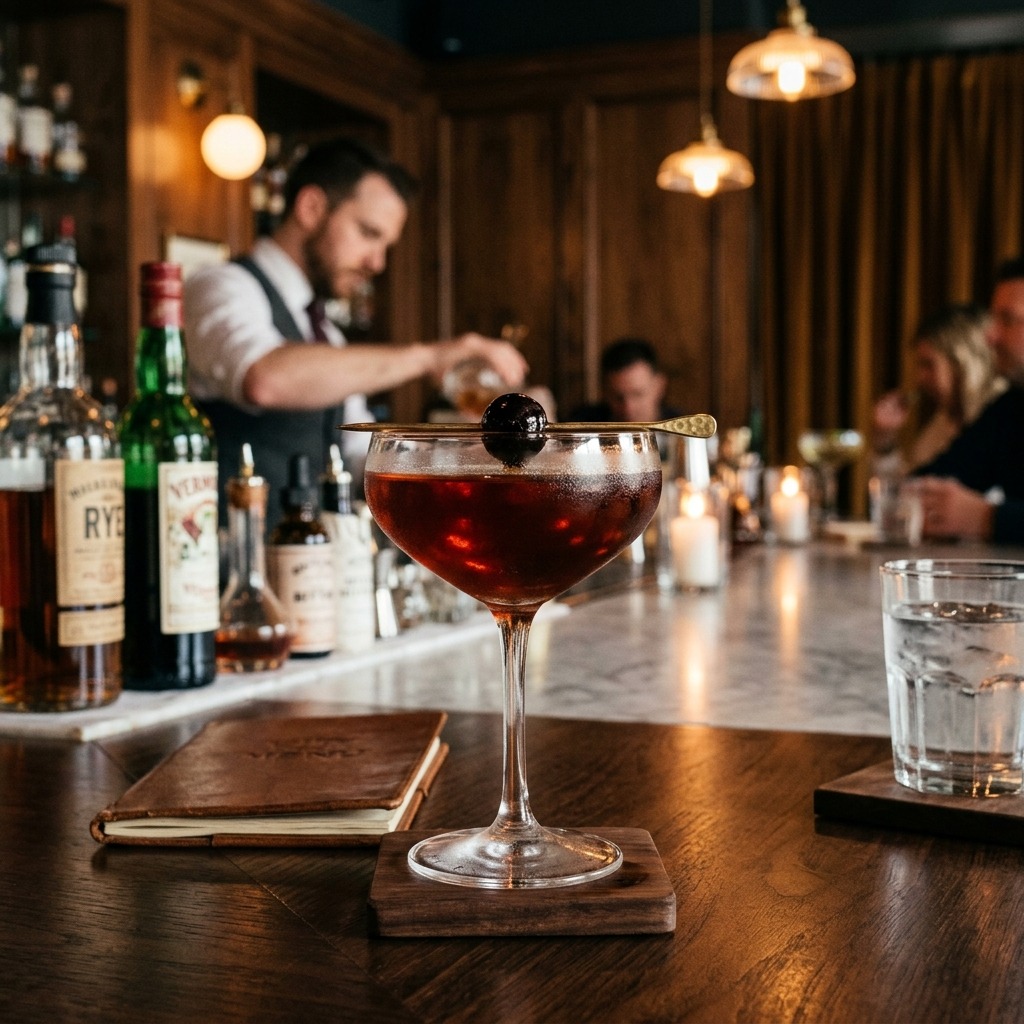
A Manhattan is a whiskey-forward cocktail made with 2 oz (60 ml) rye or bourbon whiskey, 1 oz (30 ml) sweet vermouth, and 2 dashes of Angostura bitters. Stir with ice for 30 seconds, strain into a chilled coupe or rocks glass, and garnish with a cherry or orange twist. Rich, smooth, and slightly spicy.
| Prep Time | Servings | Calories | ABV | Glassware |
| 3 minutes | 1 | ~160–180 kcal | ~28–32% | Coupe or rocks glass |
Few cocktails have earned their place at the bar quite like the Manhattan. It's a drink that rewards patience every detail, from your whiskey choice to your stirring time, shapes the final result. No blenders, no syrups, no 12-ingredient lists. Just three components, a mixing glass, and good technique.
The Manhattan traces its origins to New York City in the mid-1870s. According to popular cocktail history, the drink was first mixed at the Manhattan Club around 1874 at the request of Jennie Jerome a socialite later known as the mother of Winston Churchill to celebrate a dinner honoring presidential candidate Samuel J. Tilden. While historians debate the exact details, the New York origins of the drink are widely accepted.
Over 150 years later, the Manhattan remains one of the most ordered classic cocktails in bars worldwide. It shares the top tier with the Old Fashioned and the Martini drinks so structurally sound that bartenders use them as benchmarks for understanding cocktail balance.
What Is a Traditional Manhattan Drink Made Of?
A traditional Manhattan drink is made of three ingredients:
- Whiskey (rye or bourbon) the backbone of the drink
- Sweet vermouth adds richness, fruit, and herbal complexity
- Aromatic bitters usually Angostura, providing spice and depth
That's it. The Manhattan belongs to the "cocktail" family in its strictest definition: a spirit, a modifier (vermouth), and bitters. The garnish a brandied cherry or citrus twist is optional but traditional.
Classic Manhattan Drink Recipe (Easy & Simple)
This is the simple Manhattan cocktail that works every time. No exotic ingredients, no special equipment beyond a mixing glass and a bar spoon.
Ingredients
- 2 oz (60 ml) rye whiskey (or bourbon see comparison table below)
- 1 oz (30 ml) sweet vermouth (Carpano Antica Formula, Noilly Prat, or Martini & Rossi)
- 2 dashes Angostura bitters
- Ice (large cubes preferred for dilution control)
- Garnish: Luxardo maraschino cherry or expressed orange/lemon peel
Step-by-Step Instructions
- Chill your glass. Place a coupe or rocks glass in the freezer for 5 minutes, or fill it with ice water while you prepare the drink.
- Add ingredients to a mixing glass. Pour in the whiskey, sweet vermouth, and bitters.
- Add ice. Fill the mixing glass two-thirds with large ice cubes.
- Stir for 30 seconds. Use a bar spoon and stir in smooth, consistent circles. You're chilling and diluting the drink not aerating it. Never shake a Manhattan.
- Strain into your chilled glass. Use a Hawthorne or julep strainer.
- Garnish. Drop in a Luxardo cherry, or express an orange peel over the glass and either drop it in or discard it.
Manhattan Cocktail Recipe in ML (Metric Measurements)
For international readers or those scaling up for batch preparation:
| Ingredient | US Measurement | Metric (ml) |
| Rye whiskey | 2 oz | 60 ml |
| Sweet vermouth | 1 oz | 30 ml |
| Angostura bitters | 2 dashes | ~2 ml |
| Total yield | ~3 oz | ~90 ml |
To make a batch of 8 Manhattans, multiply each ingredient by 8, combine in a pitcher, and refrigerate. Stir each serving over ice individually before straining.
Rye or Bourbon: Which Makes the Best Manhattan Drink Recipe?
The single biggest decision you'll make when crafting the best Manhattan drink recipe is your whiskey choice. Both work but they produce noticeably different drinks.
| Rye Whiskey | Bourbon | |
| Flavor profile | Spicy, dry, peppery | Sweet, round, vanilla-forward |
| Balance with sweet vermouth | High contrast, classic structure | Harmonious, approachable |
| Recommended for | Traditional enthusiasts | Beginners, sweeter palates |
| Top bottles | Rittenhouse BIB, Sazerac Rye | Maker's Mark, Buffalo Trace |
| Bartender preference | Widely favored | Common in modern menus |
Most professional bartenders and cocktail writers favor rye for the classic Manhattan. Rye's natural spiciness creates a more dynamic tension with the sweet vermouth, giving the drink structure and length. Bourbon produces a smoother, more dessert-like result excellent, but stylistically different.
Choose rye if you want the traditional, bartender-approved Manhattan with spice and bite. Choose bourbon if you prefer a sweeter, softer cocktail or are new to the drink.
What Is a Perfect Manhattan Recipe?
The Perfect Manhattan uses a split of both sweet and dry vermouth, replacing the full portion of sweet vermouth with equal halves of each.
Perfect Manhattan Ingredients
- 2 oz (60 ml) rye whiskey
- ½ oz (15 ml) sweet vermouth
- ½ oz (15 ml) dry vermouth
- 2 dashes Angostura bitters
- Garnish: Lemon twist (preferred over cherry for the Perfect Manhattan)
How the Perfect Manhattan Tastes
The dry vermouth introduces a crisp, herbaceous edge that cuts through the richness of the sweet vermouth. The result is more elegant and less heavy than the classic version—closer to a Martini in its dryness, but with the depth of a classic Manhattan. It works particularly well with bourbon, where the dry vermouth balances the spirit's natural sweetness.
Sweet Manhattan Recipe
The Sweet Manhattan is essentially the classic recipe leaning further into rich, dessert-like territory. Two approaches work well:
Option A: Increase the vermouth ratio
- 1.5 oz (45 ml) rye whiskey
- 1.5 oz (45 ml) sweet vermouth
- 2 dashes Angostura bitters
Option B: Use a richer sweet vermouth
Keep the classic 2:1 ratio but substitute Carpano Antica Formula or Cocchi Storico Vermouth di Torino for a standard sweet vermouth. These are fuller-bodied, darker vermouths with strong vanilla, chocolate, and dried fruit notes that dramatically deepen the sweetness without adjusting the ratio.
Garnish recommendation: A brandied cherry (Luxardo brand preferred) adds a syrupy, fruit-forward finish that amplifies the sweet character.
Is a Manhattan a Strong Drink?
Yes. A Manhattan is a strong drink by any standard.
With two ounces of whiskey (typically 40–50% ABV) and one ounce of vermouth (16–18% ABV), the finished cocktail sits at approximately 28–32% ABV before any dilution from stirring. After proper stirring, you're looking at roughly 24–28% ABV in the glass.
For comparison:
- A standard glass of wine: ~12–14% ABV
- A pint of beer: ~4–6% ABV
- A classic Manhattan: ~24–28% ABV after dilution
The Manhattan is fully spirit-forward with no juice, soda, or non-alcoholic mixer to soften the alcohol content. Its smoothness can be deceptive the sweetness of the vermouth masks the proof. Sip slowly.
What Are the Most Popular Manhattan Variations?
| Variation | Key Difference | Best For |
| Classic Manhattan | 2:1 rye/bourbon to sweet vermouth | Traditional drinkers |
| Perfect Manhattan | Equal parts sweet + dry vermouth | Those who prefer dryness |
| Sweet Manhattan | Higher vermouth ratio or richer vermouth | Dessert-cocktail lovers |
| Dry Manhattan | Dry vermouth only | Martini drinkers |
| Rob Roy | Scotch whisky base | Smoky, peaty preference |
| Black Manhattan | Averna amaro replaces vermouth | Bitter, herbal fans |
| Vieux Carré | Split rye + Cognac base, Benedictine | Complex, New Orleans style |
What Are the Best Tips for Making a Perfect Manhattan at Home?
1. Refrigerate your vermouth. Sweet vermouth oxidizes once opened. Store it in the fridge and use it within 4–6 weeks. Stale vermouth is the most common reason a homemade Manhattan tastes flat.
2. Use large ice cubes in your mixing glass. Smaller ice melts faster, over-diluting the drink. Larger cubes give you more control over the final dilution.
3. Never shake a Manhattan. Shaking aerates the drink, creating a cloudy appearance and a frothy texture. A Manhattan should be crystal clear and silky.
4. Choose quality vermouth. Many home bartenders splurge on whiskey and buy the cheapest vermouth. Since vermouth makes up one-third of the drink, it matters enormously. Carpano Antica Formula, Dolin Rouge, or Cocchi Storico are excellent choices.
5. Express your garnish. If using a citrus peel, hold it skin-side down over the glass and give it a firm bend. This sprays the essential oils across the surface of the drink, adding an aromatic layer before the first sip.
6. Chill your glass in advance. A warm glass will immediately begin to raise the temperature of a perfectly cold cocktail.
What Foods Pair Well with a Manhattan?
The Manhattan's combination of spice, bitterness, and sweetness makes it a natural companion for rich, savory, and umami-forward foods.
- Aged cheeses cheddar, gouda, Manchego
- Charcuterie prosciutto, salami, smoked meats
- Beef dishes steak, beef tartare, short ribs
- Dark chocolate 70%+ cacao complements the bitters beautifully
- Mushroom-forward dishes risotto, wild mushroom pasta
- Oysters the salinity plays against the sweetness of the vermouth
Avoid pairing Manhattans with very sweet or acidic foods, which will clash with the bitters and create a harsh finish.
Frequently Asked Questions
What is the traditional Manhattan drink recipe?
The traditional Manhattan recipe is 2 oz rye whiskey, 1 oz sweet vermouth, and 2 dashes Angostura bitters. Stir with ice for 30 seconds and strain into a chilled coupe or rocks glass. Garnish with a Luxardo cherry or citrus twist.
What is the Manhattan cocktail recipe in ml?
The classic Manhattan in metric measurements is 60 ml rye whiskey, 30 ml sweet vermouth, and approximately 2 ml (2 dashes) Angostura bitters, yielding roughly 90 ml before dilution.
What is the difference between a Perfect Manhattan and a classic Manhattan?
A Perfect Manhattan uses equal parts sweet and dry vermouth (½ oz / 15 ml each) instead of the full ounce of sweet vermouth in the classic recipe. The result is drier, more herbaceous, and less sweet.
Is a Manhattan stronger than a Martini?
A Manhattan and a Martini are similar in strength, both sitting in the 25–30% ABV range after dilution. A Martini made with a high-proof gin can be slightly stronger depending on the gin-to-vermouth ratio used.
Can I make a Manhattan with bourbon instead of rye?
Yes. Bourbon produces a sweeter, softer Manhattan due to its higher corn content and natural vanilla notes. Rye is the traditional choice and creates a spicier, more structured cocktail.
How long does sweet vermouth last after opening?
Sweet vermouth lasts 4–6 weeks after opening when stored in the refrigerator. Oxidized vermouth tastes flat, sour, or vinegary and will ruin a Manhattan. Always smell vermouth before using it.
Can I batch-make Manhattans ahead of time?
Yes. Combine the whiskey, vermouth, and bitters in a sealed bottle or pitcher and refrigerate for up to two weeks. Do not add ice to the batch stir each serving individually over ice before straining.
How many calories are in a Manhattan cocktail?
A standard Manhattan contains approximately 160–180 calories per serving, primarily from the alcohol content. There is minimal sugar from the vermouth, and the drink contains no fat or protein.
Why should you stir a Manhattan instead of shaking it?
Stirring chills and dilutes the drink without introducing air bubbles. Shaking creates a cloudy, frothy texture that is considered incorrect for spirit-forward cocktails like the Manhattan, Martini, and Negroni.
What is the best sweet vermouth for a Manhattan?
Carpano Antica Formula is widely regarded as the gold standard for Manhattans due to its rich vanilla, chocolate, and dried fruit notes. Cocchi Storico Vermouth di Torino and Dolin Rouge are excellent alternatives at a lower price point.
- 2 oz rye whiskey (or bourbon see comparison table below) (60 ml)
- 1 oz sweet vermouth (Carpano Antica Formula, Noilly Prat, or Martini & Rossi) (30 ml)
- 2 dashes Angostura bitters
- Ice (large cubes preferred for dilution control)
- Garnish: Luxardo maraschino cherry or expressed orange/lemon peel
- 1 chill your galassChill your glass. Place a coupe or rocks glass in the freezer for 5 minutes, or fill it with ice water while you prepare the drink.
- 2
mix ingredientsAdd ingredients to a mixing glass. Pour in the whiskey, sweet vermouth, and bitters.- 3
add iceAdd ice. Fill the mixing glass two-thirds with large ice cubes.- 4
Stir for 30 secondsStir for 30 seconds. Use a bar spoon and stir in smooth, consistent circles. You're chilling and diluting the drink not aerating it. Never shake a Manhattan.- 5
strainStrain into your chilled glass. Use a Hawthorne or julep strainer.- 6
GarnishGarnish. Drop in a Luxardo cherry, or express an orange peel over the glass and either drop it in or discard it. - 2