
Mexican Martini Drink Recipe: Ingredients and Variations
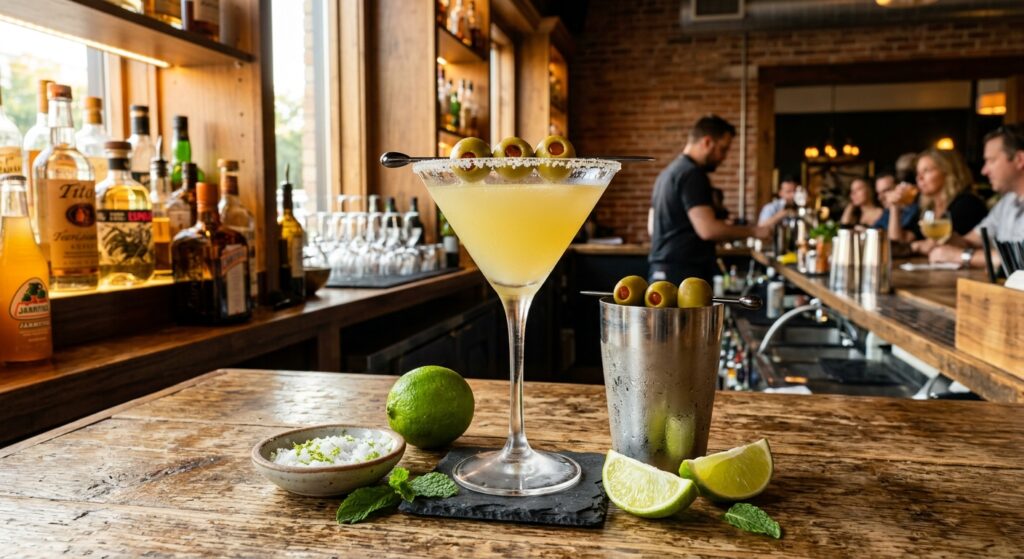
The Mexican martini is a stiff, Austin-born margarita riff served "up" in a salt-rimmed martini glass with a splash of olive brine. Made with tequila, orange liqueur, fresh lime juice, and briny olives, it's sweet, salty, and acidic and usually arrives with its own shaker for a refill.
How to Make a Mexican Martini
Shake 2 ounces of reposado tequila, 1 ounce of Cointreau, 1 ounce of fresh lime juice, about ½ to ¾ ounce of fresh orange juice, and ½ ounce of olive brine with ice for 20 seconds. Strain into a salt-rimmed martini glass. Garnish with a lime wedge and three pimiento-stuffed olives on a pick.
Austin, Texas, claims this cocktail as its own, and once you taste one, you'll understand the civic pride. It's not technically Mexican, and it's not really a martini it's a well-dressed margarita with a brine-forward attitude. But the name stuck, and so did the drink, which has become a fixture of Tex-Mex happy hours from South Congress to suburban strip-mall cantinas across the state.
What Is a Mexican Martini Drink?
A mexican martini drink is a margarita variation built with tequila, orange liqueur, fresh lime juice, and a splash of green olive brine, served up in a chilled, salt-rimmed martini or coupe glass and garnished with olives instead of a simple lime wheel. Unlike a standard margarita, it skips the ice at serving time and leans into a salty, savory edge from the olive brine.
The drink's reputation rests on a few non-negotiables: decent tequila, fresh citrus (bottled juice is widely considered a dealbreaker), and real martini olives not just any olive from the back of the fridge.
The History of the Mexican Martini
Local lore credits Austin's Cedar Door bar with inventing the Mexican martini in the early 1980s. According to the bar's current owner, Heather Potts, a Cedar Door bartender named Ellen was served an olive brine–enhanced margarita while traveling south of the border and brought the idea back to founders Gus and Diane Koerner (Punch). Longtime Cedar Door bartender Jim LeMond, who died in 2019, is often credited with popularizing the drink; he once told the New York Times that other bartenders would ask him how to make it, then put it on their own menus within weeks (Punch).
Trudy's, a local Tex-Mex chain, disputes the Cedar Door origin story and calls its own version the "Mex-Mart." Writer Claudia Alarcon recalled first tasting the drink at Cedar Door around 1985, when it was still called a "Mexican Margarita" (Patrón, 2016). Whoever invented it first, Trudy's now serves the biggest version in town: a 44-ounce Mexican martini suggested for four to six people (The Kitchn, 2024).
What Makes a Mexican Martini Different From a Margarita?
A mexican martini differs from a standard margarita in its presentation and its signature olive brine. It's shaken (not blended or served over rocks), strained into a martini glass instead of a rocks glass, and finished with a splash of briny olive juice and a garnish of olives instead of just a lime wheel.
Choose a Mexican martini over a frozen or rocks margarita if you want a stronger, more spirit-forward drink with a savory, almost dirty-martini edge. Choose a classic margarita if you prefer something lighter, icier, and purely citrus-sweet.
Essential Ingredients for a Mexican Martini
| Ingredient | Role | Notes |
| Reposado or blanco tequila | Base spirit | Reposado is oak-aged and mellower; blanco is sharper and more agave-forward |
| Orange liqueur (Cointreau or Grand Marnier) | Sweetness + citrus depth | Cointreau is cleaner-tasting; Grand Marnier adds richer flavor |
| Fresh lime juice | Acidity | Bottled lime juice is widely discouraged by recipe developers |
| Fresh orange juice | Rounds out sweetness | Even a small splash matters — bottled juice can overpower the drink |
| Olive brine | Signature salty note | Amount varies by preference; start light and add to taste |
| Martini olives | Garnish + flavor | Pimiento-stuffed Spanish queen or Manzanilla olives are standard |
| Salt (or Tajín) | Rim | Some bars only salt half the rim |
A tequila comparison can help you choose the right base:
| Tequila Type | Flavor Profile | Best For |
| Blanco | Bright, peppery, agave-forward | Those who want a sharper, punchier drink |
| Reposado | Mellow, oak-kissed, lightly golden | The most commonly recommended choice |
| Añejo | Deeper, smokier, more barrel character | Sipping-focused versions |
| Mezcal | Smoky substitute | A smoky twist on the classic |
Easy Mexican Martini Drink Recipe
This version follows the ratios used by recipe developers at outlets including The Kitchn, scaled for one generous drink.
Prep time: 5 minutes
Shake time: About 20 seconds
Servings: 1 (Austin bars often serve this with a shaker on the side, technically yielding closer to 2 drinks)
Calories: Approximately 272 per serving (The Kitchn, auto-calculated estimate for a similar build actual calories vary by tequila proof and liqueur brand)
Ingredients
- 2 oz reposado or blanco tequila
- 1 oz Cointreau (or orange liqueur of choice)
- 1 oz fresh lime juice
- ½–¾ oz fresh orange juice
- ½ oz olive brine (from the jar), plus more to taste
- Kosher salt or Tajín, for the rim
- Ice
- Lime wedge, for garnish
- 3 pimiento-stuffed martini olives, for garnish
Instructions
- Rim the glass. Moisten the rim of a martini glass with a lime wedge, then dip it in salt or Tajín to coat. Chill the glass in the freezer for at least 5 minutes.
- Shake it up. Combine the tequila, Cointreau, lime juice, orange juice, and olive brine in a cocktail shaker filled with ice. Shake until the outside of the shaker is very frosty, about 20 seconds.
- Taste and adjust. Add more olive brine if you want a saltier, brinier flavor.
- Strain and garnish. Strain into the chilled, rimmed glass. Garnish with a lime wedge and olives speared on a cocktail pick.
Simple Mexican Martini Drink (No-Fuss Version)
Short on time or ingredients? This stripped-down build skips the orange juice and still delivers the signature brine:
- 2 oz tequila
- 1 oz orange liqueur
- 1 oz fresh lime juice
- ½ oz olive brine
- Salt rim, olives, lime wedge
Shake with ice, strain, and garnish. It's not quite as rounded in flavor as the full recipe, but it's ready in under five minutes.
Best Mexican Martini Drink Recipe (Austin Bar-Style)
For a drink closer to what you'd get at an Austin bar complete with a shaker to pour your own refill scale up the classic ratios used by Texas Monthly and The Defined Dish:
- 3 oz reposado or añejo tequila
- 1.5 oz Cointreau
- 1.5 oz fresh lime juice
- ½ oz green olive brine
- A splash of fresh orange juice
- Salt rim, lime wedge, olives
This larger pour yields roughly two drinks and roughly double the calories of the single-serving version (an estimated 500+, varying by pour and brand). Shake hard in an ice-filled shaker, strain into a chilled, salt-rimmed coupe, and serve the remainder in the shaker alongside the glass the authentic Austin touch.
Mexican Martini Drink Recipe with Vodka
Not a tequila fan? Swap the tequila for vodka ounce-for-ounce:
- 2 oz vodka
- 1 oz orange liqueur
- 1 oz fresh lime juice
- ½ oz olive brine
- Salt rim, olives, lime wedge
This isn't a traditional Mexican martini tequila is central to the original but it's a popular workaround for vodka drinkers. Expect a similar calorie count to the tequila version (an estimated 250–280, varying by vodka proof), since the alcohol content is comparable.
Mexican Martini Drink Recipe with Sprite
Some Austin bars, including versions associated with Cedar Door and Trudy's, are said to sweeten their Mexican martini with a splash of Sprite or other lemon-lime soda (The Defined Dish). Purists disagree: Cedar Door owner Heather Potts calls Sprite and orange juice additions a departure from the original, and Texas Monthly's recipe developers describe soda-mixed versions as a "syrupy" letdown.
If you want to try it anyway:
- 2 oz tequila
- 1 oz orange liqueur
- 1 oz fresh lime juice
- ½ oz olive brine
- A splash of Sprite
- Salt rim, olives, lime wedge
Expect a sweeter, fizzier drink with a rough estimate of 300+ calories per serving, depending on how much Sprite you add.
Variations and Regional Differences
Austin bars have never agreed on one "correct" Mexican martini, and that's part of the fun:
- Cedar Door style: Three pimiento-stuffed olives, a lime wedge, and a shaker of extra drink on the side.
- Trudy's "Mex-Mart": Known for its 44-ounce jumbo size, suggested for four to six people (The Kitchn).
- Chuy's riff: Jalapeño-stuffed olives for a spicy kick.
- Frozen bar versions: Tequila, triple sec, lime, and a float of olive brine blended with ice.
- Home cook tweaks: Readers of The Defined Dish have swapped in jalapeño-stuffed olives or lemonade instead of orange juice.
Common Mistakes to Avoid
- Using bottled lime or orange juice. Recipe developers consistently report that bottled citrus overwhelms or flattens the drink's flavor.
- Skipping the chill step. A warm glass melts your careful shake-chilled balance fast.
- Adding too much brine at once. Start with ½ ounce and add more gradually you can't take it back out.
- Using cheap tequila. Because there's no simple syrup to mask rough edges, the tequila's quality shows through clearly.
- Over-diluting with ice. Shake just long enough to chill thoroughly (about 20 seconds) over-shaking waters it down.
Serving Suggestions and Pairings
A Mexican martini pairs naturally with classic Tex-Mex bar snacks:
- Tortilla chips and salsa
- Guacamole
- Queso
- Jalapeño poppers
It's best suited for happy hour, brunch, or casual gatherings rather than formal dinners, given its strong, spirit-forward profile. Many Austin bars serve it with the shaker on the side so you can pour a second round yourself.
Storage and Make-Ahead Tips
Mexican martinis are best shaken fresh and served immediately, since the ice-shaken dilution and chill are part of the drink's character. If you want to prep ahead for a party, pre-measure and combine the tequila, orange liqueur, and juices in a sealed container and refrigerate for up to a day; add the olive brine and shake with ice just before serving. Salt the rims right before pouring, since salt can absorb moisture and lose its crunch if it sits too long.
Frequently Asked Questions
How many calories are in a Mexican martini?
A single-serving Mexican martini made with tequila, Cointreau, lime juice, orange juice, and olive brine contains approximately 272 calories, according to The Kitchn's auto-calculated nutrition data for a comparable recipe.
How much tequila goes in a Mexican martini?
Standard recipes call for 2 to 3 ounces of tequila per serving, depending on the recipe's scale 2 ounces for a single-serving pour, or 3 ounces for the larger, Austin bar-style shaker version.
How long does it take to make a Mexican martini?
Most recipes require about 5 minutes of prep time, plus roughly 20 seconds of shaking with ice to properly chill and dilute the drink before straining.
Who invented the Mexican martini?
Austin's Cedar Door bar claims to have invented the drink in the early 1980s, while Trudy's, a local Tex-Mex chain, disputes this and calls its own version the "Mex-Mart."
How big is Trudy's Mexican martini?
Trudy's serves a 44-ounce version of the drink, which the restaurant suggests is appropriate for four to six people to share.
How much olive brine should I use?
Most recipes call for about ½ ounce of olive brine per serving, though you can taste and adjust, adding a bit more for a saltier, brinier flavor.
Is a Mexican martini stronger than a margarita?
Because it's shaken and strained rather than blended or poured over ice, a Mexican martini typically delivers a more concentrated, spirit-forward pour than a frozen or rocks margarita of the same size.
Can I make a Mexican martini with vodka instead of tequila?
Yes, you can swap in 2 ounces of vodka in place of tequila, though this departs from the traditional tequila-based recipe that defines the classic Mexican martini.
Is Sprite a traditional ingredient in a Mexican martini?
Some Austin establishments are said to add a splash of Sprite, but purists, including Cedar Door's owner, consider soda and orange juice additions a departure from the original recipe.
What glass should I use to serve a Mexican martini?
A chilled martini glass or coupe is the standard choice, rimmed with salt and garnished with a lime wedge and pimiento-stuffed olives on a cocktail pick.
- 2 oz reposado or blanco tequila
- 1 oz Cointreau (or orange liqueur of choice)
- 1 oz fresh lime juice
- ½–¾ oz fresh orange juice
- ½ oz olive brine , plus more to taste (from the jar)
- Kosher salt or Tajín, for the rim
- Ice
- Lime wedge, for garnish
- 3 pimiento-stuffed martini olives, for garnish
- 1 Rim and Chill the GlassRim the glass. Moisten the rim of a martini glass with a lime wedge, then dip it in salt or Tajín to coat. Chill the glass in the freezer for at least 5 minutes.
- 2
Shake the Cocktail IngredientsShake it up. Combine the tequila, Cointreau, lime juice, orange juice, and olive brine in a cocktail shaker filled with ice. Shake until the outside of the shaker is very frosty, about 20 seconds.- 3
Adjust the Olive BrineTaste and adjust. Add more olive brine if you want a saltier, brinier flavor.- 4
Strain and Garnish the MartiniStrain and garnish. Strain into the chilled, rimmed glass. Garnish with a lime wedge and olives speared on a cocktail pick. - 2