
Miami Vice Cocktail Drink Recipe: Easy Frozen Classic
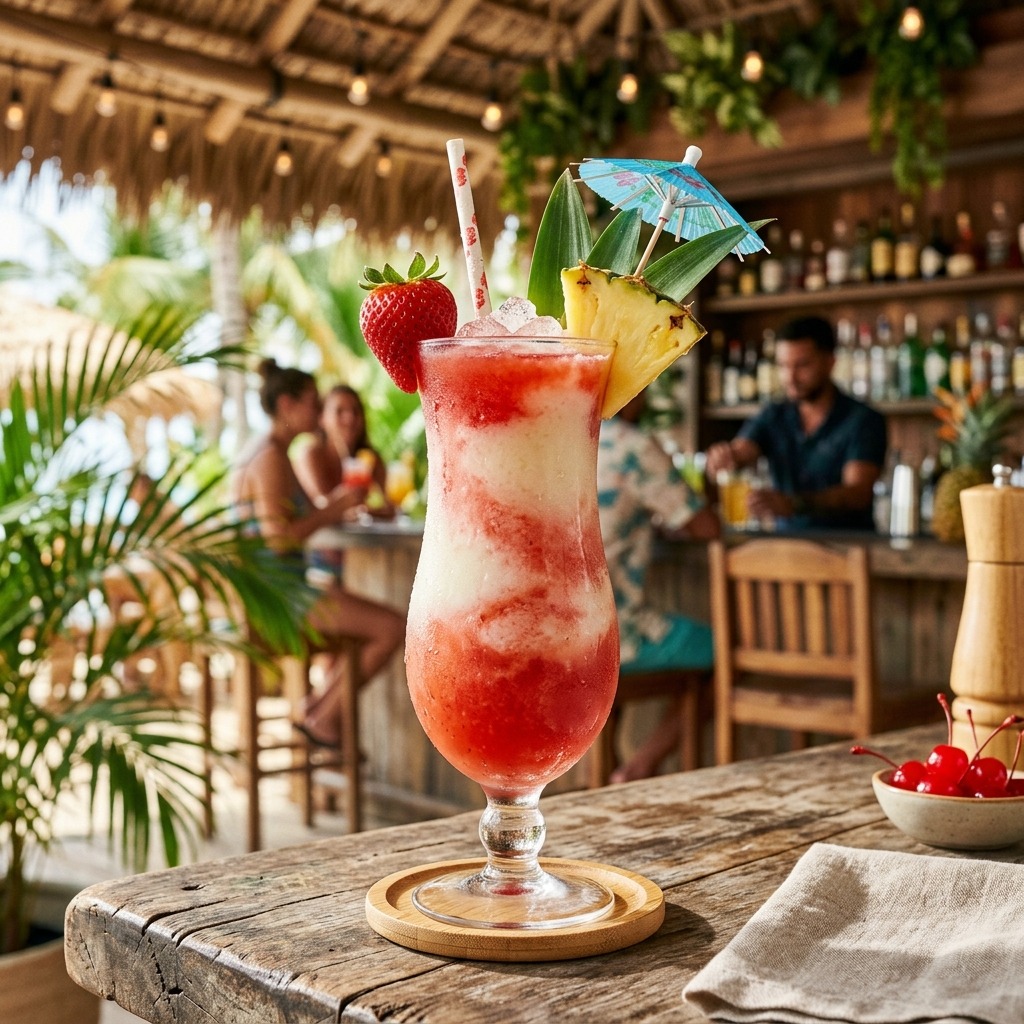
The Miami Vice cocktail is a layered frozen drink that combines a Strawberry Daiquiri and a Piña Colada in one glass. Made with white rum, fresh strawberries, lime juice, cream of coconut, and pineapple juice, it delivers a striking red-and-white swirl with tropical, creamy, and citrusy flavors in every sip.
Few cocktails stop a room the way the Miami Vice does. That iconic red-and-white swirl hits the table, and suddenly everyone wants one. Named after the 1980s NBC crime drama that made pastel suits and South Beach cool, the Miami Vice cocktail has outlasted the show by decades and for good reason. It tastes as good as it looks.
At a Glance: Miami Vice Cocktail Quick Facts
| Detail | Info |
| Prep Time | 8–10 minutes |
| Servings | 1 |
| Calories (per serving) | ~460–600 kcal |
| Alcohol Content | ~10–13% ABV |
| Glassware | Hurricane glass or tall glass |
| Difficulty | Easy–Intermediate |
Is a Miami Vice a Drink?
Yes the Miami Vice is a real, well-established cocktail. It's a frozen blended drink that combines two separate cocktails a Strawberry Daiquiri and a Piña Colada poured into the same glass to create a visually striking two-toned effect. The red strawberry layer and the white coconut layer sit side by side, either swirled or cleanly separated, depending on your pouring technique.
The Miami Vice is widely served at beach bars, cruise ships, resort pools, and tropical-themed bars across the US and internationally. Bartender Joaquín Simó has described it as "perhaps the most perfect frozen drink ever created."
Why Is It Called a Miami Vice Drink?
The Miami Vice cocktail takes its name from the iconic NBC television series Miami Vice, which aired from 1984 to 1989. Created by Anthony Yerkovich and executive-produced by Michael Mann, the show was set against the glamorous, neon-soaked backdrop of South Florida's nightlife. It became synonymous with 1980s cool pastel clothing, waterfront bars, and an effortlessly tropical lifestyle.
The cocktail captures that same spirit: bold, colorful, dual-natured. The red-and-white layers even mirror the visual contrast that defined the show's aesthetic. Some bartenders, including Steve the Bartender (YouTube), note that the cocktail may actually predate the TV show, having existed as a "resort cocktail" or "club cocktail" before the series made the name famous. Either way, the Miami Vice brand gave it staying power.
What Is a Classic Miami Drink?
The Piña Colada is widely considered the most quintessential "classic Miami drink," rooted in Caribbean and South Florida beach culture. However, the Miami Vice cocktail has become its modern successor particularly in coastal Florida bar scenes. It builds on the Piña Colada's DNA while adding a Strawberry Daiquiri layer, making it a more visually dramatic and flavor-complex option. On cruise ships departing from Miami and at South Beach pool bars, the Miami Vice is arguably the most ordered blended cocktail.
Miami Vice Drink Simple Ingredient Checklist
Here's everything you'll need, with approximate retail costs (2025–2026 US pricing):
For the Strawberry Daiquiri Layer:
- 2 oz white rum (e.g., Bacardi Superior)
- 1 cup frozen strawberries
- 1 oz fresh lime juice
- 1 oz simple syrup
- For the Piña Colada Layer:
- 1.5 oz white rum (same bottle)
- 2 oz cream of coconut (e.g., Coco Lopez) ~$4–6 per can
- 2 oz pineapple juice ~$6.99 for 64 oz (Langer's)
- 1 cup frozen pineapple chunks ~$3–5 per bag
- 1 cup crushed ice
Garnish (optional):
- Pineapple wedge, maraschino cherry, cocktail umbrella, lime wheel, fresh strawberry
Estimated Total Cost Breakdown
| Scenario | Estimated Cost |
| Home-made (first batch, buying ingredients) | ~$30–40 for multiple servings |
| Cost per serving at home | ~$5–8 |
| Bar/restaurant price | ~$12–18 per drink |
| Cruise ship price | ~$12–15 per drink |
| Pre-made cocktail mix (Dirty Habit Cocktails) | ~$26 per bottle |
Making it at home is significantly cheaper roughly 60–70% less per drink than ordering at a bar.
Miami Vice Drink Easy Recipe: Step-by-Step Instructions
Step 1: Blend the Strawberry Daiquiri layer.
Add 1 cup of frozen strawberries, 2 oz white rum, 1 oz lime juice, and 1 oz simple syrup to a blender. Blend until completely smooth. Pour into a freezer-safe pitcher and place in the freezer while you prepare the Piña Colada layer.
Step 2: Blend the Piña Colada layer.
Rinse the blender. Add 1 cup frozen pineapple chunks, 1.5 oz white rum, 2 oz cream of coconut, 2 oz pineapple juice, and 1 cup crushed ice. Blend until smooth and thick.
Step 3: Pour and layer.
Remove the strawberry mixture from the freezer. Pour the strawberry daiquiri into a chilled hurricane glass first. Then slowly pour the piña colada over the back of a spoon to layer it on top or pour both simultaneously for a natural swirl effect.
Step 4: Garnish and serve immediately.
Add a pineapple wedge, maraschino cherry, and a cocktail umbrella for the full resort experience.
Best Miami Vice Drink Recipe: Pro Tips for Perfect Results
How to Make the Best Miami Vice?
The difference between an average Miami Vice and a great one comes down to five details:
- Use frozen fruit instead of extra ice. Frozen strawberries and pineapple chunks keep the drink cold without diluting the flavor. Ice waters it down; frozen fruit intensifies it.
- Chill your glass first. Place your hurricane glass in the freezer for at least 20 minutes before pouring. A warm glass melts the edges instantly and bleeds the colors together.
- Freeze your rum. Alcohol lowers the freezing point of a mixture. Starting with ice-cold rum from the freezer helps maintain the slushy consistency throughout blending.
- Blend the strawberry layer first. The strawberry daiquiri is more acidic and holds its frozen structure slightly longer than the coconut-heavy piña colada layer, making it easier to manage the layering sequence.
- Pour over a spoon. Slowly pouring the piña colada over the back of a spoon lets it spread without immediately merging with the strawberry layer below.
Common Mistakes to Avoid
- Using coconut cream instead of cream of coconut. These are not interchangeable. Coconut cream is unsweetened and savory. Cream of coconut (like Coco Lopez) is sweetened and specifically designed for cocktails.
- Adding too much ice. This creates a watery drink. Add more frozen fruit if your mix is too thin.
- Skipping simple syrup in the daiquiri layer. Frozen strawberries vary widely in sweetness. Simple syrup ensures consistent, balanced flavor every time.
Miami Vice Drink Calories: Full Breakdown
| Component | Approx. Calories |
| Strawberry Daiquiri layer (2 oz rum, strawberries, lime, syrup) | ~190–220 kcal |
| Piña Colada layer (1.5 oz rum, cream of coconut, pineapple juice) | ~240–280 kcal |
| Total (1 serving) | ~430–500 kcal |
| Total (per BakingBeauty tested recipe) | 460 kcal |
The majority of calories come from the cream of coconut and simple syrup. To reduce the calorie count, swap cream of coconut for light coconut milk (saves ~80–100 kcal) and reduce or eliminate the simple syrup if your strawberries are naturally sweet.
Variations & Creative Twists
The classic Miami Vice is just the starting point. Here are four well-tested variations:
- Mango Miami Vice: Replace the pineapple chunks with 1 oz fresh mango purée or mango chunks for a sweeter, more tropical spin.
- Virgin Miami Vice: Swap rum for additional pineapple juice (daiquiri layer) and coconut water (piña colada layer). All the flavor, none of the alcohol.
- Miami Nice: Use guava purée in place of strawberry for a softer, more floral version. Popular at The Beehive in San Francisco.
- Coconut Rum Version: Replace white rum in the piña colada layer with Malibu Coconut Rum (750ml, ~$17.99) for a deeper coconut flavor profile.
Serving & Presentation Tips
A great Miami Vice is as much about the eye as the palate:
- Glassware: A tall hurricane glass or clear highball glass shows off the layering best. Avoid short rocks glasses the visual effect is lost.
- Garnish smartly: A pineapple wedge + maraschino cherry + cocktail umbrella = the full resort look. A fresh strawberry sliced on the rim adds color continuity.
- Serve immediately. This drink melts quickly, especially in warm environments. Have your glasses chilled and your guests ready before you start blending.
- Batch serving: For 4 servings, double all ingredient quantities and use a pitcher with a spout for each layer. Keep both batches in the freezer until ready to serve.
Make-Ahead and Storage
The Miami Vice is best made fresh and served immediately. However, if you need to prep ahead:
- Freeze each layer separately in airtight containers for up to 4 hours before serving.
- Re-blend briefly before pouring if the layers have frozen solid.
- Do not store a fully assembled drink. Once poured and layered, the drink degrades within 20–30 minutes as the layers merge and the texture flattens.
Choosing the Right Rum: Quick Comparison
| Rum Type | Best For | Price (750ml) |
| Bacardi Superior White Rum | Classic, clean flavor | ~$14–18 |
| Malibu Coconut Rum | Enhanced coconut depth | ~$17.99 |
| Don Q Cristal White Rum | Slightly sweeter, smooth | ~$15–20 |
| Plantation 3 Stars White Rum | Craft option, more complexity | ~$22–28 |
For a straightforward Miami Vice, Bacardi Superior is the workhorse choice. Malibu works well in the piña colada layer if you want a more pronounced coconut note.
Frequently Asked Questions
What is the alcohol content of a Miami Vice cocktail?
A standard Miami Vice contains approximately 3.5 oz of white rum total across both layers, giving it an estimated ABV of 10–13%, depending on the brand and recipe used. This is comparable to a strong glass of wine.
Can I make a Miami Vice without a blender?
No a blender is essential for achieving the slushy, frozen texture that defines this cocktail. A food processor can work as a substitute in a pinch, but a standard blender produces the smoothest result.
What's the difference between cream of coconut and coconut cream?
Cream of coconut (like Coco Lopez) is sweetened and thick, specifically designed for cocktails. Coconut cream is unsweetened and used in cooking. Using the wrong one will result in a bitter, flat-tasting piña colada layer.
How many calories are in a Miami Vice cocktail?
A standard single serving contains approximately 460–500 calories. The cream of coconut and simple syrup account for most of the calorie load. A lighter version using coconut milk and less syrup reduces this to roughly 350–380 calories.
How much does it cost to make a Miami Vice at home?
Buying all ingredients for the first time costs roughly $30–40, but yields multiple servings at approximately $5–8 per drink. By comparison, a bar will typically charge $12–18 for a single Miami Vice.
Can I make a dairy-free or vegan Miami Vice?
Yes. The standard recipe is already dairy-free. Cream of coconut contains no dairy. Just verify that your simple syrup brand does not use animal-derived processing agents if strict veganism is a concern.
How do I keep the two layers from mixing?
Pour the piña colada layer slowly over the back of a spoon onto the strawberry daiquiri base. You can also pour both layers simultaneously at equal speeds into the glass from opposite sides. A pre-chilled glass helps slow the blending of layers.
Can I prepare a Miami Vice batch for a party?
Yes. Blend each layer separately, store in airtight containers in the freezer for up to 4 hours, and re-blend briefly before pouring. Use a pitcher with a spout for clean, controlled layering. For 8 servings, multiply all measurements by four.
What can I use instead of strawberries?
Raspberries, watermelon chunks, or guava purée all work as substitutes in the daiquiri layer. Each changes the flavor profile slightly raspberry adds tartness, watermelon adds sweetness, and guava adds a floral depth (see the "Miami Nice" variation above).
Why does my Miami Vice turn out watery?
The most common cause is over-relying on ice for texture. Use frozen fruit as the primary bulk ingredient in both layers and reduce the ice quantity. Also, ensure your glasses are pre-chilled, and serve immediately after blending.
- 2 oz white rum (e.g., Bacardi Superior)
- 1 cup frozen strawberries
- 1 oz fresh lime juice
- 1 oz simple syrup
- 1 add sugerStep 1: Blend the Strawberry Daiquiri layer.
- 2
add iceAdd 1 cup of frozen strawberries, 2 oz white rum, 1 oz lime juice, and 1 oz simple syrup to a blender. Blend until completely smooth. Pour into a freezer-safe pitcher and place in the freezer while you prepare the Piña Colada layer.- 3
mix ingredientsStep 2: Blend the Piña Colada layer.- 4
shakeRinse the blender. Add 1 cup frozen pineapple chunks, 1.5 oz white rum, 2 oz cream of coconut, 2 oz pineapple juice, and 1 cup crushed ice. Blend until smooth and thick.- 5
Pour the mixture into the glass and layer it evenly.Step 3: Pour and layer.- 6
GarnishRemove the strawberry mixture from the freezer. Pour the strawberry daiquiri into a chilled hurricane glass first. Then slowly pour the piña colada over the back of a spoon to layer it on top or pour both simultaneously for a natural swirl effect.- 7
serve and enjoyStep 4: Garnish and serve immediately.- 8
Add a pineapple wedge, maraschino cherry, and a cocktail umbrella for the full resort experience. - 2