
Soy Drink Recipe: Easy Homemade Chinese-Style Soy Milk
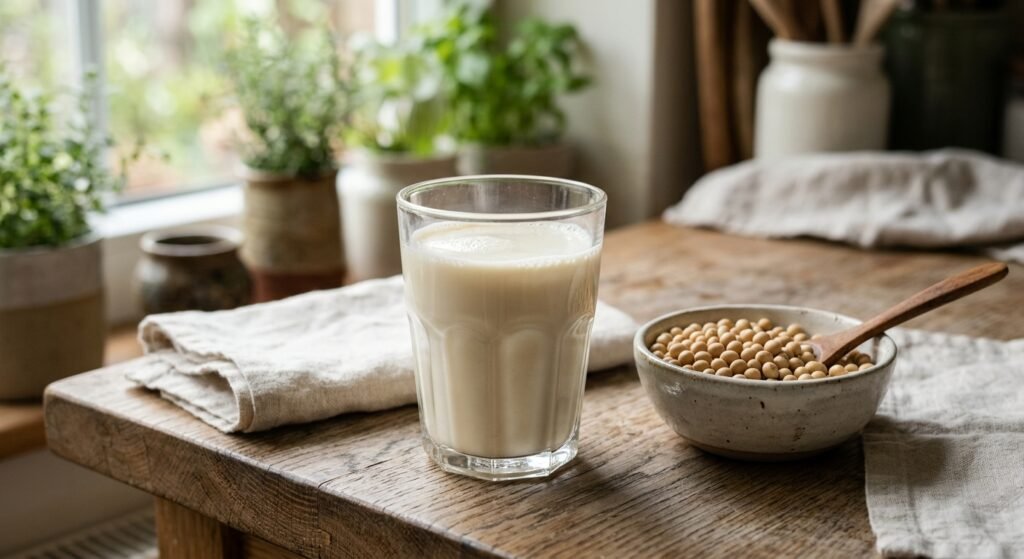
Homemade soy milk is made by soaking dried soybeans, blending them with water, straining out the solids, and boiling the liquid until safe to drink. For 1 cup of dried soybeans, use roughly 6 cups of water to yield about 5 cups of soy milk. Add sugar, sesame, or ginger for flavor.
Homemade soy milk is a creamy, protein-rich drink that's been a breakfast staple across China, Taiwan, and Korea for generations. It has a nutty, naturally sweet flavor that's far richer than most store-bought cartons, and it's popular because it skips the stabilizers, gums, and added flavorings found in commercial versions. Making it at home also means you control the thickness, sweetness, and flavor exactly to your taste.
Why Make Homemade Soy Milk?
Homemade soy milk beats the store-bought version on a few fronts. There are no additives, preservatives, or artificial flavors just soybeans and water. It's also considerably cheaper per serving than premium soy milk brands, and it cuts down on packaging waste since you're not buying cartons every week. Best of all, you can customize the sweetness, texture, and flavor however you like, whether that's a plain, lightly salted version or something sweeter with dates.
| Benefit | Why It Matters |
| No additives | Just soybeans and water nothing artificial |
| Lower cost | Dried soybeans cost far less per serving than cartons |
| Less waste | No cartons or plastic packaging |
| Customizable | Adjust sweetness, thickness, and flavor to taste |
Soy Bean Drink Recipe: Ingredients and Equipment
A soy bean drink recipe requires just a handful of ingredients and basic kitchen tools. The core ingredient is dried soybeans, soaked and blended with water. Optional add-ins like dates, sugar, sesame seeds, or ginger allow for flavor customization. You'll need a blender, a straining tool, and containers for storage.
Ingredients:
- 1 cup (about 170g) dried soybeans, organic and non-GMO if possible
- 6 cups water (for cooking/blending)
- Optional: 2 pitted dates, 1–2 tbsp sugar, 1 tsp toasted sesame seeds, 1 tbsp black sesame powder, 1-inch piece fresh ginger, ¼ tsp salt
Equipment:
- Blender or food processor
- Fine-mesh strainer or nut milk bag
- Large pot
- Storage containers or jars
Tips for sourcing beans: Look for organic, non-GMO dried soybeans at Asian grocery stores or specialty retailers. Fresher beans soak more evenly and produce a smoother, less bitter milk.
How to Make Soya Drink at Home: Step-by-Step
Making soya drink at home involves four main stages: soaking, cooking, blending, and straining. Soak the beans, cook them until soft, blend with fresh water into a smooth puree, then strain and re-boil the liquid. This two-step cooking process is essential for both texture and safety.
Soaking Time by Water Temperature
Soaking time varies depending on water temperature. Use this table as a guide:
| Water Temperature | Soaking Time |
| 80°F | 8 hours |
| 70°F | 10 hours |
| 60°F | 13.5 hours |
| 50°F | 17.5 hours |
A simple readiness test: a properly soaked bean should squeeze easily into two flat, evenly yellow halves that split cleanly.
Step-by-Step Instructions
- Soak the beans. Rinse 1 cup of dried soybeans and soak according to the table above (overnight is easiest for most home cooks).
- Boil the beans. Drain and rinse soaked beans, then boil in fresh water on high heat for about 15 minutes, uncovered. Reduce heat and simmer covered for another 5 minutes until soft.
- Cool and portion. Drain, rinse under cold water, and let cool. At this point, you can freeze portions for later use.
- Blend. Combine cooked beans with fresh water (see ratio table below) in a blender. Blend on high for 1–2 minutes until smooth and creamy.
- Strain. Pour the blended mixture through a fine-mesh strainer or nut milk bag, pressing firmly to extract all liquid. Repeat with a small amount of fresh water for a second pressing.
- Re-boil. Bring the strained milk to a gentle simmer for about 5 minutes, stirring frequently. This step is necessary because soybean protein needs sustained heat to become fully digestible, according to Andrea Nguyen's Asian Tofu (2011).
- Flavor and serve. Add sugar, salt, or other flavorings while the milk is still warm, then cool or chill before serving.
Important: Never drink raw or undercooked soy milk. Raw soybeans contain trypsin inhibitors, antinutrients that must be deactivated through soaking, grinding, and thorough heating (PMC9525506, NIH).
Soy Drink Recipe Healthy: Ratios for Richness
A soy drink recipe can be adjusted for richness simply by changing the water ratio. More water produces a lighter, lower-calorie drink; less water produces a creamier, richer one. Choose based on how you plan to use the milk drinking plain versus using it in coffee or baking.
| Style | Water per 1 Cup Cooked Beans | Texture |
| Rich | 4 cups | Thick, creamy |
| Medium | 6 cups | Balanced, standard |
| Light | 8 cups | Thin, lower-calorie |
Is Homemade Soy Milk Healthy?
Yes. Homemade soy milk is naturally high in protein, low in saturated fat, and free from the preservatives found in many packaged brands. A standard 1-cup (240ml) serving contains an estimated 130–160 kcal, with roughly 8–9g of protein and 6–7g of fat when unsweetened. These figures are estimates and will vary based on bean quality and how much liquid is pressed from the okara (soybean pulp).
Flavor Variations
Homemade soy milk is easy to customize. Here are popular variations, with suggested amounts per 1 cup (240ml) of finished milk:
| Variation | Add-In | Amount |
| Classic plain | Toasted sesame seeds + salt | 1 tsp seeds, ¼ tsp salt |
| Sweet | Sugar or pitted dates | 1 tbsp sugar or 1 date (~66 kcal) |
| Black sesame | Black sesame powder | 1 tbsp |
| Ginger-infused | Fresh ginger | 1-inch cube, blended in |
Each teaspoon of added sugar contributes roughly 16 kcal, so adjust sweetness gradually to taste.
Soy Drink Recipe Chinese: Serving Traditions
A Chinese soy drink recipe is often served either sweet or savory, depending on region. In Shanghai, savory dou jiang is a breakfast staple, served warm with a drizzle of soy sauce, scallions, and crispy youtiao (fried dough) for dipping. In Taiwan, soy milk is typically enjoyed sweetened, often alongside green onion pancakes or egg pancakes. Both styles rely on the same base recipe only the toppings and flavorings differ.
Common Troubleshooting Tips
Why Does My Soy Milk Taste Beany or Bitter?
A beany or bitter taste usually comes from incomplete blanching or grinding at too low a temperature. Blending and cooking soybeans at temperatures above 80°C significantly reduces beany flavors, according to a study published in PubMed (21535711). If your milk tastes off, try boiling the beans longer before blending.
How Do I Prevent Boil-Over?
Soy milk foams up quickly and can boil over in seconds. Watch the pot closely once you see foam begin to rise (typically within 3–6 minutes), and remove it from heat briefly if it climbs too fast.
Why Is My Soy Milk Grainy?
Grainy texture usually means the milk wasn't strained thoroughly. Use a fine-mesh strainer or nut milk bag, and press firmly doing a second pressing with a splash of fresh water helps extract maximum liquid while leaving the grit behind.
What Do I Do with the Leftover Soy Pulp (Okara)?
Don't throw away the okara. It can be folded into banana bread, added to overnight oats, or stir-fried with herbs and soy sauce as a savory side dish, as suggested by home cooks at Cooking Therapy and Maangchi. Okara keeps in the fridge for up to 1 week or can be frozen for several months.
Storage and Shelf Life
| Item | Storage Method | Shelf Life |
| Blended soy milk | Refrigerator | Up to 3 days |
| Cooked soybeans (pre-blend) | Freezer, portioned bags | Several months |
| Soaked beans (in soaking liquid) | Refrigerator | Up to 2 days |
| Soaked beans (drained) | Refrigerator | Up to 5 days |
| Okara (soy pulp) | Refrigerator | Up to 1 week |
To reheat frozen cooked soybean portions, thaw in the fridge overnight, then blend with fresh hot water as usual. This method lets you make a fresh batch any morning without re-soaking from scratch.
Recipe Card
Homemade Soy Milk
- Prep time: 10 minutes (plus 8–17.5 hours soaking)
- Cook time: 25 minutes
- Yield: About 5 cups
- Servings: 5 (1 cup each)
- Calories: ~140 kcal per serving (estimate)
Ingredients:
- 1 cup (170g) dried soybeans
- 6 cups water (for cooking and blending)
- Optional: sugar, dates, sesame seeds, black sesame powder, ginger, salt
Instructions:
- Soak soybeans per the temperature table above.
- Boil soaked beans 15 minutes, then simmer covered 5 minutes.
- Cool, drain, and portion (freeze extra for later).
- Blend cooked beans with fresh water, 1–2 minutes until smooth.
- Strain through a fine-mesh strainer or nut milk bag, pressing well.
- Re-simmer strained milk for 5 minutes.
- Add flavorings, cool, and serve or refrigerate.
Frequently Asked Questions
How much soy milk does 1 cup of dried soybeans make?
One cup of dried soybeans blended with about 6 cups of water yields roughly 5 cups of finished soy milk, enough for five 1-cup servings.
How long should I soak soybeans before making soy milk?
Soaking time depends on water temperature: 8 hours at 80°F, 10 hours at 70°F, 13.5 hours at 60°F, or 17.5 hours at 50°F.
Why do I need to boil soy milk twice?
The first boil cooks the beans before blending; the second 5-minute simmer after straining ensures the protein is fully cooked and digestible, per Andrea Nguyen's Asian Tofu (2011).
How many calories are in a cup of homemade soy milk?
A standard 1-cup (240ml) serving of unsweetened homemade soy milk contains an estimated 130–160 kcal, with about 8–9g of protein.
How long does homemade soy milk last in the fridge?
Blended soy milk keeps for up to 3 days when refrigerated in an airtight container.
Can I freeze homemade soy milk?
It's better to freeze the cooked soybeans in portioned bags rather than the blended milk, then blend fresh with hot water when ready to drink.
Why does my soy milk taste bitter or beany?
A beany flavor often results from insufficient heat during blending. Grinding and cooking above 80°C reduces this effect significantly, per a PubMed study (21535711).
How long does soy pulp (okara) last?
Okara keeps refrigerated for up to 1 week or can be frozen for several months for later use in baking or stir-fries.
What's the ratio for rich versus light soy milk?
Use 4 cups of water per cup of cooked beans for a rich, creamy texture, 6 cups for a balanced medium texture, or 8 cups for a lighter, thinner drink.
Is homemade soy milk safe to drink without boiling?
No. Raw soybeans contain trypsin inhibitors that must be deactivated through soaking, grinding, and thorough boiling before the milk is safe to drink (PMC9525506, NIH).
- 1 cup dried soybeans, organic and non-GMO if possible (about 170g)
- 6 cups water (for cooking/blending)
- Optional: 2 pitted dates, 1–2 tbsp sugar, 1 tsp toasted sesame seeds, 1 tbsp black sesame powder, 1-inch piece fresh ginger, ¼ tsp salt
- 1 Soak SoybeansSoak the beans. Rinse 1 cup of dried soybeans and soak according to the table above (overnight is easiest for most home cooks).
- 2
Boil SoybeansBoil the beans. Drain and rinse soaked beans, then boil in fresh water on high heat for about 15 minutes, uncovered. Reduce heat and simmer covered for another 5 minutes until soft.- 3
Cool and Portion BeansCool and portion. Drain, rinse under cold water, and let cool. At this point, you can freeze portions for later use.- 4
Blend Cooked SoybeansBlend. Combine cooked beans with fresh water (see ratio table below) in a blender. Blend on high for 1–2 minutes until smooth and creamy.- 5
Strain Soy MilkStrain. Pour the blended mixture through a fine-mesh strainer or nut milk bag, pressing firmly to extract all liquid. Repeat with a small amount of fresh water for a second pressing.- 6
Re-Boil Soy MilkRe-boil. Bring the strained milk to a gentle simmer for about 5 minutes, stirring frequently. This step is necessary because soybean protein needs sustained heat to become fully digestible, according to Andrea Nguyen's Asian Tofu (2011).- 7
Add Flavorings and ServeFlavor and serve. Add sugar, salt, or other flavorings while the milk is still warm, then cool or chill before serving. - 2