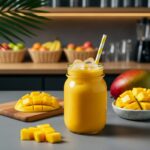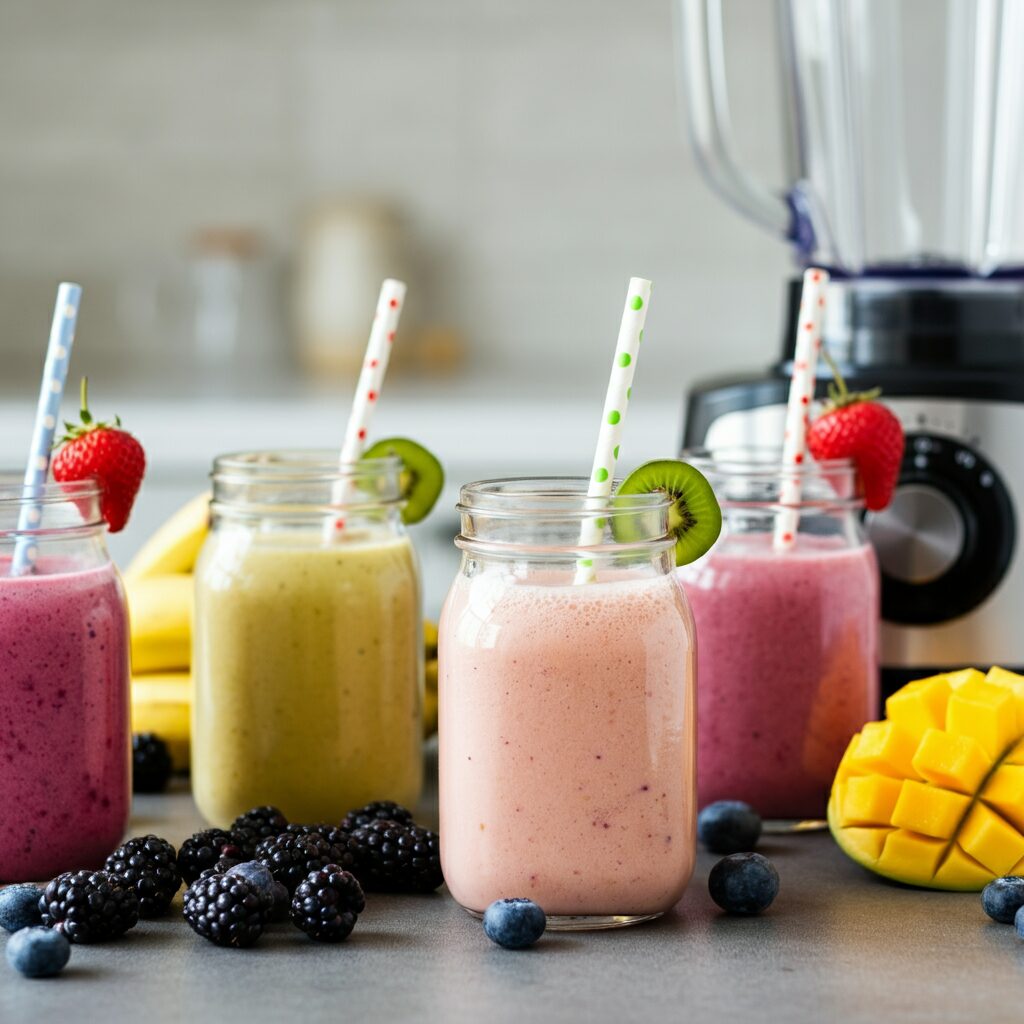
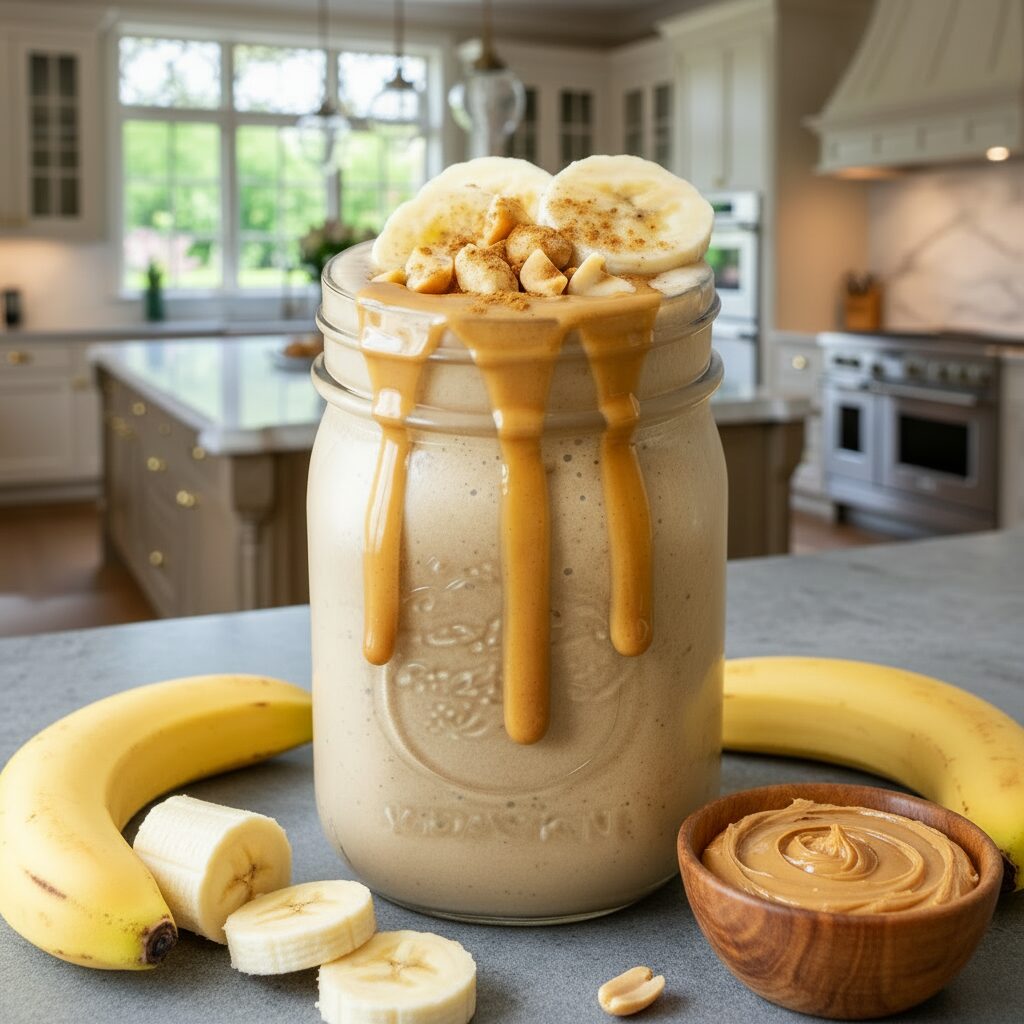
There are few flavor pairings as iconic as peanut butter and banana. Whether you grew up eating them on toast or you rely on them for post-workout recovery, this combination offers a perfect balance of salty, sweet, and creamy.
While smoothie chains charge premium prices for this classic blend, making it at home is significantly cheaper, healthier, and fully customizable.
Why This Recipe Works
This smoothie relies on a “trifecta” of ingredients that serve functional purposes beyond just flavor:
Frozen Bananas
These act as the ice, providing a thick, milkshake-like texture without watering down the flavor. They also provide natural sweetness, reducing the need for added sugar.
Peanut Butter
Provides healthy fats and protein, which helps slow digestion and keeps you full longer.
Liquid Base
Whether dairy or plant-based, the liquid unifies the ingredients into a sippable consistency.
The Core Recipe
This ratio yields one large serving (approx. 16 oz) or two smaller snack servings.
Ingredients
- 2 Bananas: Frozen, peeled, and broken into chunks.
- 2 Tablespoons Peanut Butter: Creamy natural peanut butter is best for texture; crunchy adds texture but can get stuck in straws.
- ½ Cup Greek Yogurt: Plain or vanilla (optional, for extra protein and creaminess).
- ¾ to 1 Cup Milk: Dairy, almond, oat, or soy.
- 1 Teaspoon Honey or Maple Syrup: Optional, depending on banana ripeness.
- ½ Teaspoon Vanilla Extract: Enhances the sweetness.
Instructions
Prep
Add the liquid (milk) and yogurt to the blender first. This helps lubricate the blades and ensures a smoother blend.
Add Solids
Add the peanut butter, sweetener, and frozen banana chunks on top.
Blend
Start on low speed to break up the banana, then increase to high speed. Blend for 45-60 seconds until completely smooth.
Adjust
If the mixture is too thick, add a splash more milk. If too thin, add a few ice cubes or another half banana.
Cost Analysis: Homemade vs. Smoothie Chains
One of the most compelling reasons to make this at home is the “inflation-proof” cost. Smoothie chains often mark up ingredients by over 600%.
Here is a breakdown of the estimated cost per serving in 2024 (USD):
| Ingredient | Homemade Cost (Est.) |
| 2 Bananas | $0.50 |
| 2 Tbsp Peanut Butter | $0.20 |
| 1 Cup Almond Milk | $0.35 |
| ½ Cup Greek Yogurt | $0.65 |
| Total Homemade Cost | $1.70 |
Commercial Comparison:
- Jamba Juice (PB Mood): $7.50 – $9.25
- Smoothie King (The Hulk): $7.00 – $9.50
- Tropical Smoothie Cafe: $6.50 – $8.00
The Verdict: You can make roughly four to five smoothies at home for the price of buying one at a chain.
Nutritional Breakdown
The nutritional profile of your smoothie changes drastically based on the milk and protein base you choose. Below is a comparison of a standard recipe (using the ratios above).
Nutritional Values (Per 16oz Serving)
| Component | Whole Milk Base | Unsweetened Almond Milk Base |
| Calories | ~520 | ~410 |
| Protein | 22g | 16g |
| Carbohydrates | 65g | 58g |
| Fat | 24g | 18g |
| Sugars (Natural) | 38g | 28g |
Note: Values are estimates based on standard ingredient databases. Greek yogurt is included in both calculations.
Key Nutrients
- Potassium: Bananas are rich in potassium (approx. 422mg per medium banana), which aids in muscle function and fluid balance.
- Healthy Fats: Peanut butter provides monounsaturated fats, which are heart-healthy and essential for nutrient absorption.
- Calcium: If using dairy milk or fortified plant milk, this smoothie is a significant source of calcium.
Texture and Consistency Guide
The difference between a mediocre smoothie and a great one usually comes down to texture.
For a Drinkable Smoothie
Use a 1:1 ratio of frozen ingredients to liquid. If you are using 1 cup of frozen bananas, use 1 cup of milk. Omitting yogurt will also make the drink thinner and easier to sip through a straw.
For a Smoothie Bowl (Spoonable)
Use a 2:1 ratio of frozen ingredients to liquid.
You need the mixture to be thick enough to support toppings like granola, chia seeds, and sliced fruit.
You may need a tamper tool for your blender to push the ingredients down toward the blades.
The “Ice” Debate
Many recipes call for ice, but culinary professionals generally advise against it for this specific flavor profile.
Ice crystals melt and water down the rich, creamy flavor of the peanut butter. Always freeze your bananas ahead of time to act as the cooling agent.
If you must use fresh bananas, freeze milk in an ice cube tray to maintain the creamy texture.
Variations and Customizations
This recipe is a blank canvas. Here is how to adapt it to specific dietary goals:
High-Protein (Post-Workout)
- Add: 1 scoop of vanilla or chocolate whey protein powder.
- Swap: Use ultra-filtered milk (like Fairlife) or soy milk, both of which have higher protein counts than almond milk.
- Benefit: Increases protein content to 30g+, aiding in muscle recovery.
The “Chunky Monkey” (Dessert)
- Add: 1 tablespoon of unsweetened cocoa powder or a handful of cacao nibs.
- Swap: Use chocolate milk as the base.
- Benefit: Satisfies a sweet tooth with natural sugars rather than processed candy.
Low-Calorie / Weight Loss
- Swap: Use powdered peanut butter (PB2) instead of jarred peanut butter.
- Result: This cuts about 150 calories and 14g of fat while retaining the peanut flavor.
Frequently Asked Questions
Can I use almond butter instead of peanut butter?
Yes. Almond butter has a milder, nuttier flavor and a slightly grittier texture. Cashew butter is another excellent alternative that is sweeter and creamier than almonds.
My bananas are turning brown. Are they okay to use?
Brown bananas are actually superior for smoothies. As bananas ripen, their starch converts to sugar, making them naturally sweeter and softer. Peel them immediately and freeze them in a dedicated bag for future smoothies.
Is this smoothie vegan?
It is naturally vegetarian. To make it vegan, ensure you use a plant-based milk (oat, soy, almond) and use maple syrup or agave instead of honey. Check your peanut butter label to ensure it does not contain added honey or milk solids.
Final Thoughts
By utilizing frozen bananas and understanding the ratios of liquid to solid, you can create a breakfast or snack that rivals any high-end smoothie shop for a fraction of the price.
Whether you need a protein-packed recovery drink or a kid-friendly breakfast, this recipe is the perfect starting point.

Naeem is a passionate drink enthusiast and recipe curator behind DrinkWhisper.com. With 10 years of exploring cafes, bars, and home mixology trends, he shares inspiring drinks, creative cocktails, and refreshing non alcoholic recipes for every occasion.