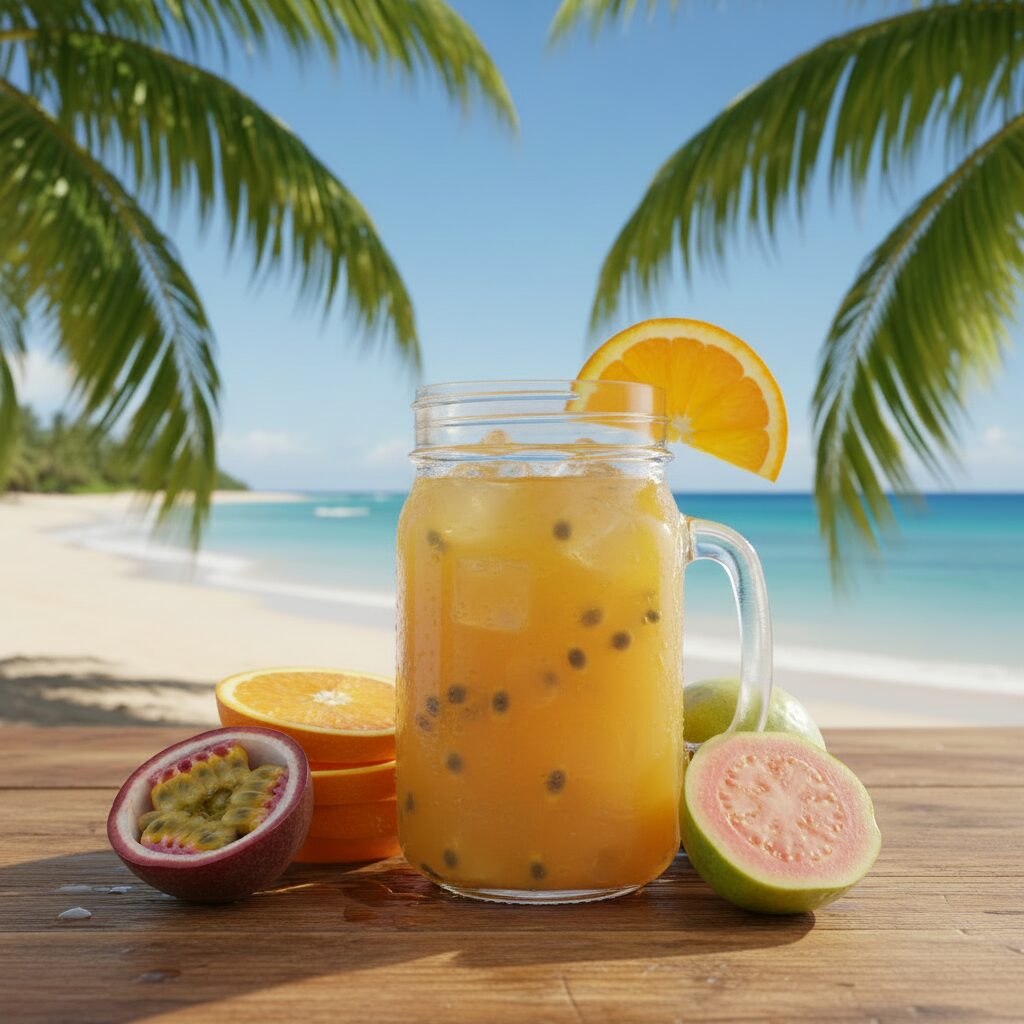
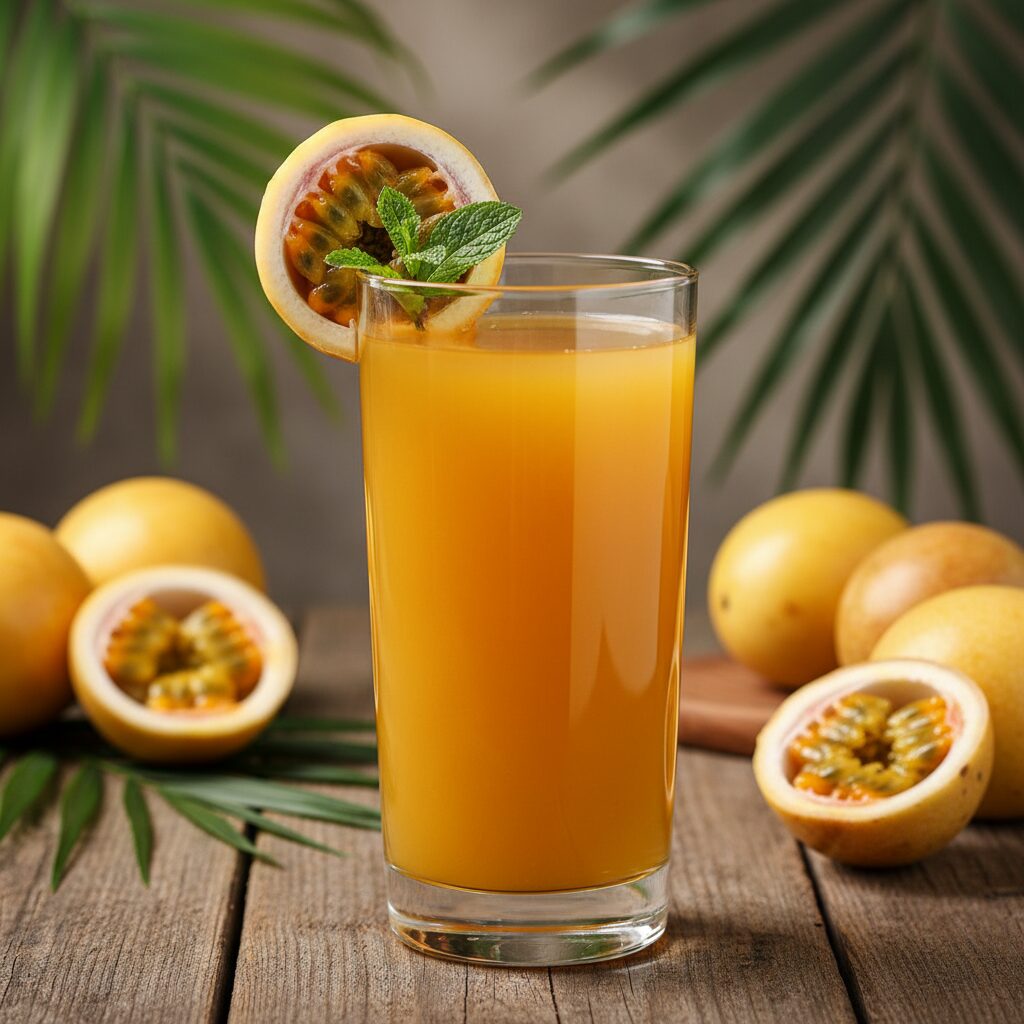
If you have ever sliced open a wrinkled, deep-purple fruit to reveal vibrant golden pulp and an intoxicating aroma, you likely already understand the appeal of passion fruit.
Known as maracuyá in Spanish or maracujá in Portuguese, this tropical staple is celebrated for its intense sweet-tart flavor profile.
While often used as a garnish in high-end desserts, passion fruit juice is a nutritional powerhouse and a versatile beverage base that deserves a spot in your daily routine.
Understanding the Fruit: Varieties and Taste Profile
Before juicing, it helps to know what you are buying. Passion fruit comes in two main varieties, each offering a distinct experience for your palate.
Purple vs. Yellow
Purple Passion Fruit (Passiflora edulis)
This variety is generally smaller with a deep purple rind. It is known for being sweeter and less acidic, making it the preferred choice for eating raw or making fresh juice without excessive added sugar.
Yellow Passion Fruit (Passiflora flavicarpa)
Larger and often more tart, the yellow variety has a stronger floral acidity. It is excellent for juices but typically requires more sweetener or dilution with water to balance the flavor.
When is it Ripe?
A common mistake is buying smooth, shiny fruit. For the sweetest juice, look for fruit that feels heavy for its size (indicating high juice content) and has slightly wrinkled skin.
As the skin wrinkles, the pulp inside becomes sweeter and more aromatic.
Nutritional Breakdown
Passion fruit juice is not just flavorful; it is nutrient-dense. It is particularly noted for its high Vitamin C content, which supports immune health, and antioxidants like beta-carotene.
Below is a nutritional breakdown for a standard 1-cup (247g) serving of raw, purple passion fruit juice.
| Nutrient | Amount per Cup | % Daily Value (approx.) |
| Calories | 126 | – |
| Carbohydrates | 33g | 11% |
| Sugars | 33g | – |
| Vitamin C | 71mg | 82% |
| Riboflavin (B2) | 0.3mg | 25% |
| Potassium | 687mg | 15% |
| Vitamin A | 89µg | 10% |
Note: Nutritional values can vary based on the specific variety of fruit and added water or sweeteners.
Health Benefits
Beyond the raw numbers, the antioxidants in passion fruit juice help combat oxidative stress.
The fruit is also traditionally associated with relaxation; compounds in the fruit may have mild anxiolytic (anti-anxiety) properties, potentially aiding in stress reduction and better sleep.
How to Make Passion Fruit Juice at Home
Making juice at home ensures you get 100% natural flavor without preservatives. There are two primary methods: the manual method (for clear juice) and the blender method (for a thicker texture).
Method 1: The Manual Sieve (Best for Clear Juice)
This method is gentle and prevents the seeds from breaking, which can sometimes release a bitter flavor.
Prep
Slice 8–10 ripe passion fruits in half.
Heat (Pro Tip)
Scoop the pulp into a small saucepan and warm gently for 3 minutes. Do not boil. This heat helps liquefy the pulp, making it easier to separate from the seeds.
Strain
Pour the warmed pulp into a fine-mesh sieve over a bowl or pitcher. Use the back of a spoon to press the pulp firmly against the mesh to extract every drop of liquid.
Mix
You will be left with a concentrated tart puree. Dilute this with water (typically a 1:3 ratio of puree to water) and sweeten with sugar, honey, or agave to taste.
Method 2: The Blender Pulse (Best for Speed)
Scoop
Place the pulp of 8–10 fruits into a blender.
Pulse
Add 1 cup of water. Pulse on the lowest setting for just a few seconds. The goal is to loosen the pulp from the seeds, not to pulverize the seeds.
Strain
Pour the mixture through a strainer to catch the seeds.
Dilute
Add more water and sweetener to reach your desired consistency and sweetness.
Price Comparison: DIY vs. Store-Bought
Is it cheaper to make it yourself or buy a bottle? That depends on your location and the quality you require.
Fresh passion fruit can be expensive when out of season, but bottled options range from budget-friendly beverages to premium, cold-pressed cocktail mixers.
| Product Type | Brand Example | Approx. Price | Volume | Best Use |
| Budget / Pantry | De Mi Pais | $2.12 – $2.62 | 16.5 oz (490ml) | Casual drinking, smoothies |
| Premium / Cold Pressed | Twisted Alchemy | $25.00 | 25.4 oz (750ml) | High-end cocktails, culinary foams |
| DIY (Fresh Fruit) | Local Market | Varies by season | Varies | Fresh eating, pure flavor |
| Frozen Pulp | Goya / La Fe | $3.00 – $5.00 | 14 oz (414ml) | Baking, bulk juicing |
If you are making cocktails where texture and purity matter, investing in premium cold-pressed juice or making it from fresh fruit is worth the cost.
For smoothies or casual sipping, budget brands or frozen pulp offer excellent value.
Serving Styles and Culinary Uses
While delicious on its own over ice, passion fruit juice is a versatile ingredient in the kitchen.
The Brazilian Way
In Brazil, suco de maracujá is often blended with sweetened condensed milk to make a creamy, rich mousse, or simply mixed with water and sugar for a refreshing lunch beverage.
Cocktails
The high acidity makes it a perfect replacement for lime or lemon in tropical drinks. It is the key ingredient in the famous “Porn Star Martini” and the New Orleans classic, the “Hurricane.”
Salad Dressings
Reduce the juice slightly on the stove to concentrate the flavor, then whisk with olive oil, honey, and a pinch of salt for a tropical vinaigrette that pairs well with grilled shrimp or chicken.
Frequently Asked Questions
Is it safe to eat the seeds?
Yes, passion fruit seeds are fully edible. They are crunchy and high in fiber. Many people enjoy the texture they add to yogurt or smoothies.
However, if you are drinking the juice, you may prefer to strain them out for a smoother experience.
How long does fresh juice last?
Freshly made passion fruit juice should be stored in the refrigerator and consumed within 4 to 5 days. For long-term storage, you can freeze the juice (or the pulp) for up to 6 months without significant loss of flavor.
Why is my homemade juice too sour?
Passion fruit is naturally very tart, especially the yellow variety. It is rarely drunk as 100% pure juice.
Standard preparation involves diluting the puree with water and adding a sweetener like simple syrup or honey to balance the acidity.
Does passion fruit juice contain caffeine?
No, passion fruit juice is naturally caffeine-free. However, because of its refreshing, tart nature, it is sometimes used in energy drink blends or green tea infusions that may contain caffeine.
Always check the label on store-bought blends.
Final Thoughts
Whether you choose to invest in a premium cold-pressed bottle for your home bar or spend a Sunday afternoon straining fresh pulp for a week’s worth of vitamins, the effort is rewarded by the taste.
For those watching their sugar intake, stick to the purple variety and dilute with sparkling water. For the culinary adventurer, use the yellow variety to bring a bright, acidic punch to desserts and sauces.

Naeem is a passionate drink enthusiast and recipe curator behind DrinkWhisper.com. With 10 years of exploring cafes, bars, and home mixology trends, he shares inspiring drinks, creative cocktails, and refreshing non alcoholic recipes for every occasion.