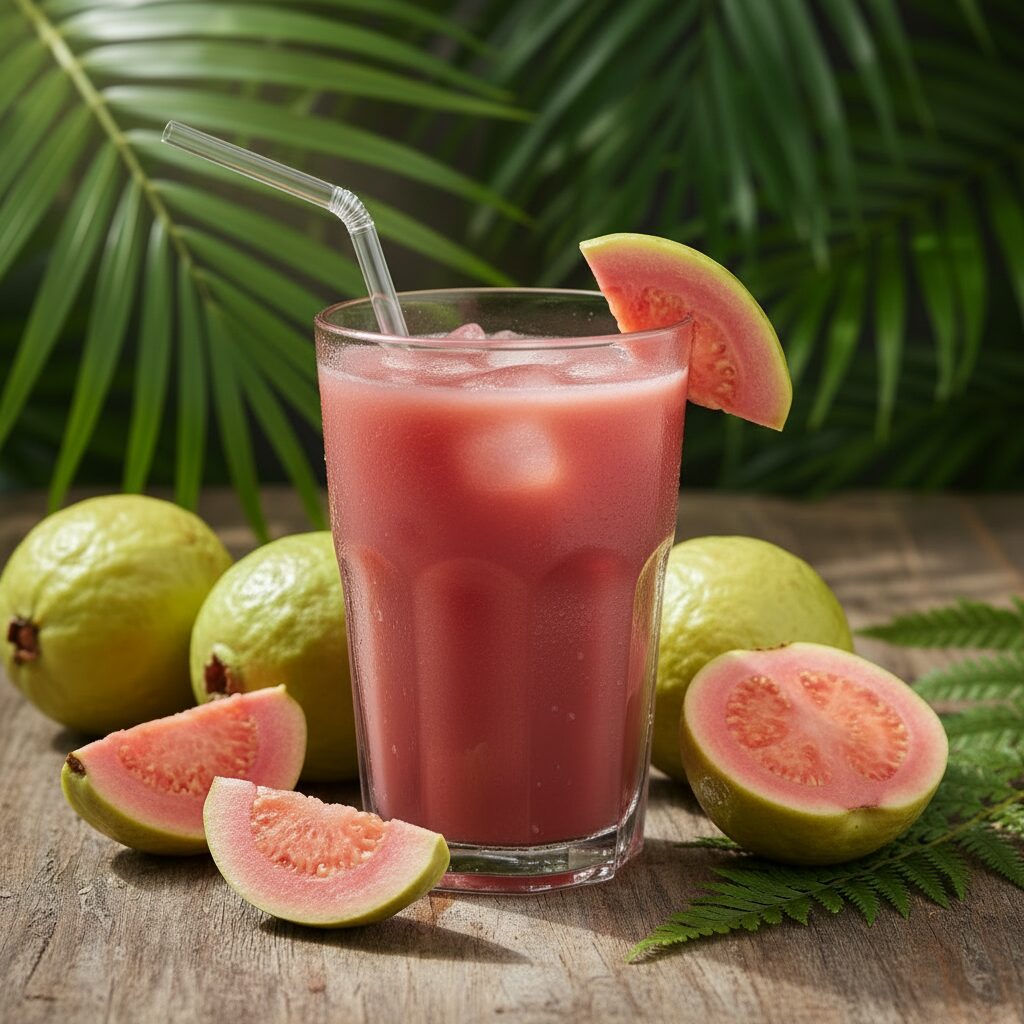
While orange juice often claims the spotlight for Vitamin C, guava juice is the unsung hero of the fruit world.
Hailing from Central America and widely consumed across Mexico, the Caribbean, and Asia, this tropical beverage is often referred to as a “superfood” for good reason.
However, not all guava juice is created equal. From sugary shelf-stable nectars to fresh-pressed aguas frescas, nutritional value and price can vary wildly.
Nutritional Profile: What’s Inside 8 oz?
When analyzing guava juice, it is critical to distinguish between fresh-pressed juice (often homemade or high-end cold-pressed) and guava nectar (commonly found in grocery store cartons).
Nectars usually contain added water and sweeteners because pure guava pulp is too thick to drink alone.
Caffeine Content: Guava juice is naturally 100% caffeine-free, making it a safe choice for children or evening consumption.
Here is a comparison of typical nutritional values for a standard 1 cup (8 fl oz / 240 ml) serving:
| Nutrient | Fresh Guava Juice (Raw, No Sugar Added) | Store-Bought Guava Nectar (Pasteurized) |
| Calories | ~110 – 130 kcal | ~140 – 160 kcal |
| Total Carbohydrates | 25g – 30g | 35g – 40g |
| Dietary Fiber | 8g (High) | < 1g (Pulp is often strained) |
| Sugars | 22g (Natural) | 30g+ (Includes added sugars) |
| Protein | 4g | < 1g |
| Vitamin C | 300%+ Daily Value | 60% – 100% Daily Value |
Note: Nutritional values can vary by brand and preparation method.
Health Benefits of Guava Juice
Guava is a nutritional powerhouse. However, to maximize these benefits, opt for cloudy juices that retain some pulp, or fresh varieties.
1. Immune System Support
Guava is one of the richest food sources of Vitamin C. A single serving of fresh juice can provide more than double the daily recommended intake, significantly more than oranges.
This supports white blood cell function and helps the body fight off infections.
2. Heart Health and Blood Pressure
Guava is high in potassium and sodium-free. Potassium helps counteract the effects of sodium in your diet, which aids in regulating blood pressure.
Additionally, soluble fiber found in the fruit pulp may help lower “bad” LDL cholesterol.
3. Digestive Aid
This benefit depends entirely on the pulp. Fresh guava juice that retains the pulp is an excellent source of dietary fiber, which aids bowel movements.
Clear, processed nectars remove this fiber, nullifying this specific benefit.
4. Antioxidant Properties
The fruit is rich in lycopene (especially in pink guavas) and flavonoids. These antioxidants combat oxidative stress in the body, potentially reducing the risk of chronic diseases and supporting skin health.
Varieties and Taste Profile
Understanding the type of guava used can help you choose the flavor profile that suits you best.
Pink Guava
- Taste: Sweet, highly fragrant, and musky.
- Best For: Juices, desserts, and cocktails.
- Appearance: This is the variety most commonly used for “Guava Nectar” due to its appealing color and stronger tropical scent.
White Guava
- Taste: Tart, slightly acidic, and crisp (similar to a pear or granny smith apple).
- Best For: Health shots, green juices, and eating raw with chili salt.
- Nutritional Note: White guavas often contain even more Vitamin C than their pink counterparts, though they have less lycopene.
Price Guide: What Should You Pay?
One of the biggest questions consumers have is regarding cost. Guava juice prices fluctuate significantly based on processing and convenience.
Grocery Store Nectar (Cartons/Cans)
- Brands: Goya, Kern’s, Jumex, Ceres.
- Price: $2.50 – $4.50 USD per 32oz (1 Liter) carton.
- Verdict: Most affordable, but check the label for “High Fructose Corn Syrup.”
Premium/Imported Juice
- Brands: Alain Milliat, specialized Asian imports.
- Price: $8.00 – $12.00 USD per bottle.
- Verdict: Higher fruit content, better flavor, usually glass-bottled.
Juice Bars & Cold Pressed
- Format: Freshly made smoothies or cold-pressed blends.
- Price: $9.00 – $14.00 USD per 16oz serving.
- Verdict: Most expensive, but offers the highest nutritional retention (enzymes and vitamins).
Homemade (DIY)
- Cost: Fresh guavas typically cost $4.00 – $7.00 USD per pound.
- Verdict: Requires labor (deseeding is difficult), but allows total control over sugar.
How to Select and Serve
Shopping Tips
- Look for “100% Juice”: Many products are labeled “Guava Drink” or “Cocktail,” which means they are mostly water and sugar with very little fruit.
- Check the Sediment: Good guava juice should be cloudy. Sediment at the bottom of the bottle usually indicates real fruit pulp is present.
Serving Styles
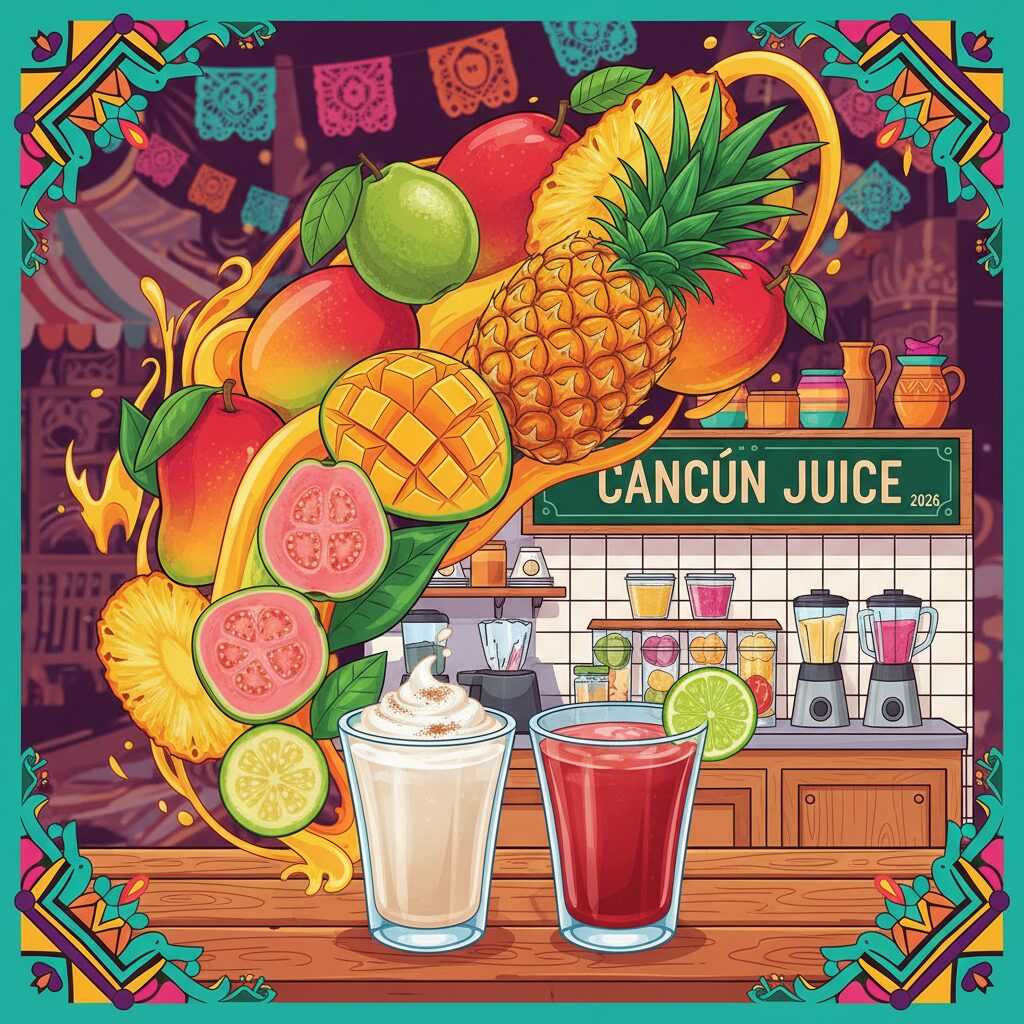
- Agua Fresca (Mexican Style): Fresh guava puree blended with water and sugar. It is much thinner and more refreshing than nectar.
- The Nectar Pour: Served thick over ice. Often used as a mixer for tropical cocktails.
- The Smoothie Base: Because of its high pectin content, blended guava creates a creamy texture without adding dairy, making it perfect for vegan smoothies.
How to Make Fresh Guava Juice at Home
Choose and Prepare the Guavas
Start by selecting four to five ripe guavas, look for fruits that are soft to the touch and highly fragrant. Wash them thoroughly, trim the ends, and chop them into small pieces.
You can keep the skin and seeds, as they’re full of nutrients.
Blend the Guavas
Place the chopped guava pieces into a blender with about four cups of water. Blend until the mixture turns into a smooth, thick pulp.
Strain the Juice
Pour the blended mixture through a fine-mesh sieve or cheesecloth into a pitcher. Press down firmly to separate the juice from the pulp and seeds, extracting as much liquid as possible.
Add Sweetness and Serve
For extra sweetness, stir in a small amount of sugar or honey, though ripe guavas are naturally sweet. Serve the juice chilled over ice for a refreshing drink loaded with Vitamin C and antioxidants.
Frequently Asked Questions
Is guava juice safe for diabetics?
Store-bought guava nectar is generally not recommended for diabetics due to high added sugar content and a high glycemic load. However, eating whole raw guava is often safe due to its low glycemic index and high fiber.
Does guava juice contain caffeine?
No. Guava juice is naturally caffeine-free. It provides energy through natural fruit sugars and vitamins, not stimulants.
Why is homemade guava juice sometimes gritty?
Guavas contain “stone cells” (sclereids) in their flesh, which give the fruit a gritty texture similar to a pear. To get a smooth juice at home, you must strain the puree through a cheesecloth or fine mesh sieve.
Can I drink guava juice if I have acid reflux?
Guava is acidic (rich in Vitamin C and citric acid). While it is less acidic than lemon or grapefruit, it can still trigger heartburn in sensitive individuals.
Final Thoughts: Which One is Right for You?
For the Flavor Seeker
Opt for Pink Guava Nectar. It offers that classic, sweet, tropical taste perfect for a hot day or a cocktail mixer.
For the Health Purist
Choose White Guava or Fresh-Pressed. You will endure a tart flavor and higher price point, but you gain maximum Vitamin C and fiber without the added syrup.
For the Budget Conscious
Buy Frozen Guava Pulp (found in the freezer aisle of Latino or Asian markets). It is cheaper than fresh fruit, 100% real fruit, and allows you to control the sugar and water ratio at home.

Naeem is a passionate drink enthusiast and recipe curator behind DrinkWhisper.com. With 10 years of exploring cafes, bars, and home mixology trends, he shares inspiring drinks, creative cocktails, and refreshing non alcoholic recipes for every occasion.