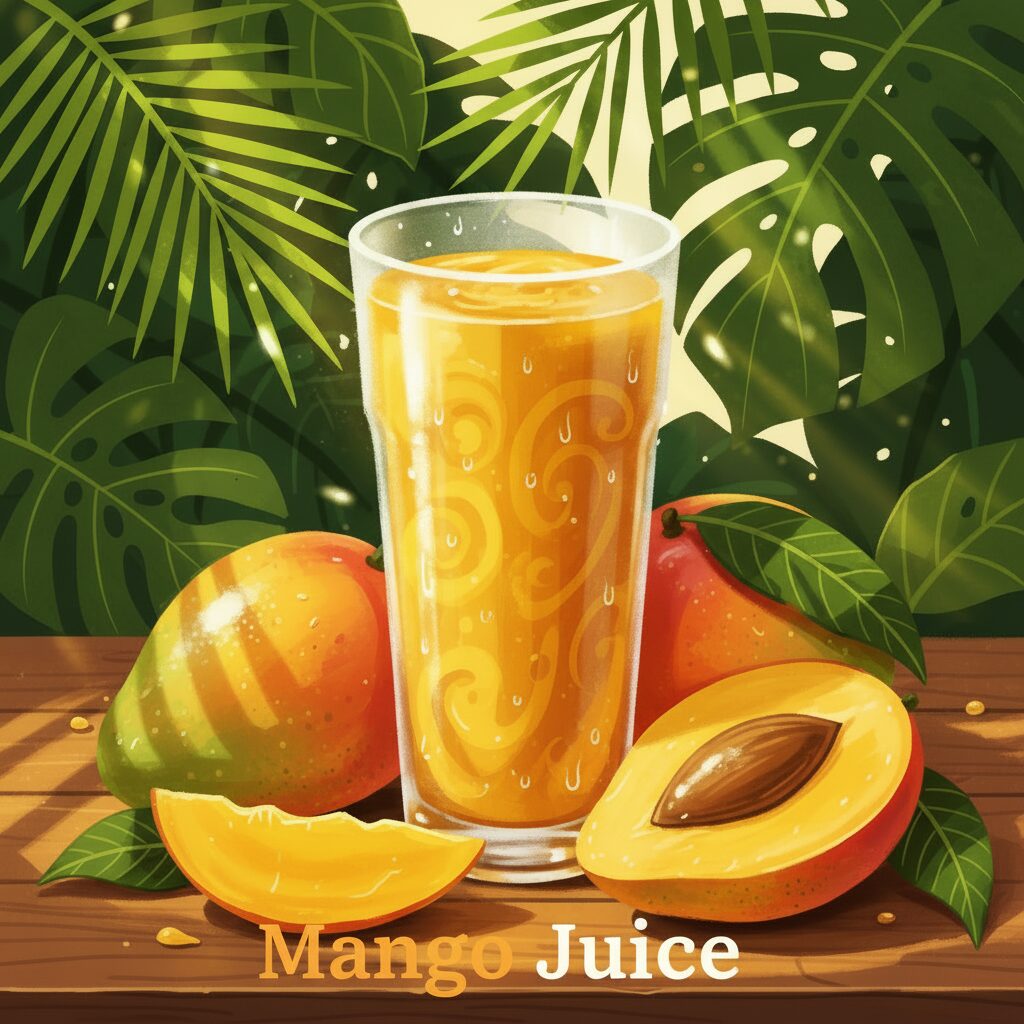
The mango is often called the “King of Fruits,” and for good reason. Its lush, velvety texture and balance of tartness and sweetness make it a global favorite.
While grabbing a bottle of nectar from the grocery store is easy, making mango juice at home offers a freshness that commercial brands simply cannot replicate.
Whether you are looking to replicate a favorite vacation drink, control your sugar intake, or
What is Mango Juice vs. Mango Nectar?
When shopping or ordering, you will often see the terms “juice” and “nectar” used interchangeably, but there is a significant difference in composition.
Mango Juice
In its purest form, this would be 100% liquid extracted from the fruit. However, because mangoes are pulpy and low in water content, 100% extracted liquid is often too thick to drink.
Mango Nectar
This is the industry standard for mango beverages. It is a blend of mango pulp (usually 25% to 50%), water, and sweetener.
Mango Smoothie
This implies the whole fruit (fiber included) is blended, often with a dairy or plant-based milk thickener.
Origin
Mangoes (Mangifera indica) originated in the region between northwestern India, Bangladesh, and northeastern India over 4,000 years ago.
History
In these cultures, mango juice isn’t just a drink; it is a seasonal ritual.
Traditional preparations often include cooling spices like cardamom or savory elements like cumin (as seen in Aam Panna), whereas Western preparations tend to focus on maximizing sweetness.
Taste Profile and Serving Styles
The taste of your juice depends entirely on the variety of mango used.
- Alphonso: Known as the gold standard; extremely sweet, creamy, and non-fibrous.
- Ataulfo (Honey): Sweet and tart with a buttery texture.
- Tommy Atkins: Mildly sweet but can be fibrous (requires straining).
Serving Variations
| Style | Description | Best For |
| Pure Nectar | Blended mango pulp + water + sugar. | A refreshing afternoon drink. |
| Spiced/Savory | Pulp + cumin + black salt + mint. | Digestion and hydration in extreme heat. |
| Creamy (Lassi) | Pulp + yogurt + milk + cardamom. | Breakfast or a filling snack. |
| Vegan Creamy | Pulp + coconut milk/water. | Lactose intolerance and tropical flavor. |
How to Make Mango Juice at Home
Making this drink at home allows you to control the texture and sweetness. Here is the definitive method.
Ingredients
- 2 Ripe Mangoes (Alphonso or Honey varieties are best).
- 1 ½ cups Liquid (Cold water, coconut water, or orange juice).
- Sweetener (Optional: 1 tbsp honey, sugar, or agave).
- Ice Cubes.
Instructions
- Prep: Wash the mangoes thoroughly. Peel the skin and slice the flesh away from the pit. Cube the flesh.
- Blend: Add mango cubes and your chosen liquid to a high-speed blender.
- Sweeten: Taste a piece of mango first. If it is tart, add your sweetener. If using orange juice as a base, you may not need extra sugar.
- Process: Blend on high until completely smooth.
- Strain (Optional): If you used a fibrous mango (like Tommy Atkins), pour the mixture through a fine-mesh sieve to remove strings. For creamy varieties, skip this step.
- Serve: Pour over ice and garnish with a sprig of mint.
Milk & Liquid Guide
Choosing the right liquid base changes the character of the drink completely.
- Water: Keeps the calorie count lower and highlights pure mango flavor.
- Coconut Water: Adds electrolytes and a tropical nutty finish.
- Dairy Milk: Creates a rich, milkshake-like consistency.
- Almond/Oat Milk: Nutty undertones; oat milk adds extra creaminess.
Nutritional Value: Homemade vs. Store-Bought
Understanding what is in your glass is crucial for health-conscious consumers. Store-bought nectars often contain high fructose corn syrup and very little actual fruit.
Nutritional Comparison (Per 8 oz / 240ml Serving)
| Nutrient | Homemade (Water Base) | Canned Mango Nectar | Jamba (Mango-A-Go-Go)* |
| Calories | ~110-130 | ~130-150 | ~275 (small) |
| Protein | 1g | 0g | 2g |
| Fat | <1g | 0g | 0g |
| Carbs | 28g | 35g | 66g |
| Sugars | 25g (Natural) | 33g (Added + Natural) | 58g |
| Fiber | 2-3g | <1g | 2g |
| Caffeine | 0mg | 0mg | 0mg |
Note: Jamba nutrition based on a small size which includes sherbet and juice blends, significantly increasing sugar content.
Caffeine Content
Mango juice is naturally 100% caffeine-free. It relies on natural fruit sugars (fructose) for an energy boost rather than stimulants, making it suitable for children and those sensitive to caffeine.
2026 Price
Inflation has impacted grocery and menu prices. Here is what you can expect to pay for mango beverages in 2026.
| Product Type | Brand / Location | Estimated Price (2026) | Serving Size |
| Fresh Smoothie | Jamba | $7.50 – $8.50 | Small (16 oz) |
| Fresh Smoothie | Smoothie King | $7.00 – $8.50 | 20 oz |
| Bottled Nectar | Grocery (Jumex/Goya) | $3.50 – $4.50 | 64 oz carton |
| Premium Juice | Grocery (Naked/Bolthouse) | $4.00 – $5.00 | 15.2 oz bottle |
| Homemade | DIY (Fresh Fruit) | $2.50 – $3.50 | Yields ~24 oz |
The Verdict: Making it at home is roughly 60% cheaper per ounce than buying a premium smoothie at a chain, and offers significantly better health value than cheap grocery store nectars.
Safety and Storage Guidelines
The Risk of Unpasteurized Juice
If you make fresh mango juice at home, it is “unpasteurized.” The CDC warns that raw fruit juice can carry bacteria like Salmonella or E. coli if the fruit was contaminated.
Risk Group
Pregnant women, the elderly, and those with compromised immune systems should be cautious with raw juice.
Solution
To pasteurize at home, bring the juice to a boil for at least 1 minute, then chill. Note that this will slightly alter the flavor.
Storage Tips
Refrigerator
Consuming within 24 hours is best for nutrient retention (Vitamin C degrades over time). It can be stored for up to 3 days in an airtight jar.
Freezer
Mango pulp freezes beautifully. Pour into ice cube trays for “instant smoothie” blocks later. Frozen pulp keeps for up to 12 months.
Frequently Asked Questions
Is mango juice good for weight loss?
Mangoes are nutrient-dense but high in natural sugar. While healthier than soda, it is calorie-dense. If weight loss is the goal, limit portion sizes or dilute the juice with water or ice.
Can I use frozen mango chunks for this recipe?
Absolutely. Using frozen chunks (thawed slightly) actually produces a frothier, colder drink without needing to add extra ice, which prevents dilution.
Does mango juice contain dairy?
Pure mango juice does not. However, “Mango Smoothies” or “Mango Lassi” ordered at restaurants often contain yogurt or milk. Always ask for ingredients if you are vegan or lactose intolerant.
Final Thoughts
While buying it from a chain is convenient, the sugar content and high price tag in 2026 make the homemade route the clear winner for health and budget.
By selecting the right mango variety and controlling your ingredients, you ensure a glass full of vitamins, not just syrup.

Naeem is a passionate drink enthusiast and recipe curator behind DrinkWhisper.com. With 10 years of exploring cafes, bars, and home mixology trends, he shares inspiring drinks, creative cocktails, and refreshing non alcoholic recipes for every occasion.