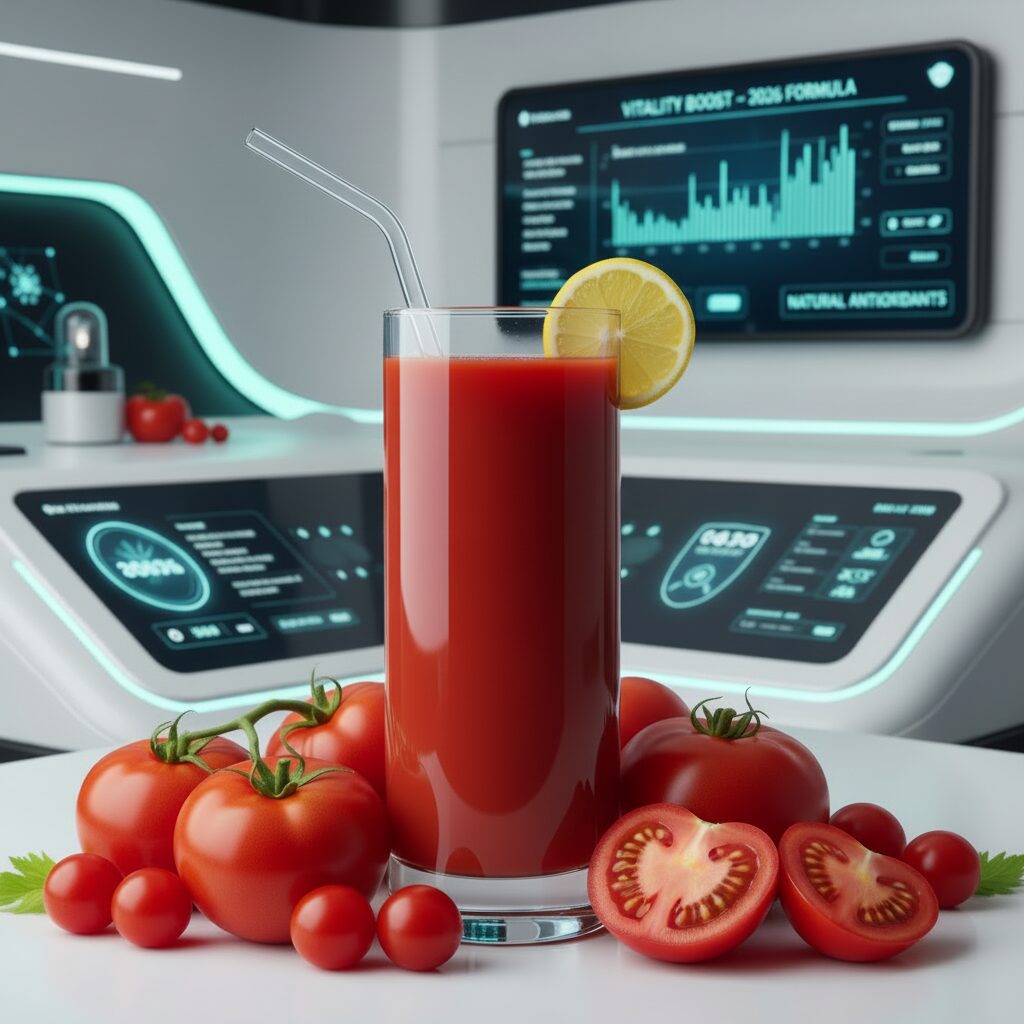
Tomato juice is often pigeonholed as a simple cocktail mixer or an airplane beverage.
However, this vibrant red drink is a nutritional powerhouse that offers significant benefits for heart health, skin protection, and immune support.
While whole tomatoes are a kitchen staple, drinking the juice offers a concentrated dose of antioxidants, specifically lycopene.
Nutritional value per Serving
One of the primary reasons health professionals recommend tomato juice is its nutrient density. It provides essential vitamins without a high calorie count.
The following table outlines the nutritional profile for a standard 8 oz (240 ml) serving of 100% canned tomato juice. Note that sodium levels vary drastically depending on the brand and whether you choose a “low sodium” option.
| Nutrient | Amount per 8 oz (240 ml) | % Daily Value (DV) |
| Calories | 41–50 kcal | – |
| Protein | 2 g | – |
| Fat | 0–0.5 g | – |
| Carbohydrates | 10–12 g | 4% |
| Sugars | 6–9 g (Naturally occurring) | – |
| Fiber | 2 g | 7% |
| Sodium (Standard) | 630–980 mg | 27–43% |
| Sodium (Low-Salt) | 140 mg or less | <6% |
| Vitamin C | 45 mg | 74% |
| Potassium | 400–550 mg | 10–16% |
| Caffeine | 0 mg | 0% |
Top Health Benefits of Tomato Juice
Drinking tomato juice offers advantages that differ slightly from eating raw tomatoes. Processing and heating tomatoes breaks down cell walls, which increases the bioavailability of certain antioxidants.
1. A Rich Source of Lycopene
Lycopene is the carotenoid responsible for the bright red color of tomatoes. It is a powerful antioxidant that protects cells from free radical damage.
Studies suggest that a diet high in lycopene may reduce the risk of prostate cancer and other forms of cancer.
Because tomato juice is pasteurized (heated), the body absorbs this lycopene more efficiently than it does from raw fruit.
2. Heart Health Support
The combination of lycopene, beta-carotene, and potassium makes tomato juice a heart-healthy choice.
- Lycopene: May help lower “bad” LDL cholesterol and reduce arterial stiffness.
- Potassium: Essential for maintaining healthy blood pressure levels by counteracting the effects of sodium.
3. Skin Protection
Antioxidants like vitamin C and beta-carotene help protect the skin from UV damage and environmental pollutants.
Regular consumption may contribute to better skin elasticity and reduced signs of aging.
4. Immune System Boost
Just one cup covers a significant portion of your daily vitamin C requirements. Vitamin C stimulates the production of white blood cells, which are the body’s first line of defense against infections and viruses.
Potential Drawbacks and Risks
While beneficial, tomato juice is not suitable for everyone.
High Sodium Content
This is the most significant drawback. Manufacturers often add salt to enhance flavor and act as a preservative.
A single cup of standard tomato juice can contain nearly half of your recommended daily sodium intake.
Excessive sodium consumption can lead to high blood pressure, negating the benefits of the potassium found in the juice. Always opt for “Low Sodium” or “No Salt Added” varieties.
Acid Reflux (GERD)
Tomatoes are naturally acidic, containing malic and citric acids.
For individuals prone to heartburn or Gastroesophageal Reflux Disease (GERD), drinking tomato juice can trigger intense symptoms.
Added Sugars in Blends
Pure tomato juice rarely contains added sugar.
However, vegetable blends (like popular juice cocktails) often mix tomato juice with fruit juices or sweeteners to improve palatability, which increases the calorie and sugar count.
2026 Price Guide: What to Expect at the Store
Food prices have fluctuated over the last few years. As of early 2026, the price of tomato juice remains relatively affordable compared to other specialty health juices.
Below is a breakdown of current price ranges for the most common package sizes found in major US retailers (such as Walmart, Kroger, and Target).
| Brand / Type | Container Size | Estimated Price (2026) | Price Per Ounce |
| Campbell’s 100% Tomato Juice | 64 fl oz (Bottle) | $4.40 – $4.90 | ~$0.07 |
| Campbell’s 100% Tomato Juice | 11.5 fl oz (6-Pack Cans) | $5.50 – $6.50 | ~$0.09 |
| V8 Original Vegetable Juice | 46 fl oz (Bottle) | $3.80 – $4.50 | ~$0.09 |
| Store Brand (Generic) | 46 fl oz (Can) | $2.50 – $3.25 | ~$0.06 |
| Premium Organic (e.g., R.W. Knudsen) | 32 fl oz (Glass Jar) | $5.50 – $7.00 | ~$0.19 |
Note: Prices vary by region and retailer. Buying in bulk or choosing store brands generally offers the best value.
Taste Profile and Varieties
Not all red juices taste the same. Understanding the varieties helps you choose the right one for your palate.
100% Tomato Juice
The most traditional option. It has a rich, savory, and slightly acidic flavor. The texture is thicker than fruit juice but smoother than a smoothie. It is distinctly “umami.”
Vegetable Juice Blends (e.g., V8)
These usually contain a base of tomato juice mixed with juices from carrots, celery, beets, parsley, and watercress. The flavor is more complex and vegetal, often slightly sweeter due to the carrots and beets.
Clamato
A blend of tomato juice, spices, and dried clam broth. It is thinner, briny, and primarily used as a cocktail mixer for Micheladas or Bloody Caesars.
Beefsteak vs. Roma
When making homemade juice, the variety of tomato matters. Roma (Paste) tomatoes produce a thicker, richer juice, while Beefsteak tomatoes produce a more watery, lighter juice.
Homemade Tomato Juice Recipe
Making tomato juice at home allows you to control the sodium and avoid preservatives. It is an excellent way to use up a summer harvest.
Prep time: 15 minutes
Cook time: 25 minutes
Yield: Approx. 4 cups
Ingredients
- 3 lbs very ripe tomatoes (Roma or Plum work best)
- 1/2 cup chopped celery (with leaves)
- 1/3 cup chopped onion
- 1 tsp sugar (optional, cuts acidity)
- Pinch of black pepper
- Salt to taste (start with none)
Instructions
- Prep: Wash the tomatoes, remove the cores, and chop them roughly. You do not need to peel them yet.
- Simmer: Combine tomatoes, celery, onion, sugar, and pepper in a large stainless steel pot. Bring to a simmer over medium heat. Cook uncovered for about 25 minutes until the mixture is completely soupy and soft.
- Strain: Pass the hot mixture through a food mill, fine-mesh sieve, or chinois. Press down hard with a spatula to extract the liquid and pulp while leaving the skins and seeds behind.
- Cool: Let the juice cool completely. It will thicken slightly as it cools.
- Season: Taste the juice. Add a small pinch of salt if needed.
- Store: Keep in an airtight pitcher in the refrigerator for up to one week.
Frequently Asked Questions
Does tomato juice have caffeine?
No. Tomato juice is naturally caffeine-free. It provides energy through natural sugars and hydration, not stimulants.
Is tomato juice keto-friendly?
In moderation. An 8 oz serving has about 10 grams of net carbs. While lower than orange or apple juice, it may take up a significant portion of a strict keto carbohydrate limit (usually 20g-50g per day).
Why is tomato juice popular on airplanes?
Studies suggest that the low pressure and background noise in an airplane cabin suppress our perception of sweetness but enhance our perception of “umami” (savory) flavors.
This makes tomato juice taste sweeter and more balanced in the air than it does on the ground.
Can I drink tomato juice if I have kidney stones?
Consult your doctor. Tomatoes are moderate in oxalates, which can contribute to kidney stones in susceptible individuals. However, the high hydration and potassium content can be beneficial for others.
Final Thoughts
Whether you buy a 46 oz can for under $4.00 or simmer your own batch at home, choosing a low-sodium option is the best way to maximize health benefits.

Naeem is a passionate drink enthusiast and recipe curator behind DrinkWhisper.com. With 10 years of exploring cafes, bars, and home mixology trends, he shares inspiring drinks, creative cocktails, and refreshing non alcoholic recipes for every occasion.