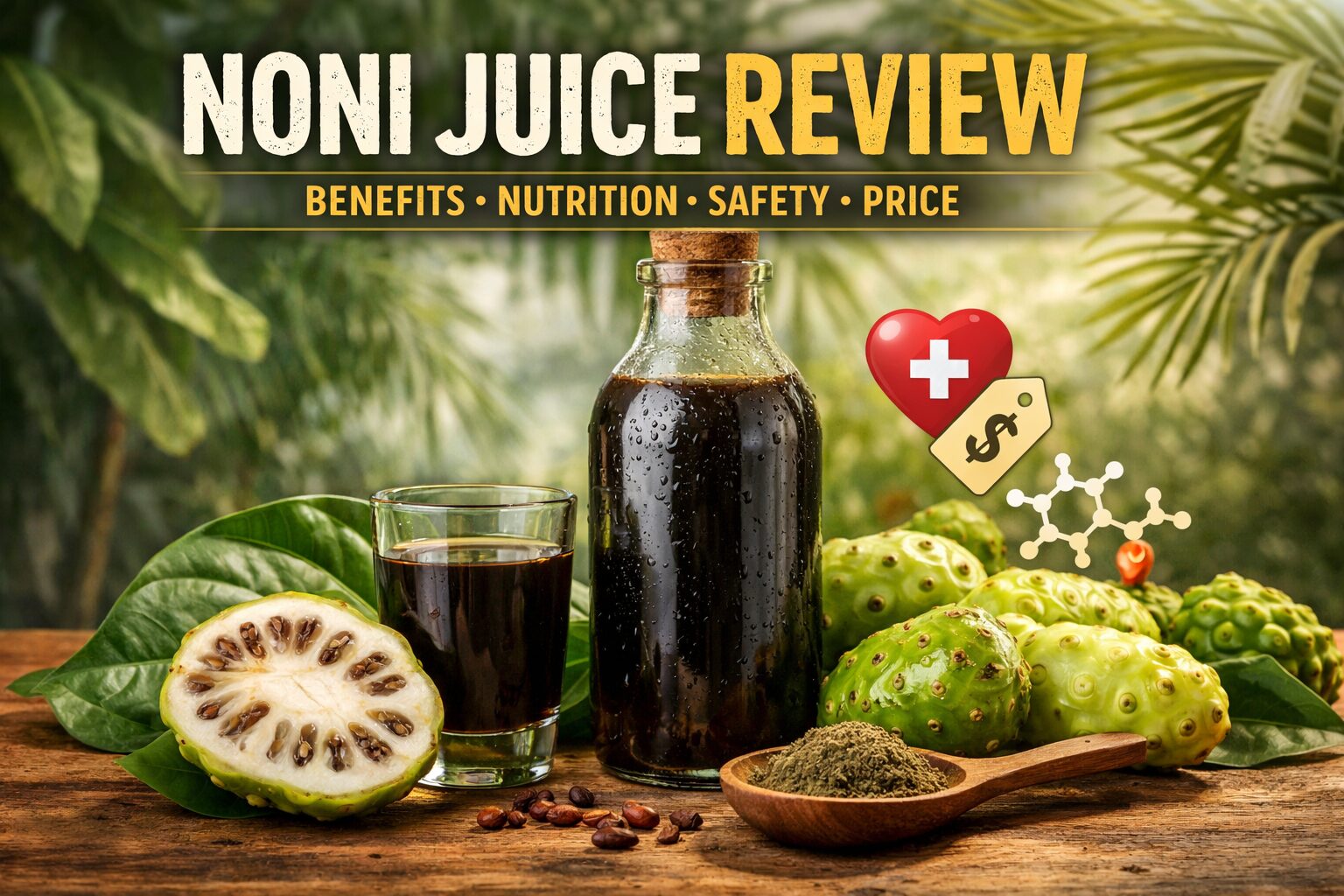
For centuries, the Polynesians have revered the noni fruit, a lumpy, mango-sized fruit with a distinctively pungent aroma, as a staple of traditional medicine.
Today, noni juice sits on health food store shelves worldwide, marketed as a panacea for everything from arthritis to low energy.
But what actually is noni juice, and does it live up to the hype?
While popular health websites touch on its antioxidants and potential risks, few provide a comprehensive look at the practical side: what it tastes like, how much it costs, and how to actually consume it.
What is Noni Juice?
Noni juice is derived from the fruit of the Morinda citrifolia tree, an evergreen shrub native to Southeast Asia, Australasia, and the Pacific Islands.
Polynesian explorers carried noni seeds (or “canoe plants”) across the Pacific, valuing the plant so highly that they ensured it was cultivated wherever they settled.
Origin & History
In traditional folk medicine, every part of the plant, roots, bark, flowers, and fruit, was used to treat ailments ranging from constipation and infections to pain and inflammation.
Today, the fruit is harvested, fermented, or pressed to create the dark, potent juice found in bottles today.
Taste Profile and Texture
If you are expecting a tropical fruit punch, you are in for a surprise. Noni is often called “cheese fruit” or “vomit fruit” for a reason.
- Taste: Pure noni juice is intensely bitter, sour, and astringent. It lacks the natural sweetness of pineapple or mango.
- Aroma: It has a pungent, fermented smell often compared to strong, aged cheese.
- Texture: Depending on the processing, it can range from a thin, watery liquid (fresh-pressed) to a thicker, syrup-like consistency (aged/fermented).
Note: Because the flavor is so challenging for Western palates, most commercial brands blend noni with grape, blueberry, or raspberry juice to mask the taste.
Always check the label if you are seeking 100% pure noni.
Nutritional Value (Per 8 oz / 240 ml)
Understanding what is in your glass is crucial. While many sources list values for small shots (1 oz), here is the estimated nutritional breakdown for a standard 8 oz (240 ml) glass of pure noni juice.
Note: Commercial blends often have significantly higher sugar and calorie counts due to added fruit juices.
| Nutrient | Amount per 8 oz (240 ml) |
| Calories | ~40 kcal |
| Carbohydrates | 8 – 9 g |
| Protein | < 1 g |
| Fat | < 1 g |
| Sugar (Natural) | 8 g |
| Vitamin C | ~72 mg (approx. 80% DV) |
| Potassium | High (varies by crop) |
| Caffeine | 0 mg |
The Caffeine Question
Noni juice is naturally caffeine-free. It provides an energy boost not through stimulants, but potentially through its rich antioxidant profile and vitamin content.
This makes it a suitable option for those sensitive to caffeine or looking for a morning pick-me-up without the jitters.
Health Benefits: Separating Fact from Fiction
While marketing materials often claim noni cures everything, scientific evidence is more modest but still promising.
1. Potent Antioxidant Source
Noni is packed with antioxidants, including iridoids, beta carotene, and vitamins C and E. These compounds help combat oxidative stress and free radicals in the body, which are linked to chronic conditions.
2. Potential for Smokers
One of the most unique findings in noni research involves tobacco smoke. Studies suggest that noni juice may reduce cellular damage and DNA damage caused by tobacco smoke.
However, this does not negate the harmful effects of smoking.
3. Pain and Inflammation
Traditional use focused heavily on pain relief. Some animal studies and limited human trials suggest noni may help reduce pain and inflammation associated with arthritis, potentially improving range of motion.
4. Immune System Support
With high levels of Vitamin C and other phytochemicals, noni juice acts as an immune modulator, potentially helping the body ward off minor infections.
Safety and Side Effects
Noni juice is generally safe for healthy adults when consumed in moderation (recommended 3-4 oz daily), but it carries specific risks for certain groups.
Kidney Disease
Noni is extremely high in potassium. If you have kidney disease or are on a potassium-restricted diet, avoid noni juice.
Liver Toxicity Concerns
There have been rare but documented cases of liver toxicity associated with noni consumption.
While the link isn’t definitive (and may be related to specific brands or processing methods), those with pre-existing liver conditions should consult a doctor.
Pregnancy
Due to a lack of safety data and historical use as an emmenagogue (stimulating menstruation), it is best avoided during pregnancy and breastfeeding.
Drug Interactions
Noni may interact with medications for high blood pressure (ACE inhibitors/ARBs), blood thinners (Warfarin), and diuretics.
Price Guide: What Does It Cost?
Noni juice is a premium health supplement, and prices reflect the difficulty of harvesting and importing the fruit.
| Product Type | Typical Size | Price Range (USD) | Cost per Serving (1 oz) |
| Tahitian Noni (Brand Name) | 1 Liter (33 oz) | $45.00 – $65.00 | ~$1.50 |
| Generic Organic Pure Noni | 32 oz (946 ml) | $30.00 – $40.00 | ~$1.10 |
| Noni Juice Blends (Diluted) | 32 oz (946 ml) | $20.00 – $30.00 | ~$0.80 |
| Noni Shots (Convenience) | 2.5 oz | $4.00 – $6.00 | ~$4.00 |
Prices are estimates based on 2026 online retailers like Amazon, Walmart, and specialty health stores.
How to Make Noni Juice at Home
If you live in a tropical climate (Hawaii, Florida, Southeast Asia) and have access to fresh noni fruit, you can make the juice yourself. The traditional method uses fermentation to extract the juice.
You will need
- Ripe noni fruit (translucent, soft, and pungent)
- A large glass jar with a lid (sterilized)
- Cheesecloth or a strainer
Instructions
- Wash and Dry: Thoroughly wash the ripe noni fruit and let them air dry completely. Water can spoil the fermentation.
- Pack the Jar: Place the whole fruits into the glass jar. Do not crush them. Pack them tight.
- Ferment: Seal the jar and place it in a sunny spot (for traditional methods) or a warm cupboard. Leave it for 6 to 8 weeks.
- Extraction: As the fruit ferments, the juice will naturally seep out and settle at the bottom. It will turn a dark amber/brown color.
- Strain: After 2 months, pour the mixture through a sterilized cheesecloth or strainer to separate the juice from the pulp and seeds.
- Store: Bottle the juice in sterilized glass containers and refrigerate. It serves as a potent concentrate.
Frequently Asked Questions
Is noni juice safe to drink every day?
For most healthy adults, yes. The typical recommended dose is 1 to 3 ounces per day. However, due to liver toxicity concerns, some experts recommend cycling off it occasionally or sticking to smaller doses.
Does noni juice contain alcohol?
Traditional noni juice is fermented, meaning it may contain trace amounts of alcohol, similar to kombucha. However, it is not an alcoholic beverage in the recreational sense. Fresh-pressed varieties do not contain alcohol.
Why is noni juice so expensive?
The high cost comes from the specific growing regions (mostly islands), the labor-intensive harvesting process, and the shipping costs of heavy glass bottles from the Pacific to Western markets.
Can I mix noni juice with milk?
It is not recommended. The high acidity of noni juice will curdle dairy milk instantly. If you need to mask the flavor, mix it with grape juice, apple juice, or into a fruit smoothie.
Final Thoughts: Who Should Drink It?
Noni juice is an acquired taste with a rich history. Here is the verdict for different users:
For the Purist
If you value traditional medicine and can stomach the bitter taste, opt for 100% pure, fermented organic noni to get the full spectrum of compounds.
For the Flavor-Sensitive
Look for “Tahitian” blends mixed with blueberry or grape. You get the benefits of noni without the “cheesy” aroma.
For the Budget-Conscious
This is an expensive supplement. You may get similar antioxidant benefits from cheaper local superfoods like berries or leafy greens.
For the Caffeine-Free
A great alternative to green tea or coffee for a morning ritual that supports health without the jitters.

Naeem is a passionate drink enthusiast and recipe curator behind DrinkWhisper.com. With 10 years of exploring cafes, bars, and home mixology trends, he shares inspiring drinks, creative cocktails, and refreshing non alcoholic recipes for every occasion.