
The scent of simmering cinnamon and caramelized sugar has a unique way of transforming an ordinary morning into a comforting ritual. People across Mexico have woken up to the earthy aroma of this traditional spiced drink for over a century, passing down family brewing methods from one generation to the next.
What Does “De Olla” Mean?
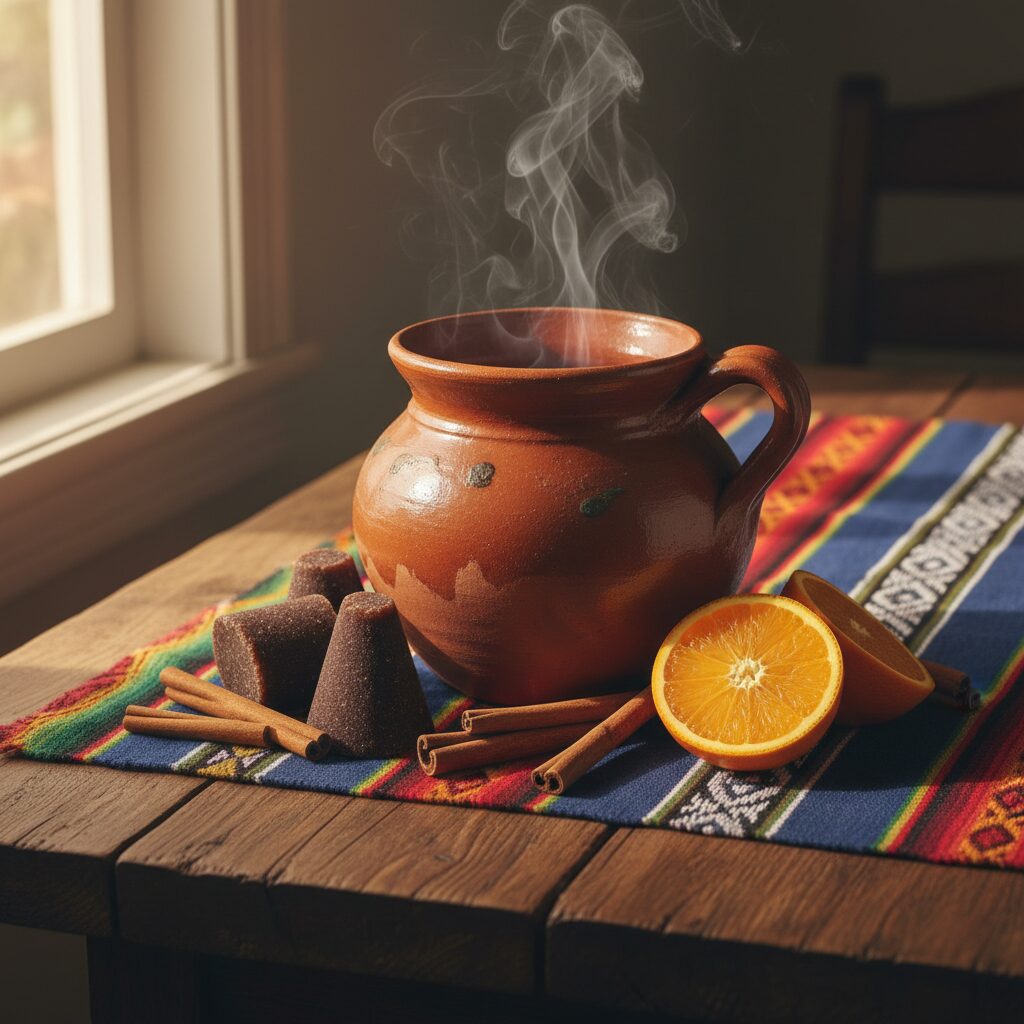
The phrase “de olla” translates directly to “from the pot.” Historically, this refers to an olla de barro, a traditional Mexican clay pot used for cooking beans, stews, and hot beverages.
The origins of this spiced brew date back to the Mexican Revolution (1910–1920). Women soldiers, known as soldaderas or adelitas, played a crucial role in the military camps. They cared for the wounded, maintained the camps, and cooked meals for the troops. To keep the soldiers energized during grueling campaigns, the soldaderas brewed coffee in large clay pots, fortifying the dark liquid with local spices and unrefined sugar.
Brewing in an olla de barro actually alters the chemistry of the coffee. Unglazed clay is slightly alkaline and highly porous. When the acidic coffee steeps inside the earthen vessel, the clay naturally neutralizes some of the bitter acids. This mineral interaction creates a remarkably smooth, earthy finish that you simply cannot replicate in a stainless steel saucepan. If you want a truly authentic experience, investing in a food-safe Mexican clay pot is highly recommended.
What Does Café de Olla Taste Like?
If you are wondering what café de olla recipe tastes like, you can expect a harmonious blend of earthy sweetness, warm spices, and robust roasted notes.
The primary sweetener, piloncillo, provides a deep molasses flavor with subtle hints of caramel and rum. The Mexican cinnamon steeps slowly in the hot water, releasing a floral, smooth aroma that perfectly complements the dark roast coffee. Depending on regional variations, you might also detect very subtle hints of licorice from star anise, a sharp bite from whole cloves, or a bright citrus finish from orange peels. The overall mouthfeel is rich and velvety, lacking the sharp acidity found in standard drip coffee.
What is Café de Olla Made Of?
Creating the perfect cup requires specific, high-quality ingredients. Substituting these components will drastically alter the final taste.
Piloncillo (Panela)
Piloncillo is raw, unrefined cane sugar pressed into a cone shape. Because it undergoes minimal processing, it retains natural molasses and minerals. This ingredient provides a dark, smoky sweetness. If you absolutely cannot find piloncillo at a local Latin market, you can substitute dark brown sugar or coconut sugar, though the flavor will lack the authentic depth.
Mexican Cinnamon (Ceylon)
Also known as “true cinnamon” or canela, Ceylon cinnamon is vastly different from the common Cassia cinnamon found in most baking aisles. Ceylon bark is thin, flaky, and delicate. It yields a sweeter, milder, and more complex floral flavor. Cassia cinnamon is spicy and aggressive, which can overpower the coffee.
Mexican Coffee Beans
For the best results, use a medium or dark roast Mexican coffee. The two most popular varieties grown in regions like Chiapas and Veracruz are Planchuela and Caracolillo.
- Planchuela: This is the standard, flat-sided coffee bean that makes up the majority of the harvest. It provides a balanced, mild body with subtle chocolate notes.
- Caracolillo: Also known as a peaberry, this is a natural genetic mutation occurring in about 5% of the coffee cherries, where only one round bean develops instead of two flat ones. Caracolillo beans roast more evenly and offer a creamier body with lower acidity and enhanced nutty sweetness.
Optional Spices
Many families personalize their brew by adding a whole clove, a small star anise pod, or even a square of Mexican drinking chocolate to the simmering water.
How to Make a Cup of Café de Olla
Preparing this recipe requires patience and careful temperature control. Boiling the coffee grounds will extract bitter tannins, so you must add the coffee only after removing the water from the heat.
Equipment Needed
- A traditional olla de barro or a medium saucepan
- A fine-mesh strainer
- Cheesecloth (optional, for a cleaner cup)
- A wooden spoon
Ingredients
- 4 cups filtered water
- 2 ounces piloncillo (about 1/3 cup chopped)
- 1/2 stick of Ceylon cinnamon
- 1/2 cup dark roast ground coffee (medium-coarse grind)
- Optional: 1 whole clove
Step-by-Step Instructions
- Simmer the Spices: Pour the filtered water into your pot. Add the piloncillo, cinnamon stick, and clove. Place the pot over medium heat.
- Dissolve the Sugar: Let the mixture come to a gentle simmer. Stir occasionally with a wooden spoon until the piloncillo completely dissolves into a fragrant, amber-colored syrup. This usually takes about 5 to 7 minutes.
- Add the Coffee: Once the water reaches a low rolling boil, immediately turn off the heat. Stir in the ground coffee.
- Steep: Cover the pot tightly with a lid. Allow the coffee to steep undisturbed for exactly 5 minutes.
- Strain and Serve: Place a fine-mesh strainer (lined with cheesecloth if desired) over a heatproof pitcher or individual mugs. Carefully pour the coffee through the strainer to catch the grounds and whole spices. Serve hot.
Recipe Data Profile
| Metric | Detail |
| Prep Time | 5 minutes |
| Cook/Steep Time | 10 minutes |
| Total Time | 15 minutes |
| Servings | 4 cups |
| Calories | ~53 kcal per serving |
Café de Olla Recipe Orange Variation
Adding citrus is a beloved variation in certain Mexican states, particularly in coastal regions. The bright oils from the orange peel cut through the heavy molasses sweetness and elevate the floral notes of the Ceylon cinnamon.
To make this variation, peel a 2-inch strip of skin from a fresh, washed orange. Be extremely careful to avoid the white pith underneath the skin, as the pith will introduce an unpleasant, chalky bitterness to the brew. Add the orange peel to the water at the very beginning, along with the piloncillo and cinnamon. Allow it to simmer and release its citrus oils. Remove the peel during the straining process.
What is the Difference Between Regular Coffee and Café de Olla?
Understanding the distinction helps clarify why this preparation method requires different brewing techniques compared to your standard morning cup.
| Feature | Regular Black Coffee | Café de Olla |
| Brewing Method | Drip, pour-over, or French press | Steeping method (immersion) |
| Vessel | Glass carafe or ceramic mug | Traditionally brewed in a clay pot |
| Sweetness | Unsweetened | Naturally sweetened during the brew |
| Flavor Profile | Depends purely on bean origin | Earthy, spiced, caramel-sweet |
| Serving Style | Often modified with milk/cream | Typically served black |
Common Preparation Mistakes and Helpful Tips
Creating a flawless brew requires attention to detail. Here are a few common pitfalls to avoid and tips to enhance your recipe.
Avoiding Bitterness
Never boil the coffee grounds. Boiling extracts harsh, bitter compounds that ruin the smooth flavor profile. Always turn off the heat completely before stirring in the coffee. Use a medium-coarse grind, similar to what you would use for a French press. A grind that is too fine will over-extract and leave a sludgy residue at the bottom of your mug.
Adjusting Sweetness
Piloncillo comes in different sizes, usually small 1-ounce cones or large 8-ounce cones. Always chop or grate the piloncillo before measuring to ensure accuracy. If you prefer a less sweet beverage, start with 1 ounce of piloncillo and taste the spiced water before adding the coffee grounds. You can always add more sweetener, but you cannot take it away.
Healthier and Dairy-Free Options
This recipe is naturally dairy-free and vegan. However, some people enjoy adding a splash of milk. If you prefer a creamy texture without dairy, cashew milk or oat milk pair beautifully with the cinnamon notes. For a lower glycemic index, you can swap the piloncillo for monk fruit sweetener, keeping in mind that the flavor profile will shift slightly.
Frequently Asked Questions
How many calories are in a standard cup of café de olla?
A standard 8-ounce serving made with the traditional ratio of piloncillo contains approximately 53 to 77 calories, entirely derived from the unrefined cane sugar.
How much caffeine is in a serving?
Because it utilizes an immersion brewing method for 5 minutes, an 8-ounce cup yields roughly 80 to 100 milligrams of caffeine, comparable to a standard French press brew.
What is the exact ratio of coffee to water?
The ideal ratio for a robust flavor is 1 part coffee to 8 parts water by volume (1/2 cup of coffee to 4 cups of water).
How long can I store leftover café de olla?
You can store strained leftovers in an airtight glass jar in the refrigerator for up to 7 days. It actually makes an excellent iced coffee when served cold over ice.
What makes the Caracolillo coffee bean different?
Caracolillo (peaberry) is a genetic mutation occurring in about 5% of coffee cherries. Because a single bean absorbs all the nutrients typically shared by two, it offers a denser, sweeter, and creamier flavor profile.
How much piloncillo equals regular brown sugar?
By weight, 1 ounce of chopped piloncillo is roughly equivalent to 2 packed tablespoons of dark brown sugar.
Does the clay pot actually change the pH of the coffee?
Yes. Authentic unglazed Mexican clay pots (ollas de barro) have alkaline properties that interact with the water and coffee during the simmer, neutralizing some of the coffee’s natural acidity.
Why do I need to use Ceylon cinnamon instead of Cassia?
Ceylon cinnamon contains about 250 times less coumarin than Cassia cinnamon. This chemical difference gives Ceylon a delicate, sweet flavor that enhances the coffee without overpowering it with sharp heat.
Can I prepare this recipe ahead of time?
Yes. You can simmer the water, piloncillo, and spices to create a concentrated syrup base. Store the syrup in the fridge and simply add it to freshly brewed coffee when you are ready to drink it.
What temperature should the water be before adding the coffee?
The spiced water should reach a low boil (around 200°F to 205°F, or 93°C to 96°C). You must turn off the heat immediately before adding the grounds to prevent burning the beans.
Bring the Warmth of Mexico to Your Kitchen
Mastering this traditional Mexican spiced coffee connects you directly to a rich, historical culinary tradition. The simple act of simmering raw sugar, sweet cinnamon, and bold coffee transforms your kitchen into a fragrant, inviting space.
Take the time to source genuine piloncillo and high-quality Mexican beans. Prepare your ingredients, grab your favorite mug, and enjoy a comforting brew that carries the true spirit of Mexico in every sip. Share the recipe with your family, experiment with the orange variation, and elevate your morning routine today.
Authentic Café de Olla Recipe: Brew Mexican Spiced Coffee
Ingredients
Instructions
-
Simmer the Spices
Pour the filtered water into your pot. Add the piloncillo, cinnamon stick, and clove. Place the pot over medium heat.
-
Dissolve the Sugar
Let the mixture come to a gentle simmer. Stir occasionally with a wooden spoon until the piloncillo completely dissolves into a fragrant, amber-colored syrup. This usually takes about 5 to 7 minutes.
-
Add the Coffee
Once the water reaches a low rolling boil, immediately turn off the heat. Stir in the ground coffee.
-
Steep
Cover the pot tightly with a lid. Allow the coffee to steep undisturbed for exactly 5 minutes.
-
Strain and Serve
Place a fine-mesh strainer (lined with cheesecloth if desired) over a heatproof pitcher or individual mugs. Carefully pour the coffee through the strainer to catch the grounds and whole spices. Serve hot.