

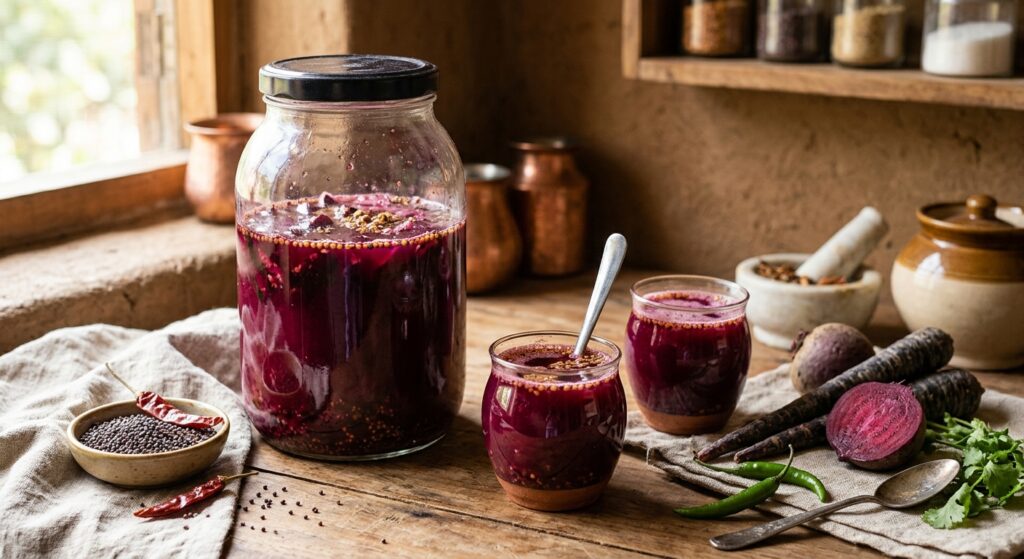
Kanji is a tangy, fermented North Indian drink made from carrots, beetroot, mustard seeds, and salt. It’s naturally probiotic, vegan, and gluten-free, taking just 15 minutes of prep and 3–5 days of fermentation. Kanji supports digestion and gut health, and is traditionally sipped before meals during the winter months.
How to Make Kanji at Home
To make kanji, chop carrots and beetroot into batons, mix with ground mustard seeds, chili powder, and salt, then submerge in boiled-and-cooled water inside a clean glass jar. Cover loosely with a muslin cloth and let it ferment in a sunny spot for 3 to 5 days, stirring daily, until it tastes pleasantly sour. Strain, chill, and serve.
What Is Kanji?
Kanji is a traditional North Indian probiotic drink made by fermenting carrots and beetroot in salted, spiced water. Wild lactic acid bacteria on the vegetables feed on their natural sugars during fermentation, producing the drink’s signature tang the same basic process behind kombucha, sauerkraut, and kimchi, just with different starting ingredients.
Traditionally, kanji is made with black (deep purple) carrots, a seasonal crop available in North India from roughly January through March. Where black carrots aren’t available, home cooks substitute red or orange carrots paired with beetroot to recreate that same deep purple-red hue.
Ingredients for Kanji Drink
This recipe makes about 1.2–1.5 liters (roughly 6 servings of 250 ml each).
| Ingredient | Quantity |
| Black carrots (or orange/purple carrots) | 3 medium (about 300 g) |
| Beetroot | 1 medium (about 150 g) |
| Yellow or brown mustard seeds, coarsely ground | 2 tablespoons |
| Red chili powder (optional) | 1 teaspoon |
| Black pepper, coarsely cracked | 1 teaspoon |
| Salt (black salt, sea salt, or a mix) | 1.5 tablespoons |
| Filtered water, boiled and cooled | 6 cups (1.5 liters) |
A note on water: Use filtered or boiled-and-cooled water rather than straight tap water. Chlorine in tap water can slow or inhibit the fermentation process, so this small step makes a real difference.
Step-by-Step Kanji Recipe
Prep Time, Ferment Time, and Nutrition at a Glance
| Detail | Information |
| Prep time | 15 minutes |
| Ferment time | 3–5 days |
| Total time | 3–5 days, 15 minutes |
| Servings | 6 (250 ml each) |
| Calories per serving | Approx. 10–20 kcal (estimate) |
| Diet | Vegan, vegetarian, gluten-free |
| Skill level | Easy |
Calorie estimate is based on USDA FoodData Central values for raw carrot (about 41 kcal per 100 g) and raw beet (about 43 kcal per 100 g), accounting for the fact that most of the vegetables’ sugars are consumed during fermentation and the solids are strained out before drinking. This is an estimate, not a lab-tested figure.
Instructions
- Prep the vegetables. Wash, peel, and cut the carrots and beetroot into ¼-inch thick batons, about 1–2 inches long.
- Grind the spices. Coarsely crush the mustard seeds and black pepper using a mortar and pestle or spice grinder.
- Sterilize your jar. Wash a large glass or ceramic jar in hot, soapy water, then rinse thoroughly and air-dry. A clean container is the single biggest factor in whether your kanji ferments safely.
- Combine everything. Add the carrots, beetroot, ground mustard-pepper mixture, chili powder, and salt to the jar. Pour in the boiled-and-cooled water, leaving an inch of space at the top.
- Stir and cover. Stir well with a clean, dry spoon. Cover the jar loosely with a muslin cloth or cheesecloth secured with a rubber band or twine avoid an airtight lid, since the ferment needs airflow.
- Ferment in the sun. Place the jar in a warm, sunny spot. Stir once daily with a clean, dry spoon. Fermentation typically takes 3 to 5 days, depending on temperature and sunlight intensity closer to 2–3 days in strong summer sun, longer in mild winter light.
- Check for doneness. Kanji is ready when it tastes pleasantly tart, salty, and slightly effervescent, with a faint cloudiness to the liquid.
- Strain and chill. Strain the liquid into a clean jar and refrigerate for a few hours before serving. Save the pickled carrot and beet pieces they’re delicious on their own.
Kanji Drink Benefits
Fermented vegetables like kanji are linked to meaningful gut health benefits. A 2021 Stanford study published in Cell (Wastyk et al.) found that a 10-week diet high in fermented foods increased gut microbiome diversity and reduced 19 inflammatory markers in healthy adults. While that study didn’t test kanji specifically, it supports the broader case for fermented foods as part of a balanced diet.
Beyond gut health, kanji offers:
- Digestive support, especially useful during the heavier, richer meals of winter.
- Antioxidants from the carrots and beetroot.
- Vitamins and minerals the vegetables contain vitamin K, vitamin C, potassium, and manganese, though the strained drink contains lower amounts than the whole vegetables.
- Dietary fiber, mostly retained in the pickled vegetable pieces rather than the strained liquid.
- A low-sodium-conscious alternative to soda when made with the recommended salt levels, though it still contains sodium (see below).
Note: the probiotic bacteria count in homemade kanji isn’t standardized or lab-tested, so it’s best to think of kanji as “probiotic-rich” rather than a drink with a guaranteed bacterial count.
Kanji Drink Benefits for Weight Loss
Kanji is sometimes marketed as a weight-loss drink, but it’s worth separating fact from hype. No clinical trial has tested kanji specifically for weight loss. What’s true is simpler: kanji is low in calories (around 10–20 kcal per 250 ml serving), hydrating, and has a sour, satisfying flavor that can work as a swap for sugary sodas or juices.
Choose kanji over sugary drinks if you’re looking for a flavorful, low-calorie way to add fermented food to your routine not as a standalone fat-loss strategy. Pair it with a balanced diet and regular activity rather than expecting the drink alone to drive results.
Side Effects of Kanji Drink
Kanji is generally safe for healthy adults in moderate amounts, but a few things are worth knowing:
- Sodium content: Kanji contains added salt. The WHO recommends adults consume less than 5 g of salt (about 2,000 mg sodium) per day, so those on a low-sodium diet should drink kanji in smaller amounts.
- Digestive sensitivity: The mustard and chili can irritate acid reflux or sensitive stomachs in some people.
- Beeturia: Beetroot can turn urine or stool pink or red in some people harmless, but surprising if you’re not expecting it.
- Oxalates: Beets contain oxalates, so those prone to kidney stones may want to moderate their intake.
- Pregnancy and immunocompromised individuals: Because kanji is an unpasteurized, home-fermented food, it’s wise for pregnant women and immunocompromised people to check with a doctor before drinking it.
This isn’t medical advice if you have an underlying health condition, check with your doctor before adding kanji to your routine.
How Do I Know If My Kanji Has Gone Bad?
Kanji has spoiled if it develops fuzzy mold, a foul or rotten smell, or a slimy texture. A thin white film (kahm yeast) is sometimes harmless, but it can be hard to distinguish from mold at home when in doubt, discard the batch rather than risk it.
| Sign | What it means | What to do |
| Fuzzy mold (any color) | Contamination | Discard entire batch |
| Foul or rotten smell | Spoilage | Discard entire batch |
| Slimy texture | Spoilage | Discard entire batch |
| Pleasant sour, tangy smell | Healthy fermentation | Safe to continue |
| Mild effervescence | Active fermentation | Safe to continue |
Variations and Customizations
| Variation | How to make it |
| Turnip kanji | Replace half the carrots with winter turnips for an earthier flavor |
| Watermelon rind kanji | Use peeled, cubed watermelon rind instead of carrots for a summer version |
| Spiced kanji | Add a bay leaf, a crushed cardamom pod, or a clove to the jar before fermenting |
| Sweetened kanji | If using lower-sugar vegetables like turnip or celery, add a teaspoon of honey or a few raisins to help fermentation along |
| Ginger-garlic kanji | Add sliced ginger and smashed garlic on day one for extra warmth |
Tips for Success
- Use filtered or boiled-and-cooled water chlorine can slow fermentation.
- Keep the jar in a warm spot, ideally between 70–85°F (21–30°C).
- Stir with a clean, dry spoon daily to discourage mold growth.
- Bring the jar indoors at night in cold climates, then return it to sunlight in the morning.
- Taste-test daily starting on day 3 so you don’t over-ferment the drink.
Storage Suggestions
Refrigerate kanji as soon as it’s done fermenting to slow down further fermentation. It’s best enjoyed within 7–10 days for peak flavor, though some home fermenters report it staying drinkable for up to 2–3 weeks refrigerated. Stir well before serving, since settling is normal. Kanji is not freezer-friendly freezing kills the live cultures that make it probiotic in the first place.
Frequently Asked Questions
How long does kanji take to ferment?
Kanji typically takes 3 to 5 days to ferment, depending on sunlight and temperature. In strong, direct sun it can be ready in as little as 2 days; in cooler or cloudier conditions, it may take up to 5 days.
Can I make kanji without direct sunlight?
Yes. Keep the jar in a consistently warm spot, such as near a radiator or in a warm kitchen cabinet, maintaining roughly 70–85°F (21–30°C). It will still ferment, just somewhat more slowly without direct sun.
Is kanji vegan and gluten-free?
Yes. Kanji is made entirely from vegetables, water, spices, and salt, making it naturally vegan, vegetarian, and gluten-free with no modifications needed.
How many calories are in a glass of kanji?
A 250 ml serving of strained kanji contains an estimated 10–20 kcal, based on USDA values for raw carrot and beet, since most of the vegetables’ sugars are consumed during fermentation and the solids are strained out.
Can I drink kanji every day?
Kanji can be part of a regular diet for most healthy adults in moderate amounts, but its sodium content means those on low-sodium diets should limit how often they drink it.
Does kanji taste like kombucha?
Kanji has a similarly tangy, fermented profile to kombucha, but it’s saltier and spicier due to the mustard seeds and chili, with an earthy vegetable base rather than a tea base.
What’s the difference between kanji and beet kvass?
Kanji uses carrots as its primary vegetable with beetroot added mainly for color, while beet kvass is made almost entirely from beetroot. Kanji also typically includes mustard seeds and chili, which beet kvass does not.
Can pregnant women drink kanji?
Because kanji is an unpasteurized, home-fermented drink, pregnant women should check with a doctor before drinking it, as is generally recommended for other unpasteurized ferments.
What can I do with the leftover carrot and beet pieces?
The fermented vegetable pieces can be eaten as a tangy pickle alongside a meal, added to salads, or tucked into sandwiches and wraps for extra flavor and probiotic content.
Why is my kanji not turning sour?
Cool temperatures, insufficient fermentation time, or too little mustard seed can all slow down fermentation. Move the jar to a warmer spot and give it another day or two before checking again.
Recipe for Kanji Drink: Easy Homemade Fermented Recipe
Ingredients
Instructions
-
Prepare the Vegetables
Prep the vegetables. Wash, peel, and cut the carrots and beetroot into ¼-inch thick batons, about 1–2 inches long. -
Grind the Spices
Grind the spices. Coarsely crush the mustard seeds and black pepper using a mortar and pestle or spice grinder. -
Sterilize the Jar
Sterilize your jar. Wash a large glass or ceramic jar in hot, soapy water, then rinse thoroughly and air-dry. A clean container is the single biggest factor in whether your kanji ferments safely. -
Combine the Ingredients
Combine everything. Add the carrots, beetroot, ground mustard-pepper mixture, chili powder, and salt to the jar. Pour in the boiled-and-cooled water, leaving an inch of space at the top. -
Stir and Cover
Stir and cover. Stir well with a clean, dry spoon. Cover the jar loosely with a muslin cloth or cheesecloth secured with a rubber band or twine avoid an airtight lid, since the ferment needs airflow. -
Ferment in Sunlight
Ferment in the sun. Place the jar in a warm, sunny spot. Stir once daily with a clean, dry spoon. Fermentation typically takes 3 to 5 days, depending on temperature and sunlight intensity closer to 2–3 days in strong summer sun, longer in mild winter light. -
Check Fermentation
Check for doneness. Kanji is ready when it tastes pleasantly tart, salty, and slightly effervescent, with a faint cloudiness to the liquid. -
Strain and Refrigerate
Strain and chill. Strain the liquid into a clean jar and refrigerate for a few hours before serving. Save the pickled carrot and beet pieces they're delicious on their own.