
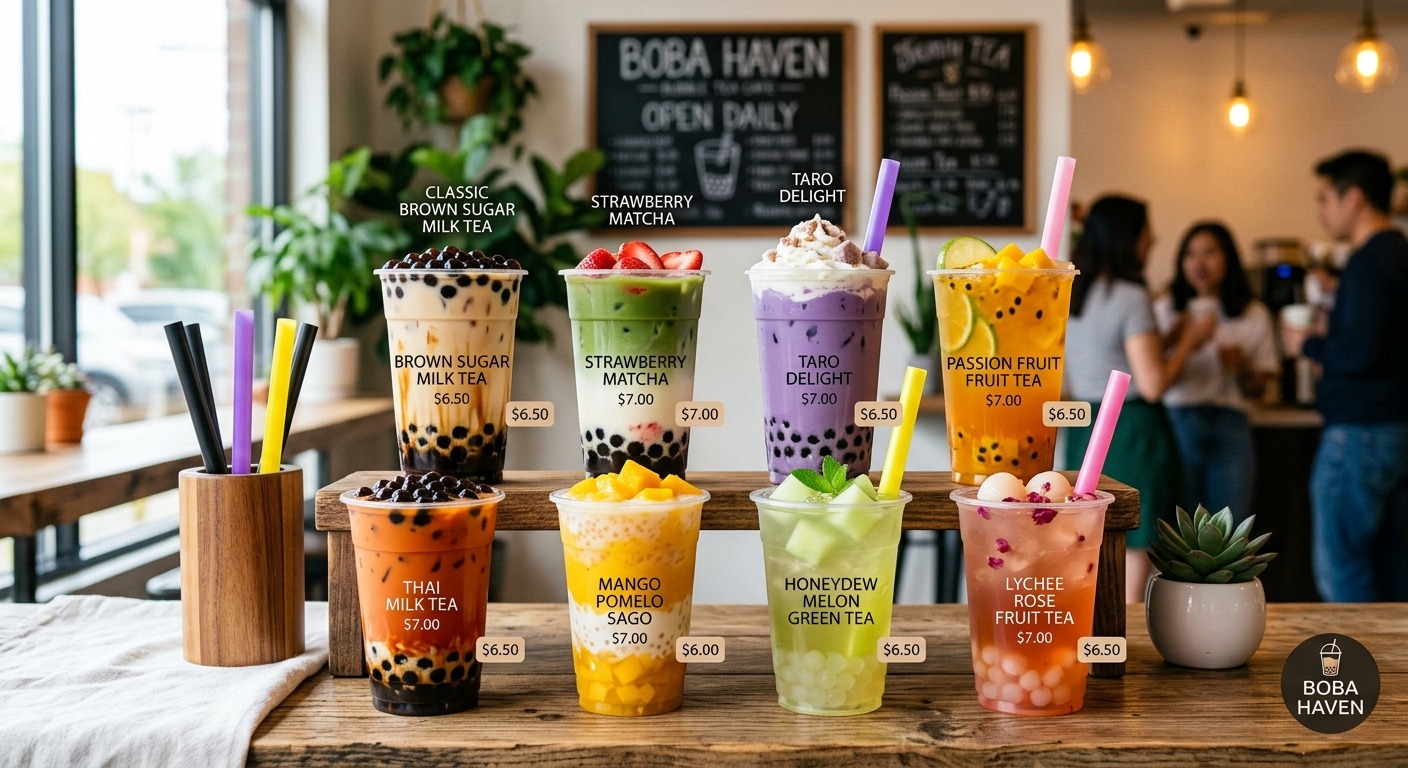
A boba tea menu typically includes milk teas, fruit teas, slushes, matcha and coffee drinks, plus a topping bar of tapioca pearls, popping boba, and jellies. Prices generally range from $5 to $9 for a standard drink, with premium specialty creations costing $10 to $20 depending on ingredients and location.
Boba has grown from a Taiwanese street drink into a global category, with the bubble tea market valued at an estimated $2.83 billion in 2025 and projected to grow at a compound annual rate of roughly 8% through the early 2030s, according to multiple market research firms including Straits Research and Data Insights Reports. That growth shows up in the sheer variety now available at most shops: what started as a simple combination of black tea, milk, and chewy tapioca pearls has expanded into dozens of flavors, bases, and topping combinations.
What’s Typically on a Boba Tea Menu?
Most boba menus are organized into six core categories: milk tea, fruit tea, matcha and hojicha drinks, coffee-boba hybrids, slushes and smoothies, and specialty or seasonal creations. Each category can be customized with toppings, milk types, sweetness levels, and ice amounts.
| Category | Common Examples | Typical Price |
| Milk Tea | Classic black, Thai tea, taro, brown sugar | 5.00–7.50 |
| Fruit Tea | Mango, lychee, strawberry, passion fruit | 4.50–7.00 |
| Matcha & Hojicha | Matcha latte, strawberry matcha, hojicha latte | 4.25–7.00 |
| Coffee-Boba | Espresso milk tea, dirty horchata, banana coffee | 4.00–7.75 |
| Slush & Smoothie | Taro slush, mango smoothie, cookies and cream | 6.50–8.50 |
| Specialty/Seasonal | Crème brûlée boba, ube latte, galaxy soda | 7.50–20.00 |
Pricing varies by shop, region, and size, so treat these as general ranges rather than fixed amounts.
Classic Boba Tea Foundations
Every boba menu is built on a handful of tea bases, and understanding them makes ordering far less overwhelming.
- Black tea boba: The original base for milk tea, offering a bold, malty flavor that holds up well against milk and brown sugar. Shops like Boba Guys describe their black tea blend as “the staple of boba milk tea.”
- Green tea: Lighter and more floral, jasmine green tea is a common base for fruit teas and delicate milk teas.
- Oolong: Varieties like Tie Guan Yin bring a nutty, slightly floral complexity that appeals to those who want more depth than standard black or green tea.
- Decaf options: Full-bodied decaf black tea lets you enjoy the classic boba experience without the caffeine.
Premium and Specialty Drinks
Specialty drinks are where shops differentiate themselves, often layering multiple textures and flavors into one cup.
- Matcha lattes: Organic Japanese matcha paired with milk, and frequently combined with fruit purées like strawberry or mango for a two-tone presentation.
- Hojicha lattes: Roasted green tea that’s naturally lower in caffeine but delivers a toasty, warm flavor profile.
- Crème brûlée drinks: A trending category featuring caramelized sugar tops over black tea and brown sugar boba, sometimes paired with ube or Oreo crumble.
- House specials: Brown sugar milk tea remains one of the most consistently popular specialty drinks across shops, often served with a caramelized brown sugar swirl and premium toppings.
Fruit and Non-Caffeinated Options
Not every boba drink revolves around tea and milk. Fruit-forward and caffeine-free options have become a significant part of most menus.
- Fruit tea blends: Combinations like mango-passionfruit or strawberry-lychee pair brewed tea with fruit purées and jelly toppings.
- Non-dairy refreshers: Drinks like ginger ale and tropical fruit mixes give a lighter, non-dairy alternative to milk tea.
- Ice-blended smoothies: Options such as taro or strawberry-banana smoothies deliver a dessert-like texture, ideal for warm weather.
- Caffeine-free bases: Butterfly pea tea and fruit-only blends allow customers avoiding caffeine to still enjoy a full boba experience.
How Much Does a Boba Drink Cost?
A standard 16-ounce boba drink typically costs between $5 and $9 in the United States, depending on the shop, region, and ingredients. Basic brewed teas without milk or toppings can cost as little as $2.50 to $4.50, while elaborate specialty drinks with premium toppings can reach $15 to $20.
| Price Tier | Example Items | Typical Range |
| Budget | Plain black or green tea, no toppings | 2.50–4.50 |
| Standard | Classic milk tea, fruit tea, matcha latte | 5.00–7.50 |
| Premium | Brown sugar boba, crème brûlée drinks | 7.50–12.50 |
| Specialty/Limited | Multi-layer creations, premium foam toppings | 12.50–20.00 |
Toppings typically add $0.75 to $1.25 per item, and larger sizes or extra add-ons (cheese foam, matcha foam, popping boba) can increase the total further. Because pricing depends heavily on location, franchise, and ordering channel, checking the specific shop’s app or website is the most reliable way to confirm current prices near you. Delivery orders through third-party platforms often carry a markup compared to ordering in-store.
Where Can I Find a Boba Tea Menu Near Me?
The fastest way to find a boba tea menu near you is to search directly on Google Maps or Yelp, check delivery apps like DoorDash, Uber Eats, or Grubhub, or visit a specific shop’s official website or ordering app, since most independent boba brands post their current menu and pricing online.
A few practical tips for finding the right shop nearby:
- Use delivery apps for menu previews: Apps like Uber Eats and Grubhub often list full menus with prices before you order, which is useful for comparing shops in your area.
- Check shop-specific apps: Larger chains often have loyalty apps that show real-time menu items and location-specific pricing.
- Search by flavor, not just brand: If you’re craving a specific drink (like brown sugar boba or crème brûlée tea), searching that term plus your city can surface shops that specialize in it.
- Confirm hours before visiting: Boba shop hours vary widely, with many opening between 10 and 11:30 a.m. and closing between 9 and 11 p.m., though this differs by location and day of the week.
Boba Tea Menu Ideas
A well-rounded boba menu typically balances six categories: a classic milk tea line, a fruit tea line, a matcha or hojicha series, a coffee-boba hybrid section, a slush or smoothie lineup, and rotating seasonal specialties, giving customers both familiar staples and reasons to return for something new.
If you’re building or exploring a menu, consider this structure as a benchmark:
- Anchor with classics: Black milk tea, Thai tea, and taro milk tea remain dependable bestsellers across most shops.
- Add a brown sugar line: Brown sugar boba milk tea consistently ranks among the most ordered specialty drinks.
- Include a matcha series: Matcha lattes and strawberry matcha variations appeal to customers seeking a non-black-tea option.
- Offer a caffeine-free selection: Fruit milks, butterfly pea lemonade, and horchata-style drinks serve customers avoiding caffeine.
- Rotate seasonal specialties: Limited-time drinks like crème brûlée boba or ube lattes keep the menu feeling fresh and give customers a reason to check back.
- Keep a topping bar diverse: Tapioca pearls, popping boba, lychee jelly, and cheese foam let customers personalize almost any base drink.
Customization and Toppings
Customization is arguably the defining feature of the boba category. Most shops let you adjust:
- Ice level: From no ice to extra ice, affecting both texture and flavor intensity.
- Sweetness level: Usually adjustable from 0% to 100% or more, letting customers control sugar content.
- Toppings: Classic tapioca pearls, crystal boba, popping boba, lychee jelly, pudding, and cheese or matcha foam are common add-ons, typically priced between $0.75 and $1.25 each.
- Milk choice: Dairy, oat, or almond milk substitutions are increasingly common, supporting dairy-free ordering.
A standard 16-ounce boba drink contains roughly 239 calories based on USDA reference data for a typical shop cup, though this varies significantly depending on sweetness level, milk type, and toppings added. Choosing less sweetness or skipping cream-based toppings like cheese foam is the simplest way to reduce calorie content without giving up the drink entirely.
Latest Menu Updates
As of this writing, several shops have introduced crème brûlée-topped boba drinks, ube-based lattes, and energy-drink hybrid teas (combining brewed tea with functional ingredients) as part of broader 2025 flavor trends. Matcha-fruit pairings and dessert-inspired flavors like tiramisu boba have also expanded across menus. Because individual shop menus change frequently, confirm current seasonal offerings directly through a shop’s app or social media before visiting.
Best Drinks by Need
| If You Want… | Consider |
| A classic, reliable order | Classic black milk tea or Thai tea |
| Something lighter and fruity | Mango or lychee fruit tea |
| Lower caffeine | Hojicha latte or fruit-based teas |
| No caffeine at all | Butterfly pea lemonade, horchata, or fruit milk |
| A dessert-like treat | Crème brûlée boba or cookies and cream smoothie |
| Budget-friendly option | Plain brewed tea or classic milk tea without premium toppings |
Frequently Asked Questions
Is boba tea the same as bubble tea?
Yes. “Boba” and “bubble tea” refer to the same drink category tea-based beverages served with chewy tapioca pearls or other toppings. The terms are used interchangeably across menus and regions.
How many calories are in a typical boba drink?
A standard 16-ounce shop cup contains approximately 239 calories, based on USDA-referenced nutrition data. Calorie count varies significantly with sweetness level, milk type, and added toppings.
What’s the cheapest way to order boba?
Plain brewed tea without milk or toppings is typically the least expensive option, often priced between $2.50 and $4.50, compared to 5–9 for a standard milk or fruit tea.
Are there caffeine-free boba options?
Yes. Butterfly pea tea, horchata, fruit milks, and select fruit-only blends are commonly offered as caffeine-free choices on most boba menus.
Do boba toppings cost extra?
Yes. Toppings like tapioca pearls, popping boba, and jellies typically cost between $0.75 and $1.25 each, while premium options like cheese foam can run slightly higher.
Can I get dairy-free boba?
Many shops offer oat or almond milk substitutions, and several fruit teas and slushes are naturally dairy-free since they’re made with water or juice bases rather than milk.
What’s the most expensive type of boba drink?
Elaborate specialty creations, such as multi-layer crème brûlée or premium foam-topped drinks, can range from $10 to $20, compared to 5–9 for standard menu items.
Does ordering boba through a delivery app cost more?
Delivery orders through third-party platforms often include a price markup compared to ordering in-store or through a shop’s own app, so checking both options before ordering can help avoid overpaying.
What toppings pair best with fruit tea versus milk tea?
Fruit teas commonly pair with lychee jelly, popping boba, and aloe vera, while milk teas are more often paired with classic tapioca pearls or pudding for a creamier texture contrast.
How do I know if a boba shop’s menu has changed recently?
Checking a shop’s official app, website, or social media is the most reliable way to confirm current seasonal drinks, since boba menus are frequently updated with limited-time flavors that aren’t always reflected on third-party delivery platforms.