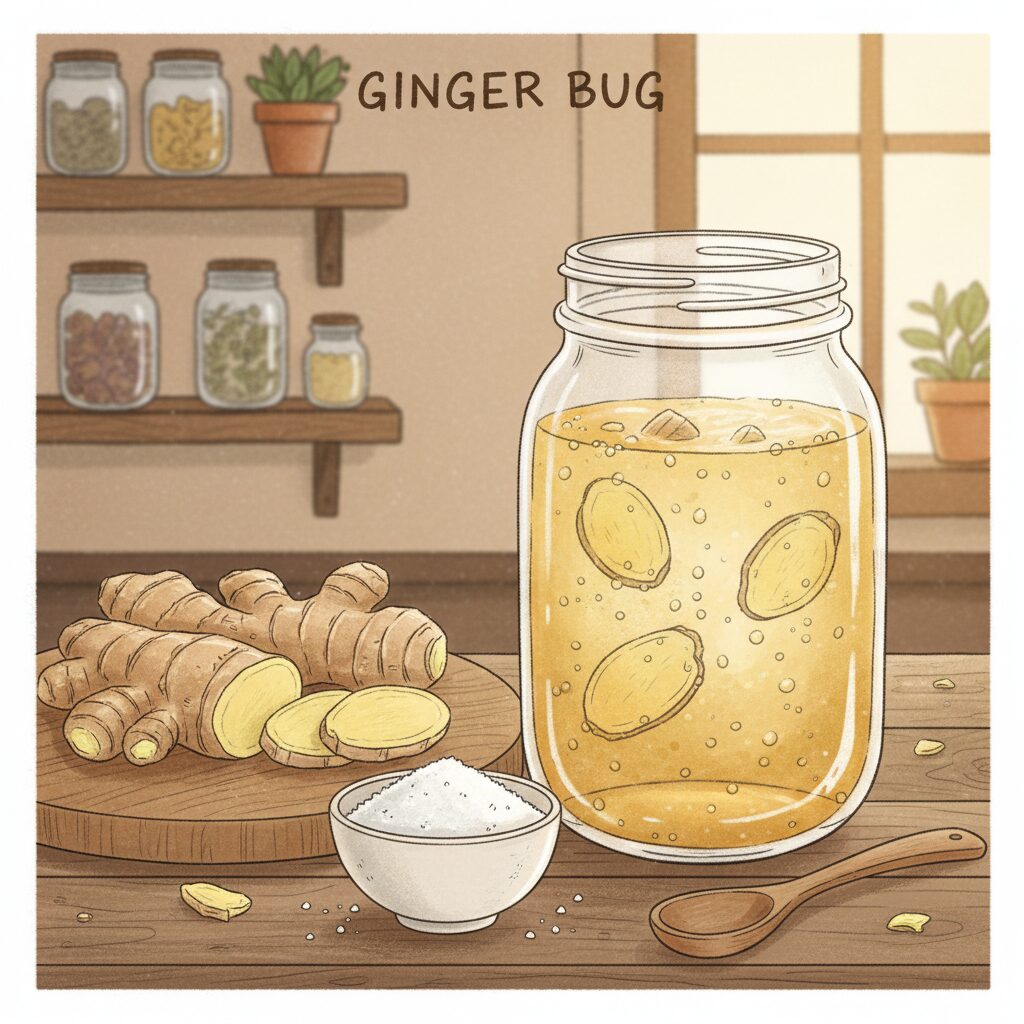
A ginger bug is a wild-fermented starter culture made from fresh ginger, sugar, and water. It boasts a sharp, slightly sweet, and yeasty flavor profile. Home brewers use this bubbly liquid to naturally carbonate sodas, ginger beer, and fruit tonics, making it a popular, probiotic-rich alternative to commercial yeast.
How to make a ginger bug
Combine 2 cups of filtered water, 1 tablespoon of chopped organic ginger (leave the skin on), and 1 tablespoon of raw cane sugar in a glass jar. Cover the jar with a breathable cloth. Feed the mixture daily with an additional 1 tablespoon of ginger and 1 tablespoon of sugar, stirring well. In 3 to 7 days, the liquid will become fizzy, opaque, and smell yeasty, indicating it is ready to use for natural sodas.
What Is a Ginger Bug and Why Brew One?
Before commercial sodas dominated grocery store shelves, families brewed their own naturally carbonated beverages at home. The secret behind these bubbly, refreshing drinks was a simple, wild-fermented starter culture known as a ginger bug.
Functioning much like a sourdough starter does for bread, a ginger bug captures naturally occurring wild yeasts and beneficial bacteria from the environment and the skin of raw ginger. Once active, this vibrant liquid acts as an engine.
You simply add a small splash of it to sweetened teas, fruit juices, or lemonade, and the microbes get to work producing carbon dioxide. The result is a delightfully fizzy, dairy-free, and vegan probiotic beverage without the artificial additives found in modern soft drinks.
Recipe Characteristics
| Attribute | Detail |
| Preparation Time | 5 minutes active (per day) |
| Fermentation Time | 3 to 7 days |
| Yield | Approx. 2 cups of starter culture |
| Calories | Varies (microbes consume most of the sugar) |
| Dietary Profile | Vegan, Dairy-Free, Gluten-Free |
How Do Ginger, Sugar, and Water Become a Probiotic Powerhouse?
Fermentation relies on a microscopic ecosystem. Raw ginger root naturally hosts a variety of wild yeasts and lactic acid bacteria on its skin. When you submerge grated ginger in a solution of water and sugar, you create the ideal feeding ground for these microorganisms.
The yeast consumes the sucrose provided by the raw cane sugar, breaking it down and converting it into tiny amounts of alcohol and carbon dioxide. Simultaneously, the lactic acid bacteria convert sugars into lactic acid, which drops the pH of the liquid.
This acidic environment protects the starter from harmful pathogens while giving your final soda a pleasant, tangy bite. Because the microbes actively digest the sugar during fermentation, the resulting beverage contains significantly less sugar than what you initially put into the jar.
What Ingredients and Tools Do You Need for a Ginger Bug?
Crafting a robust starter requires minimal ingredients, but quality matters immensely. Substituting the wrong type of water or ginger can stall the process entirely.
- Organic Fresh Ginger: You must use organic ginger. Conventionally grown ginger is often irradiated to extend shelf life, a process that destroys the natural yeasts and bacteria necessary for fermentation. Leave the skin on, as this is where the highest concentration of wild yeast lives.
- Raw Cane Sugar: Microbes thrive on plain sucrose. Organic granulated cane sugar, panela, or sucanat work beautifully. Avoid honey or maple syrup for the initial starter phase, as their distinct antibacterial properties or differing sugar profiles can hinder the wild yeast.
- Filtered Water: Tap water is routinely treated with chemicals to kill bacteria. If your local water treatment facility uses chlorine, leaving a pitcher of water uncovered overnight allows the chemical to dissipate. Many municipalities now use chloramine, which does not evaporate. You will need a high-quality carbon filter or bottled spring water to ensure your microbes survive.
Essential Equipment
- One-Quart Glass Jar: Glass is easy to sanitize, scratch-resistant, and prevents the leaching of unwanted chemicals.
- Breathable Cloth Cover: A piece of tightly woven muslin, cheesecloth, or a paper coffee filter keeps fruit flies out while allowing wild yeast from the air to enter.
- Rubber Band: To secure the cloth tightly around the rim of the jar.
- Measuring Spoons and a Stirrer: You can safely use a stainless steel spoon to stir your bug. The common myth that metal kills ferments is an exaggeration. Prolonged contact with highly acidic liquids can degrade metal over time, but a quick daily stir will cause absolutely no harm.
How Do You Start and Feed a Ginger Bug Over 5 Days?
Growing your starter culture requires a few minutes of daily attention. Follow this precise timeline to establish a vigorous colony.
Day 1: The Initial Setup
- Wash your organic ginger root and dry it with a clean paper towel. Do not peel it.
- Finely chop or grate the ginger until you have exactly 1 tablespoon.
- Pour 2 cups of room-temperature filtered water into your glass quart jar.
- Add the 1 tablespoon of prepared ginger and 1 tablespoon of raw cane sugar to the water.
- Stir vigorously to dissolve the sugar.
- Cover the jar with your breathable cloth, secure it with a rubber band, and place it in a warm, dark location (ideally around 70°F to 80°F).
Days 2 through 5: The Daily Feeding
- Remove the cloth cover once every 24 hours.
- Add 1 tablespoon of freshly chopped or grated ginger and 1 tablespoon of raw cane sugar to the jar.
- Stir the mixture vigorously to aerate the liquid and distribute the food.
- Replace the cover and return the jar to its warm spot.
By day 5, your culture should be highly active. In cooler climates, this process may stretch to 7 or even 10 days.
How Do You Know When Your Ginger Bug Is Ready?
Identifying a successful ferment engages several of your senses. Look for the following indicators before brewing your first batch of soda:
- Sight: The liquid will shift from transparent to cloudy and opaque. White sediment will accumulate at the bottom of the jar, this is simply spent yeast and completely normal. You will see bubbles rising to the surface, and pieces of ginger will float to the top, carried by carbon dioxide.
- Smell: A healthy bug emits a distinct, earthy ginger aroma mixed with a slightly yeasty, bread-like scent.
- Sound: Give the jar a brisk stir and hold your ear close to the opening. You should hear a distinct, snapping fizz, similar to opening a fresh bottle of sparkling water.
- Taste: The liquid should taste sharp, gingery, and mildly tangy, with the sweetness notably reduced from the first day.
Why Is My Ginger Bug Not Bubbling, Moldy, or Slimy?
Fermentation involves living organisms, meaning variables like temperature and ambient microbes can sometimes cause hiccups.
Resolving Inactivity (No Bubbles)
If you reach day 7 with zero bubbling, check your water source. Residual chloramine is the most common culprit for a dead culture. Temperature also plays a massive role. Yeast goes dormant in cold environments. Move your jar to a warmer spot, such as the top of your refrigerator or inside an oven with only the interior light turned on. If you bake sourdough frequently, airborne sourdough yeasts can sometimes temporarily colonize the ginger bug and die off. Keep feeding it until the ginger-specific yeast takes over.
Dealing with Slimy Textures
Occasionally, your liquid might turn viscous, thick, or syrupy. A specific strain of harmless bacteria (Leuconostoc) thrives in high-sucrose environments and creates this texture. Stop feeding the bug sugar for two days, continuing only to stir it. As the environment becomes more acidic, the slime-producing bacteria will die off, and the liquid will thin out again. Grating a small piece of fresh organic turmeric root into the jar can also introduce helpful competing microbes to fix the texture.
Identifying Kahm Yeast vs. Mold
A thin, white, chalky film on the surface is likely kahm yeast. It is entirely safe. You can skim it off with a spoon and continue your daily routine. Mold, conversely, appears as raised, fuzzy, colorful spots (blue, green, black, or pink). If you spot fuzzy mold or detect a putrid, rotten smell, the batch is compromised. Discard the contents, sterilize the jar, and start over.
How Do You Keep a Ginger Bug Alive Indefinitely?
Once your starter is bubbly and active, you do not need to feed it daily unless you brew soda constantly. You can put the culture into hibernation for easy maintenance.
Refrigeration and Weekly Feeding
- Feed the bug its usual 1 tablespoon of ginger and sugar.
- Remove the cloth cover and replace it with a solid, airtight lid.
- Place the jar in the refrigerator. The cold temperature drastically slows the fermentation process.
- Once a week, remove the jar from the fridge. Stir in 1 tablespoon of ginger and 1 tablespoon of sugar. Leave it on the counter for a few hours to warm up, then return it to the fridge.
Reviving for a Recipe
When you are ready to brew a batch of soda, pull the jar from the fridge. Swap the airtight lid for the cloth cover, and feed it daily at room temperature for 1 to 2 days until it becomes vigorously bubbly again.
As the weeks go by, your jar will fill up with spent ginger bits. You can scoop out 2/3 of this old ginger to make room for fresh water and future feedings. The discarded fermented ginger is excellent for baking ginger snap cookies or adding to marinades.
What Drinks Can You Make With a Ginger Bug?
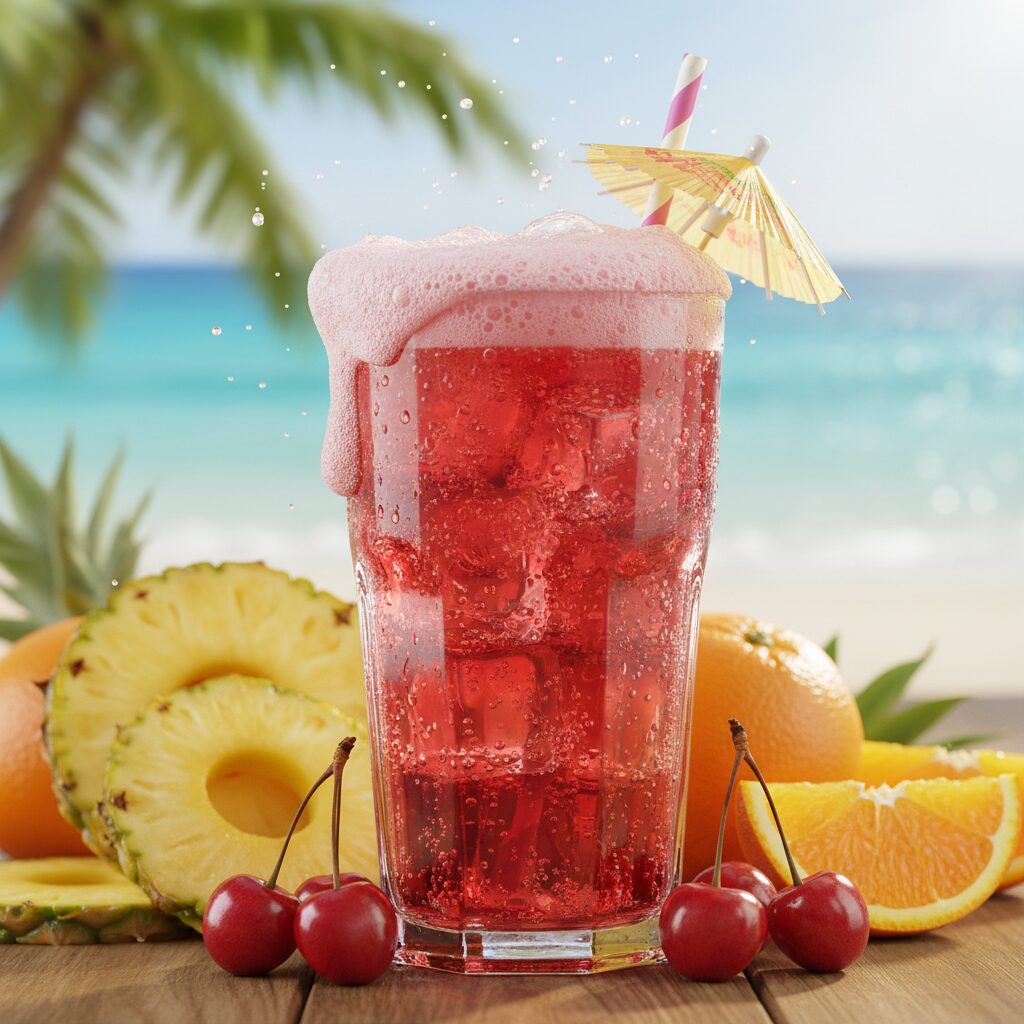
A mature starter opens up an entire world of healthy, custom-flavored sodas. Typically, you will use ½ cup of strained ginger bug liquid for every 7.5 cups of sweetened base liquid.
- Traditional Ginger Beer: Boil sliced ginger in water to make a strong tea. Dissolve sugar into the hot tea, then let it cool completely to room temperature. Stir in your ginger bug, bottle the mixture, and let it ferment for a few days.
- Hibiscus Soda: Brew a strong batch of hibiscus tea. Sweeten it with raw sugar, cool it down, and pitch your starter. The resulting drink is tart, floral, and deeply magenta.
- Sparkling Lemonade: Mix fresh lemon juice, water, and dissolved sugar. Add the starter to create a probiotic, carbonated citrus refresher.
- Vegetable Ferments: You can use a few tablespoons of active ginger bug liquid as a starter culture to kickstart lacto-fermented carrots or cabbage, substituting it directly for whey.
Frequently Asked Questions
How long does a ginger bug take to ferment initially?
Under optimal conditions, an active starter culture takes between 3 and 7 days to show vigorous bubbling and become ready for use.
What is the ideal temperature for a ginger bug?
Wild yeast thrives best in ambient room temperatures ranging from 70°F to 80°F.
How much alcohol is in a ginger bug soda?
Because wild yeast is relatively weak, naturally fermented homemade sodas generally contain a very low alcohol by volume (ABV) of around 1% to 2%.
How much headspace should I leave when bottling soda?
Always leave exactly ½ inch of empty space at the top of your flip-top bottles to allow room for carbon dioxide expansion.
How often should I feed my ginger bug in the fridge?
To maintain a healthy dormant bug, feed it once a week with 1 tablespoon of ginger and 1 tablespoon of sugar.
Can I use tap water for my ginger bug?
You can use tap water only if you properly filter it. Chloramine, commonly used in municipal water, takes weeks to evaporate naturally and will kill your yeast.
How much ginger bug do I need for a batch of soda?
A standard ratio is ½ cup of active, strained ginger bug liquid for every 7.5 cups of sweetened tea or juice.
Can I use frozen ginger?
Yes. You can use frozen organic ginger provided you grate it with the skin intact. Ensure you use the frozen root within a few months to avoid freezer burn, which harms the microbes.
How long can a ginger bug survive without feeding in the fridge?
A strong, mature culture can generally survive unattended in the refrigerator for up to 1 month, though weekly feedings are best for optimal health.
Why do my bottles need burping?
During the 2 to 4 days your soda ferments at room temperature, intense pressure builds up. You must “burp” glass bottles by briefly opening the latch daily to release excess CO2, preventing the glass from exploding.
Mastering Your Home Fermentation Journey
Capturing wild yeast to create a ginger bug is an incredibly rewarding entry point into the world of home fermentation. By mastering this simple mix of root, sugar, and water, you gain total control over the ingredients, sweetness, and flavor profiles of your household beverages. Stick to the daily feeding schedule, monitor the temperature, and trust your senses. Within a week, you will be well on your way to crafting endless variations of healthy, fizzy drinks from your own kitchen.

Naeem is a passionate drink enthusiast and recipe curator behind DrinkWhisper.com. With 10 years of exploring cafes, bars, and home mixology trends, he shares inspiring drinks, creative cocktails, and refreshing non alcoholic recipes for every occasion.