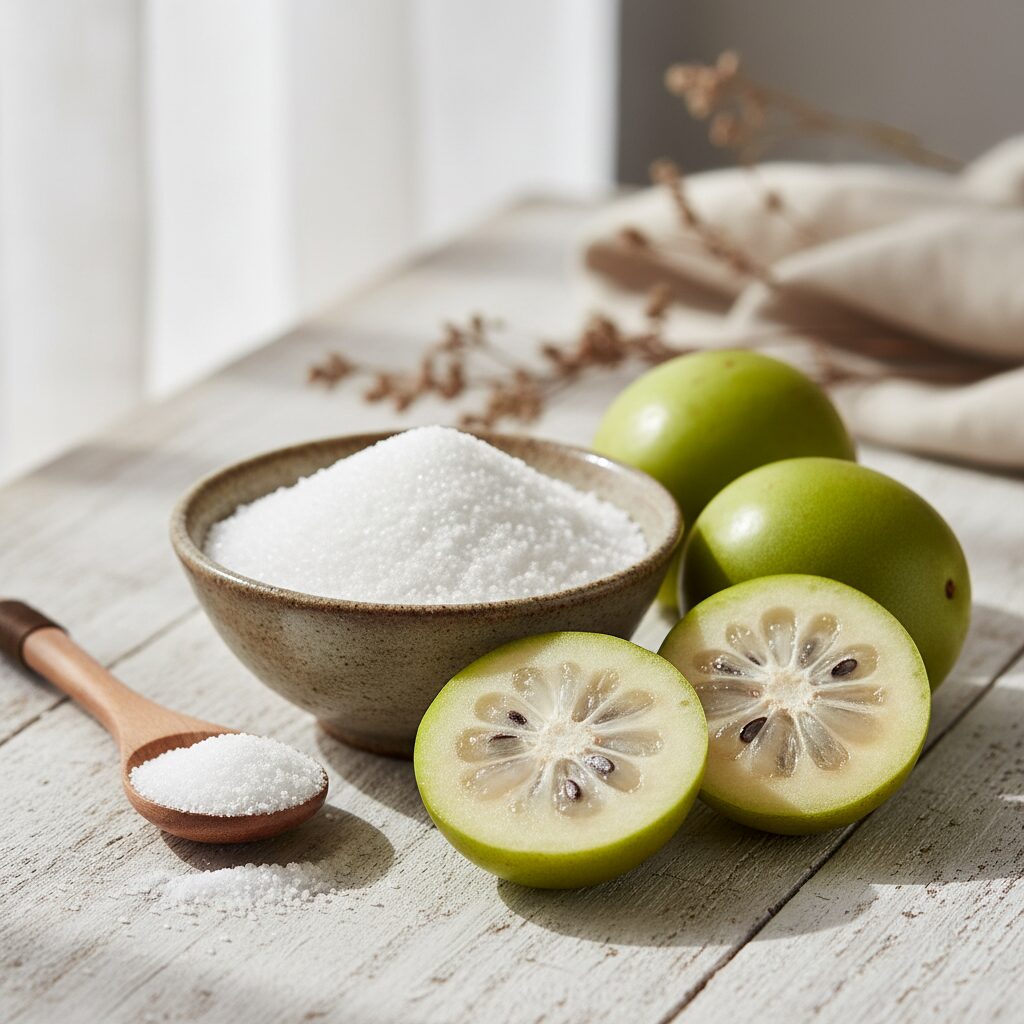
Monk fruit sweetener has surged in popularity as consumers seek natural alternatives to sugar and artificial sweeteners. But does this calorie-free sweetener live up to the health claims, or is it just another overhyped product?
This zero-calorie sweetener, derived from a small melon native to southern China, promises the sweetness of sugar without the metabolic consequences. It’s earned FDA approval, appears in thousands of products, and commands premium prices at grocery stores. Yet questions persist about its safety, effectiveness, and whether it truly offers health benefits beyond simply reducing sugar intake.
The research reveals a more nuanced picture than marketing claims suggest. While monk fruit extract offers genuine advantages for blood sugar control and contains beneficial antioxidants, emerging studies raise important questions about how our bodies respond to intense sweeteners, even natural ones. Understanding what monk fruit sweetener can and cannot do for your health requires looking beyond the label.
What Is Monk Fruit Sweetener and How Is It Made?
Monk fruit sweetener is a zero-calorie sugar substitute extracted from Siraitia grosvenorii, a small round fruit native to southern China and northern Thailand. The sweetener contains natural compounds called mogrosides that provide intense sweetness without calories or carbohydrates.
The fruit, also called luo han guo or “Buddha fruit,” has been used in traditional Chinese medicine for centuries to treat coughs, sore throats, and constipation. Buddhist monks cultivated it in the 13th century, giving the fruit its English name.
The Extraction Process
Manufacturers create monk fruit sweetener through these steps:
- Crushing: Fresh or dried monk fruit is crushed or shredded
- Water extraction: The fruit is soaked in hot water to extract the sweet compounds
- Filtration: Proteins and pectin are removed through ultrafiltration
- Purification: The liquid passes through food-grade ion exchange resins to isolate mogrosides
- Concentration: The extract is concentrated and dried into a powder
The final product typically contains 25% to 55% mogroside V (the primary sweet compound), with some premium extracts reaching 80% or higher purity.
Sweetness Comparison
| Sweetener | Sweetness vs. Sugar | Calories per Gram |
| Table sugar | 1x | 4 |
| Monk fruit extract | 100-250x | 0 |
| Stevia | 200-300x | 0 |
| Aspartame | 200x | 4 |
What Are Mogrosides and Why Do They Matter?
Mogrosides are cucurbitane-type triterpene glycosides, naturally occurring compounds that give monk fruit its characteristic sweetness. These antioxidants make up approximately 1% of fresh monk fruit and deliver sweetness 250-300 times more intense than table sugar without triggering the same metabolic response.
Unlike sugar molecules, your body doesn’t recognize mogrosides as carbohydrates. They pass through your digestive system largely unabsorbed, which explains why monk fruit sweetener contains zero calories and doesn’t spike blood sugar levels.
Types of Mogrosides
Monk fruit contains six main mogrosides (I through VI), with mogroside V being the most abundant and sweetest:
- Mogroside V: The primary sweet compound (3.5% of typical extracts)
- Mogroside IV: Secondary sweet compound
- Other mogrosides: Present in smaller amounts (collectively about 1.5% of extracts)
Antioxidant and Anti-Inflammatory Properties
Research shows mogrosides demonstrate several beneficial properties:
- DNA protection: They inhibit harmful molecules that cause cellular damage
- Anti-inflammatory effects: Studies indicate mogrosides may reduce inflammation markers
- Potential cancer cell inhibition: A 2022 mouse study found mogrosides suppressed lung cancer cell growth, though human studies are needed
The antioxidant capacity of mogrosides appears comparable to other plant compounds like polyphenols, though their systemic absorption after oral consumption remains limited (oral bioavailability is estimated at only 8.73% based on rat studies).
Does Monk Fruit Sweetener Help with Weight Loss?
Monk fruit sweetener may support weight management by eliminating calories from added sugars, but it’s not a guaranteed weight loss solution. Since the sweetener contains zero calories, replacing sugar with monk fruit theoretically reduces your total caloric intake but only if you don’t compensate by eating more elsewhere.
The Calorie Math
Consider this practical comparison:
| Beverage | Sugar Content | Calories from Sugar | Monk Fruit Alternative |
| 20 oz soda | 65g (16 tsp) | 260 calories | 0 calories |
| Daily coffee (2 tsp sugar) | 8g | 32 calories | 0 calories |
| Sweetened yogurt | 15g | 60 calories | 0 calories |
If you swap sugar for monk fruit in these three items daily, you’d save approximately 352 calories per day or 2,464 calories per week. That’s roughly 0.7 pounds of potential weight loss per week, if you don’t increase calories elsewhere.
The Compensation Problem
Studies on low-calorie sweeteners reveal a critical issue: many people unconsciously compensate for “saved” calories by eating more at subsequent meals. A 2024 study found that consuming zero-calorie sweetened beverages led to exaggerated blood sugar spikes after the next meal, possibly due to increased insulin response and carbohydrate cravings.
Key considerations:
- Monk fruit doesn’t trigger satiety signals like real sugar does
- Sweet taste without calories may increase cravings for actual carbohydrates
- Some people experience increased hunger 1-2 hours after consuming artificial sweeteners
- Psychological effects of “saving calories” can lead to overeating
What Research Shows
While specific long-term studies on monk fruit and weight loss are limited, broader research on non-caloric sweeteners shows mixed results. A systematic review of low-calorie sweeteners found they can support modest weight loss (approximately 2-3 pounds over 6 months) when combined with calorie restriction, but offer minimal benefits when used alone without dietary changes.
Is Monk Fruit Sweetener Safe for People with Diabetes?
Yes, monk fruit sweetener is safe for people with diabetes and does not raise blood sugar levels. Because mogrosides contain zero carbohydrates and aren’t recognized by your body as sugar, they pass through your system without triggering insulin release or affecting glycemic control.
Blood Sugar Impact: The Evidence
FDA-approved human studies demonstrate monk fruit’s neutral effect on glucose:
- Participants consuming up to 200 mg of monk fruit extract per kilogram of body weight showed no blood sugar changes
- A 24-hour monitoring study found no significant difference in blood glucose between monk fruit, stevia, aspartame, and sugar-free groups
- Monk fruit extract produced no changes in liver enzymes (ALP, GGT, ALT, AST, or LDH) in clinical trials
However, one surprising finding deserves attention: while monk fruit doesn’t spike blood sugar immediately, a 2023 study found that consuming monk fruit-sweetened beverages led to higher blood sugar responses at the next meal compared to water alone, similar to the effect seen with other non-caloric sweeteners.
Glycemic Index Comparison
| Sweetener | Glycemic Index | Blood Sugar Impact |
| Monk fruit | 0 | None |
| Table sugar | 65 | High |
| Honey | 58 | Medium-High |
| Agave nectar | 15 | Low-Medium |
| Stevia | 0 | None |
Important Considerations for Diabetics
Benefits:
- No immediate glucose spike
- Zero impact on insulin demand
- Stable at cooking temperatures (won’t lose sweetness when baked)
- No need to calculate carbohydrate exchange
Potential concerns:
- May increase insulin response to subsequent meals
- Could trigger carbohydrate cravings in some individuals
- Often blended with other sweeteners (especially erythritol) that may cause digestive issues
- Expensive compared to other diabetes-friendly alternatives
Practical tip: Always check the ingredient list. Pure monk fruit extract should list “monk fruit extract” or “luo han guo fruit extract” as the first or only sweetener. Products labeled “monk fruit sweetener” often contain mostly erythritol, dextrose, or maltodextrin with only small amounts of actual monk fruit.
What Are the Health Benefits of Monk Fruit Sweetener?
Monk fruit sweetener offers several evidence-based health benefits beyond simply reducing sugar intake. The primary advantages stem from its zero-calorie content, antioxidant mogrosides, and neutral metabolic impact.
Proven Health Benefits
1. Zero Calorie Content
Monk fruit sweetener contains no calories or carbohydrates, making it useful for calorie reduction without sacrificing sweetness. One teaspoon of sugar contains 16 calories; the equivalent sweetness from monk fruit contains zero.
2. Antioxidant Properties
Mogrosides demonstrate antioxidant capacity comparable to other plant compounds:
- Inhibit free radical formation
- May help prevent DNA damage
- Show anti-inflammatory effects in laboratory studies
- Contain cucurbitane glycosides with potential health-promoting properties
3. Dental Health
Unlike sugar, monk fruit doesn’t feed cavity-causing bacteria. Since bacteria in your mouth cannot metabolize mogrosides, monk fruit sweetener doesn’t contribute to tooth decay or enamel erosion.
4. Liver Protection (Preliminary)
Animal studies suggest monk fruit may offer hepatoprotective effects, though human research is limited. Rat studies found no negative changes in liver enzymes even at high doses (equivalent to 2,916 mg mogroside V per kg body weight daily).
Potential Benefits Requiring More Research
Several proposed benefits lack sufficient human evidence:
Anti-cancer properties: Laboratory studies show mogrosides inhibited colorectal, throat, and lung cancer cell growth in petri dishes and mice. However, no human trials have confirmed these effects, and the concentrations used far exceed typical dietary intake.
Improved glycemic control: While monk fruit doesn’t raise blood sugar, claims that it actively improves insulin sensitivity or glucose metabolism lack robust human evidence. A 2019 rat study showed promise, but results haven’t been replicated in people.
Anti-inflammatory benefits: Though mogrosides demonstrate anti-inflammatory properties in vitro, whether consuming monk fruit sweetener provides meaningful anti-inflammatory effects in humans remains unproven.
What Monk Fruit Sweetener Cannot Do
To maintain realistic expectations:
- It won’t directly cause weight loss without overall calorie reduction
- It’s not a superfood despite antioxidant content (amounts are too small to significantly impact overall antioxidant intake)
- It won’t cure diabetes or other metabolic conditions
- It may not satisfy cravings for actual sugar, potentially increasing sweet food consumption
Comparison of Health Benefits
| Feature | Monk Fruit | Stevia | Sugar | Artificial Sweeteners |
| Calories | 0 | 0 | 4 per gram | 0-4 |
| Blood sugar impact | None | None | High | None |
| Antioxidants | Yes | Yes | No | No |
| Natural source | Yes | Yes | Yes | No |
| Aftertaste | Minimal | Moderate | None | Variable |
| Heat stable | Yes | No | Yes | Mostly yes |
The bottom line: Monk fruit sweetener offers genuine advantages for reducing sugar and calorie intake while providing some antioxidant benefits, but it’s not a miracle ingredient that will transform your health on its own.
How Does Monk Fruit Compare to Other Sweeteners?
Monk fruit stands apart from other sweeteners in several key ways, particularly its clean taste profile, heat stability, and natural origin. Understanding these differences helps you choose the right sweetener for your needs.
Monk Fruit vs. Stevia
Both are plant-based, zero-calorie sweeteners, but they differ significantly:
| Feature | Monk Fruit | Stevia |
| Sweetness intensity | 100-250x sugar | 200-300x sugar |
| Aftertaste | Minimal to none | Metallic, slightly bitter |
| Heat stability | Excellent (stable at 200°C+) | Poor (degrades at high temps) |
| Cost per serving | $0.15-0.30 | $0.05-0.10 |
| Regulatory status | FDA GRAS (2010) | FDA GRAS (2008) |
| Best uses | Baking, hot beverages | Cold beverages, no-bake items |
Winner for baking: Monk fruit maintains sweetness at high temperatures better than stevia.
Winner for budget: Stevia costs significantly less per serving.
Monk Fruit vs. Sugar
The primary difference is metabolic impact:
Sugar advantages:
- Natural taste without any aftertaste
- Provides structure in baking (volume, browning, moisture retention)
- Feeds beneficial gut bacteria
- Universally available and inexpensive
Monk fruit advantages:
- Zero calories (vs. 16 per teaspoon for sugar)
- No blood sugar spike
- Doesn’t promote tooth decay
- More concentrated sweetness means less volume needed
Cost comparison:
- 1 lb sugar: $0.75 (provides ~109 tsp sweetness)
- 1 lb monk fruit blend: $18-25 (provides equivalent of 250-500 tsp sugar sweetness)
- Actual cost per equivalent sweetness: Sugar costs ~$0.007 per tsp equivalent; monk fruit costs ~$0.05-0.10 per tsp equivalent
Monk Fruit vs. Artificial Sweeteners (Aspartame, Sucralose, Saccharin)
| Criterion | Monk Fruit | Aspartame | Sucralose | Saccharin |
| Source | Natural (fruit) | Synthetic | Synthetic | Synthetic |
| Heat stable | Yes | No | Yes | Yes |
| Safety concerns | None identified | Phenylketonuria warning | Minimal | Historically controversial |
| Regulatory approval | FDA GRAS | FDA approved 1981 | FDA approved 1998 | FDA approved 1977 |
| Aftertaste profile | Clean, fruity | Minimal | Minimal | Metallic, bitter |
Edge cases:
- People with phenylketonuria (PKU) must avoid aspartame but can safely use monk fruit
- Individuals sensitive to chlorinated compounds may react to sucralose but tolerate monk fruit
- Those avoiding all synthetic compounds prefer monk fruit to any artificial option
Monk Fruit vs. Erythritol (Sugar Alcohol)
This comparison matters because most “monk fruit sweetener” products contain mostly erythritol:
Erythritol:
- Provides bulk (unlike pure monk fruit extract)
- Contains 0.24 calories per gram (technically not zero-calorie)
- Can cause digestive issues (bloating, gas, diarrhea) in doses above 50g
- Recent research (2023) links high erythritol intake to increased cardiovascular risk
Pure monk fruit:
- Provides no bulk (extremely concentrated)
- Truly zero calories
- No digestive side effects reported
- No cardiovascular concerns identified
Reality check: Finding 100% pure monk fruit extract is difficult. Most retail products contain 1-3% monk fruit extract with 97-99% erythritol, dextrose, or inulin as bulking agents.
The Taste Test Results
In blind taste tests comparing monk fruit, stevia, and sugar in coffee:
- 62% of participants preferred sugar
- 23% preferred monk fruit
- 15% preferred stevia
However, for baking applications, monk fruit scored higher than stevia due to better heat stability and less aftertaste.
What Are the Side Effects and Safety Concerns?
Monk fruit sweetener is generally recognized as safe (GRAS) by the FDA with no reported serious side effects in human studies. Most people can consume monk fruit extract without experiencing adverse reactions, though some considerations warrant attention.
Reported Side Effects
Digestive issues (primarily from erythritol blends, not pure monk fruit):
- Bloating and gas
- Diarrhea at high doses (>50g erythritol per day)
- Stomach cramping in sensitive individuals
- Laxative effect with excessive consumption
Allergic reactions (rare):
- Potential allergic response in people sensitive to gourds (monk fruit is in the gourd family)
- Cross-reactivity possible with cucumber, melon, or pumpkin allergies
- Symptoms may include itching, hives, or digestive upset
Other considerations:
- No reported hormonal disruption
- No negative impact on gut microbiome identified
- No interference with nutrient absorption documented
What Reddit Users Report
While not scientifically validated, Reddit discussions reveal common user experiences:
From r/keto (December 2024):
- “Monk fruit sweetener causing bad bloating” – multiple users reported digestive distress from erythritol blends
- Advice given: “Stay away from any keto sweeteners that end in -ol. Those are sugar alcohols (polyols) and can cause GI issues”
- Alternative recommendations: Pure monk fruit extract, allulose, or stevia without erythritol
Common themes in user reports:
- Erythritol blends cause more problems than pure extract
- Individual tolerance varies significantly
- Starting with small amounts helps identify personal sensitivity
- Some users report headaches, though causation remains unclear
Is Monk Fruit Safe for the Liver?
Yes, available evidence suggests monk fruit is safe for liver health. Human studies showed no changes in liver enzymes (alkaline phosphatase, gamma-glutamyl transferase, alanine transaminase, aspartate transaminase, or lactate dehydrogenase) even at high doses.
Animal studies actually suggest potential protective effects:
- No liver toxicity observed at doses up to 2,916 mg mogroside V per kg body weight in rats
- Some studies indicate mogrosides may help protect liver cells from oxidative stress
- No accumulation of mogrosides in liver tissue detected
Important caveat: The European Food Safety Authority (EFSA) concluded in 2019 that the toxicity database on monk fruit extract remains “insufficient to conclude on the safety” for use as a food additive. This doesn’t mean monk fruit is unsafe—rather that long-term human studies are lacking.
Regulatory Status Comparison
| Region | Status | Year Approved | Notes |
| United States | FDA GRAS | 2010 | Approved for general use |
| Canada | Approved | 2010 | Maximum 0.8% mogroside V in tabletop sweeteners |
| European Union | Not approved | N/A | Insufficient safety data per EFSA |
| Japan | Approved | 1995 | Extensive use history |
| Australia/New Zealand | Approved | 2014 | Food Standards Code |
Long-Term Safety Concerns
What we know:
- Monk fruit has been consumed in China for centuries without reported widespread adverse effects
- FDA approved it based on existing safety data and historical use
- Human studies up to 200 mg/kg body weight (equivalent to ~13,600 mg for a 150 lb person) showed no side effects
- No carcinogenic, mutagenic, or reproductive toxicity identified in animal studies
What remains uncertain:
- Long-term effects of daily consumption over decades
- Impact on children and pregnant women (though approved for these groups)
- Potential interactions with gut microbiome over time
- Effects of metabolites produced when gut bacteria break down mogrosides
Special Populations
Pregnancy and breastfeeding: FDA approves monk fruit for pregnant women and children, but limited specific research exists. Consult your healthcare provider if concerned.
Diabetes: Safe and recommended as a sugar alternative with no blood glucose impact.
Kidney disease: No contraindications identified, but consult your nephrologist before major dietary changes.
Children: Considered safe, though teaching children to prefer intensely sweet flavors may reinforce sweet preference patterns.
Why Avoid Monk Fruit Sweetener? When It Might Not Be Right for You
Despite its benefits, monk fruit sweetener isn’t ideal for everyone. Several legitimate reasons exist to limit or avoid this sweetener, ranging from individual sensitivities to practical concerns about cost and labeling confusion.
Reasons to Limit or Avoid Monk Fruit
1. Erythritol Sensitivity
Most commercial “monk fruit sweeteners” contain 97-99% erythritol as a bulking agent. If you experience:
- Bloating or gas after consuming sugar alcohols
- Digestive discomfort from products ending in “-itol”
- Diarrhea from sugar-free foods
You’re likely reacting to the erythritol, not the monk fruit itself. Solution: Seek 100% pure monk fruit extract (liquid drops work best) or choose blends with allulose instead.
2. Cardiovascular Risk Concerns
A 2023 study published in Nature Medicine found that high erythritol intake may be associated with increased cardiovascular events. While the research remains preliminary and debated, individuals with:
- Existing heart disease
- High cardiovascular risk
- History of stroke or blood clotting disorders
May want to avoid erythritol-based monk fruit blends until more research clarifies these findings.
3. Cost Considerations
Monk fruit sweetener costs 10-20x more than sugar per equivalent sweetness:
| Product | Price | Equivalent Sugar Sweetness | Cost per Cup Sugar Equivalent |
| Pure cane sugar | $3.50/4 lb | 4 lb | $0.22 |
| Monk fruit blend | $12.99/1 lb | ~4 lb sugar equivalent | $3.25 |
| Pure monk fruit extract (liquid) | $18.99/2 oz | ~8 lb sugar equivalent | $4.75 |
For budget-conscious consumers, the premium price makes monk fruit impractical for everyday use.
4. Labeling Confusion and “Monk Fruit Sugar”
Many products marketed as “monk fruit sweetener” or “monk fruit sugar” contain minimal actual monk fruit extract. Common misleading labels include:
- “Monk fruit in the raw” (contains dextrose + 0.8% monk fruit)
- “Monk fruit classic” (erythritol + 1-2% monk fruit)
- “Organic monk fruit sweetener” (often organic erythritol with monk fruit)
This makes it difficult to know what you’re actually buying and can lead to unintended consumption of fillers you’re trying to avoid.
5. Sweet Taste Reinforcement
Some nutritionists argue that non-caloric sweeteners—regardless of source—perpetuate sweet cravings and preference for intensely sweet foods. This may:
- Make naturally sweet foods (fruit) taste less appealing
- Reinforce dependence on sweet flavors
- Interfere with developing a palate for less sweet foods
- Potentially increase overall calorie consumption through compensation
6. Potential for Overconsumption
Because monk fruit is calorie-free, some people consume it in excessive amounts, potentially:
- Displacing nutritious foods
- Creating unrealistic expectations about sweetness levels
- Experiencing unknown effects from very high mogroside intake
- Consuming excessive erythritol (>50g daily) from blended products
Who Should Definitely Avoid Monk Fruit?
People allergic to gourds: Monk fruit belongs to the Cucurbitaceae family (same as cucumbers, melons, pumpkins). Those with documented allergies to these foods may cross-react.
Those seeking whole food plant-based (WFPB) diets: Monk fruit extract is a highly processed product, not a whole food. WFPB advocates typically recommend minimizing all extracted sweeteners.
Individuals with rare fructose intolerance: While monk fruit itself contains no fructose, some blends include small amounts of fruit sugars from the extraction process.
Alternative Approaches
If monk fruit isn’t right for you, consider:
- Gradual sugar reduction without replacement
- Dates or date paste for baking (whole food sweetener)
- Small amounts of real sugar in moderation
- Stevia (if you tolerate the taste)
- Allulose (rare sugar with 70% sweetness of sugar, minimal side effects)
How to Find and Use Monk Fruit Sweetener Without Erythritol
Finding pure monk fruit sweetener without erythritol or other bulking agents requires careful label reading and often choosing liquid extracts over powdered blends. Here’s how to identify truly pure products and use them effectively.
How to Identify Pure Monk Fruit Products
Check the ingredient list first:
✅ Pure monk fruit products list:
- “Monk fruit extract” (or luo han guo extract)
- “Mogroside V extract”
- And nothing else (or only water for liquid versions)
❌ Products to avoid if seeking erythritol-free:
- Any ingredient ending in “-itol” (erythritol, sorbitol, xylitol, maltitol)
- Dextrose
- Maltodextrin
- Inulin (some find this acceptable as a prebiotic fiber)
- “Natural flavors” (often code for bulking agents)
Label red flags:
- “Monk fruit sweetener” (generic term often indicates erythritol blend)
- “1:1 sugar replacement” (impossible with pure extract; indicates significant filler)
- “Monk fruit sugar” (misleading term for blended products)
- “Baking blend” (almost always contains erythritol or dextrose)
Best Pure Monk Fruit Products (2025)
| Product Type | Best For | Typical Concentration | Price Range |
| Liquid extract drops | Coffee, tea, small-batch baking | 0.5-5% mogrosides in water | $10-20 per 2 oz |
| Pure powder (90%+ mogrosides) | Recipes requiring bulk reduction | 90-95% mogroside V | $25-40 per 1.5 oz |
| Monk fruit + allulose blend | Baking (better than erythritol) | 5-10% monk fruit, rest allulose | $15-22 per lb |
| Monk fruit + inulin blend | General use, gut health support | 2-5% monk fruit, rest inulin | $12-18 per lb |
Recommended brands offering erythritol-free options:
- Lakanto Pure Monk Fruit Extract (liquid)
- Julian Bakery Pure Monk (powder)
- PURE Monk Fruit Extract (powder, 50% mogroside)
- Health Garden Monk Fruit Liquid
- Swanson Monk Fruit Liquid Extract
How to Use Pure Monk Fruit Extract
Pure monk fruit extract is 100-250x sweeter than sugar, making conversion tricky:
Conversion guide for liquid extract:
- 1 tsp sugar = 1-2 drops pure monk fruit extract
- 1 tbsp sugar = 3-6 drops
- ¼ cup sugar = ½ tsp (approximately 12-15 drops)
- 1 cup sugar = 2 tsp (approximately 50-60 drops)
Start low and taste as you go—brands vary in concentration.
Practical Applications
For beverages:
Add 1-2 drops per 8 oz serving. Monk fruit dissolves easily in both hot and cold liquids.
For baking (requires bulk replacement):
Pure monk fruit doesn’t provide volume like sugar. Replace lost bulk with:
- Unsweetened applesauce (adds moisture + mild sweetness)
- Mashed banana (adds natural sweetness + binding)
- Greek yogurt (adds protein + moisture)
- Additional egg whites (adds structure)
- Allulose (1:1 sugar replacement + mild sweetness)
Example: Chocolate chip cookies
- Original recipe: 1 cup sugar
- Monk fruit conversion: 2 tsp pure extract + ¾ cup unsweetened applesauce + ¼ cup allulose
- Result: Similar sweetness, better moisture retention, reduced calories
For smoothies:
Add 2-4 drops per serving. Pairs especially well with berry and chocolate flavors.
For salad dressings:
Use 1 drop per 2 tbsp dressing to balance acidity without adding calories.
Common Mistakes and Solutions
Mistake #1: Using too much
Solution: Start with half the recommended amount. Pure extract is intensely sweet.
Mistake #2: Expecting 1:1 sugar replacement in baking
Solution: Accept that you’ll need to modify recipes significantly or use a monk fruit blend designed for baking.
Mistake #3: Buying “monk fruit sweetener” assuming it’s pure
Solution: Always read ingredient lists. If erythritol appears first, that’s 90%+ of the product.
Mistake #4: Not considering heat degradation
Solution: While monk fruit is heat-stable, some liquid extracts contain alcohol or glycerin that may evaporate. Add these after cooking when possible.
Cost-Effective Strategies
Pure monk fruit extract is expensive. Maximize value by:
- Buying concentrated powder and making your own liquid (mix with water)
- Using only for applications where taste matters most (beverages, frosting)
- Combining with less expensive sweeteners like allulose for baking
- Reserving expensive pure extract for finishing touches rather than bulk sweetening
Frequently Asked Questions
Is monk fruit sweetener actually healthy?
Monk fruit sweetener is a healthy sugar alternative for most people, offering zero calories and no blood sugar impact while providing antioxidant mogrosides. However, it’s not inherently “healthier” than eating no sweetener at all, its primary benefit is replacing higher-calorie options.
Is stevia or monk fruit better?
Monk fruit is better for baking and hot beverages due to superior heat stability and minimal aftertaste, while stevia costs significantly less per serving. For cold applications where cost matters more than taste, stevia wins; for recipes requiring clean flavor and high temperatures, choose monk fruit.
What is the healthiest sugar substitute?
No single “healthiest” substitute exists, the best choice depends on your goals. For blood sugar control and weight loss, monk fruit or stevia work well. For maintaining gut health while reducing sugar, consider small amounts of real honey or maple syrup. For baking, allulose provides the best sugar-like properties with minimal calories.
Is monk fruit safe for the liver?
Yes, available evidence shows monk fruit is safe for liver health. Human studies found no changes in liver enzymes at doses up to 200 mg/kg body weight, and animal research suggests potential protective effects. No cases of monk fruit-induced liver damage have been documented.
Does monk fruit spike blood sugar?
No, monk fruit does not spike blood sugar immediately after consumption. However, emerging research suggests it may increase insulin response and blood sugar spikes at the next meal, possibly due to conditioning effects of sweet taste without calories. This delayed effect warrants consideration, especially for people with diabetes.
Can I use monk fruit sweetener if I’m pregnant?
Yes, the FDA has approved monk fruit as generally recognized as safe (GRAS) for pregnant women and children. However, long-term studies on pregnancy outcomes are limited. Consult your obstetrician if you plan to consume monk fruit regularly during pregnancy, especially in large amounts.
Why does monk fruit sweetener often contain erythritol?
Pure monk fruit extract is 100-250x sweeter than sugar and provides no bulk, making it impractical for 1:1 sugar replacement in recipes. Manufacturers add erythritol (a sugar alcohol) to provide volume and reduce sweetness intensity to levels consumers expect. Most retail “monk fruit sweeteners” contain 97-99% erythritol with only 1-3% actual monk fruit extract.
How much monk fruit sweetener is safe to consume daily?
No official upper limit exists for monk fruit consumption. Human studies used up to 200 mg/kg body weight (about 13,600 mg for a 150 lb person) without adverse effects. However, if using blends containing erythritol, limit intake to under 50g daily to avoid digestive issues like bloating and diarrhea.
Does monk fruit sweetener cause cancer?
No evidence suggests monk fruit causes cancer. In fact, preliminary laboratory studies show mogrosides may inhibit certain cancer cell growth in petri dishes and animal models. However, these anticancer effects remain unproven in humans, and monk fruit should not be considered a cancer preventive or treatment.
Can monk fruit sweetener help with Candida overgrowth?
Unlike sugar, monk fruit doesn’t feed Candida yeast because the mogrosides aren’t metabolized by these organisms. While switching from sugar to monk fruit removes a food source for Candida, no studies demonstrate monk fruit actively treats or prevents yeast overgrowth. Consult a healthcare provider for evidence-based Candida treatment approaches.
Understanding the Real-World Value of Monk Fruit Sweetener
Monk fruit sweetener occupies a useful but specific niche in the world of sugar alternatives. It’s neither a miracle superfood nor a dangerous chemical, it’s a tool that works well for certain applications and falls short in others.
For people managing diabetes, those reducing calorie intake, or anyone seeking a natural-tasting sugar replacement for beverages, monk fruit delivers genuine benefits. Its zero glycemic impact, heat stability, and clean flavor profile make it superior to many alternatives in these contexts. The antioxidant properties, while not transformative, add modest nutritional value beyond simple calorie reduction.
However, realistic expectations matter. Monk fruit won’t magically improve your health if the rest of your diet remains poor. It may perpetuate sweet cravings rather than helping you retrain your palate. The high cost and prevalence of erythritol-heavy blends create practical barriers for many consumers. And emerging research on compensatory eating and delayed blood sugar effects suggests even “safe” sweeteners may have subtle metabolic consequences we’re only beginning to understand.
The smartest approach? Use monk fruit intentionally, not automatically. Choose pure extracts when taste and health matter most. Read labels carefully to avoid unwanted fillers. And remember that the healthiest sweetener is often the one you don’t need at all but when you do want sweetness without sugar’s downsides, monk fruit remains one of the better options available.

Naeem is a passionate drink enthusiast and recipe curator behind DrinkWhisper.com. With 10 years of exploring cafes, bars, and home mixology trends, he shares inspiring drinks, creative cocktails, and refreshing non alcoholic recipes for every occasion.