
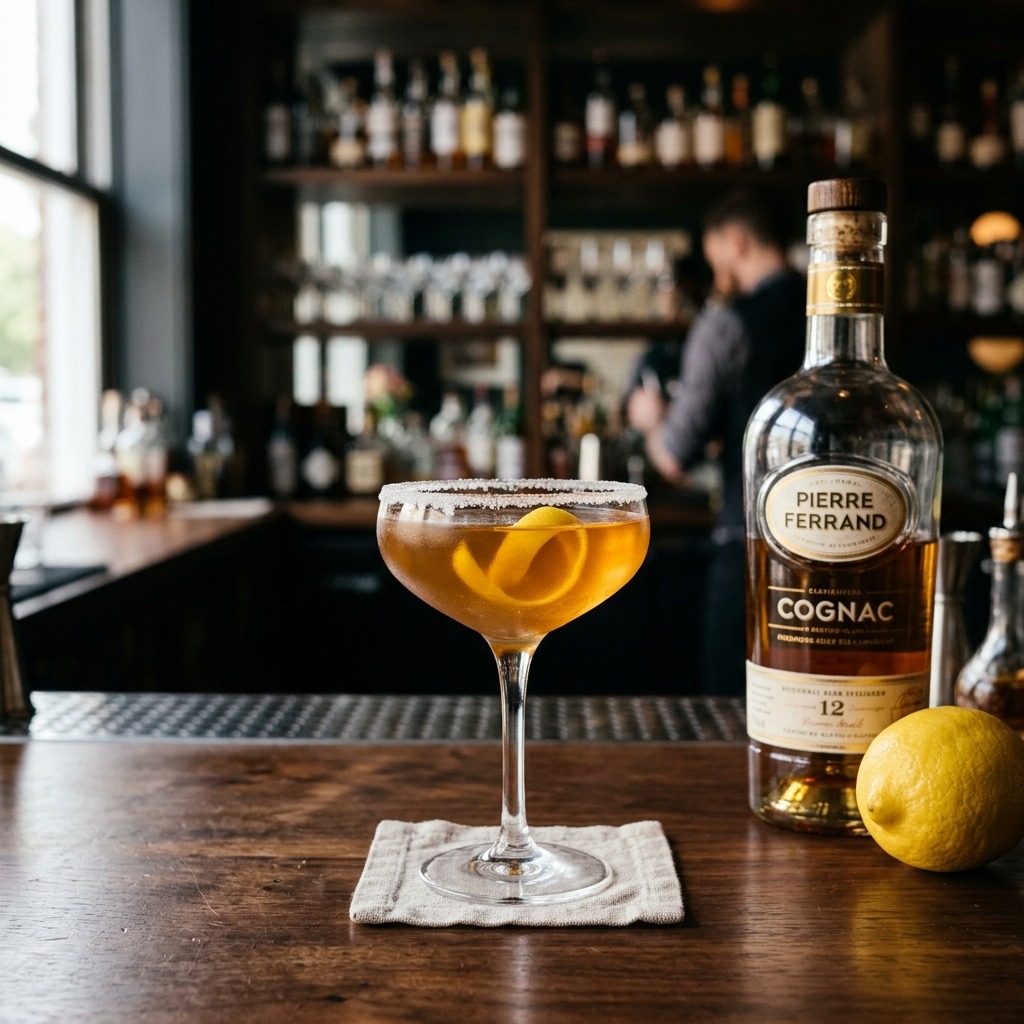
A Sidecar is a three-ingredient cocktail made with cognac, Cointreau, and fresh lemon juice. Combine 2 oz cognac, 1 oz Cointreau, and ¾ oz lemon juice in a shaker with ice, shake for 10–15 seconds, and strain into a sugar-rimmed coupe glass. Tart, elegant, and ready in under 5 minutes.
The Sidecar is one of the most enduring classics in the cocktail canon. It strikes a precise balance between the warm depth of cognac, the bright punch of citrus, and the subtle sweetness of orange liqueur. The result is a drink that feels simultaneously sophisticated and refreshing dry enough to challenge a purist, yet accessible enough to convert a casual drinker. It has survived over a century of cocktail trends for good reason.
| Spec | Details |
| Prep Time | 5 minutes |
| Total Time | 5 minutes |
| Servings | 1 cocktail |
| Calories | ~180–221 kcal |
| Estimated ABV | ~25–28% |
| Glass | Coupe or martini glass |
| Method | Shake and strain |
What Is the Origin of the Sidecar Drink?
The Sidecar’s exact birthplace is genuinely contested and that ambiguity is part of its charm. The drink is believed to have emerged around the end of World War I, in either Paris or London. Two competing bars claim credit: the Ritz Hotel in Paris and Buck’s Club in London, where bartender Pat MacGarry is cited in early editions of Harry MacElhone’s Harry’s ABC of Mixing Cocktails (1922) as the inventor. In later editions, MacElhone credits himself.
A third theory, cited by cocktail historian David A. Embury in The Fine Art of Mixing Drinks (1948), attributes the drink to an American Army captain in Paris who arrived at his local bar via motorcycle sidecar. Veteran bartender Dale DeGroff offers a different angle entirely he argues the name refers to the small amount of cocktail left in the shaker after straining, served in a shot glass “on the side.”
The Sidecar’s DNA traces back even further to the Brandy Crusta, invented by Italian bartender Joseph Santini at his New Orleans bar, Jewel of the South, in the mid-1800s. That drink a mix of brandy, maraschino liqueur, curaçao, fresh lemon juice, and bitters introduced the sugared rim that the Sidecar still wears today.
National Sidecar Day is celebrated on July 30 each year a fact almost no competitor blog mentions.
What Is the Ratio for a Sidecar? (The Three Main Options)
The Sidecar has sparked more ratio debates than almost any classic cocktail. Here are the three most common formulas:
| Version | Cognac | Cointreau | Lemon Juice | Flavor Profile |
| Original (1922) | 1 part | 1 part | 1 part | Very tart, boozy |
| Modern Standard | 2 parts | 1 part | 1 part | Balanced, drier |
| Serious Eats | 2 parts | 1 part | ¾ part | Slightly sweeter, approachable |
Most modern bartenders use the 2:1:1 ratio as a starting point. The original equal-parts formula, while historically accurate, tends to feel too sharp with contemporary spirits. If your Sidecar is coming out too tart, dial back the lemon by a quarter ounce. Too sweet? Add an extra splash of lemon.
Understanding the Classic Sidecar Ingredients
Quality is non-negotiable here. Three ingredients means there is nowhere to hide.
- Cognac (2 oz): A VSOP-grade cognac is the classic choice. Rémy Martin VSOP, Hennessy VSOP, or Courvoisier all work well. Armagnac or a quality California brandy (such as Germain-Robin) are strong alternatives. Avoid cheap mass-market brandy.
- Cointreau (1 oz): Cointreau’s specific balance of dryness and sweetness is hard to replicate. Triple sec works in a pinch but delivers a flatter result. Grand Marnier adds richness but is noticeably sweeter reduce it slightly if substituting.
- Fresh lemon juice (¾ oz): Always squeeze fresh. Bottled lemon juice introduces a dull, slightly chemical note that undermines the drink’s brightness.
- Sugar (for rim, optional): Superfine sugar adheres better than coarse granules. Run a lemon wedge around the rim before dipping.
The Classic Sidecar Recipe (Step-by-Step)
Ingredients:
- 2 oz VSOP cognac or quality brandy
- 1 oz Cointreau (or triple sec)
- ¾ oz fresh-squeezed lemon juice
- Superfine sugar, for the rim (optional)
- Orange or lemon twist, for garnish
Instructions:
- Chill your coupe or martini glass in the freezer for at least 5 minutes.
- Run a lemon wedge around the rim of the glass, then dip the rim in superfine sugar to create an even crust.
- Fill a cocktail shaker two-thirds with ice.
- Add the cognac, Cointreau, and fresh lemon juice.
- Shake firmly for 10–15 seconds until the outside of the shaker is frosted.
- Strain into the prepared glass.
- Garnish with an orange or lemon twist.
Common mistakes to avoid:
- Using bottled lemon juice
- Under-shaking (produces a warm, poorly diluted drink)
- Using a low-quality triple sec it will make the drink cloying
- Skipping the glass chill temperature matters more than most home bartenders expect
Is the Sidecar a Strong Drink?
Yes the Sidecar is a relatively high-ABV cocktail. With 2 oz of 40% ABV cognac and 1 oz of 40% ABV Cointreau, the drink contains approximately 1.2 oz of pure alcohol before dilution from shaking. After ice dilution, the final pour sits at roughly 25–28% ABV, which is considerably stronger than wine (12–15%) and comparable to a well-made Martini. The tartness of the lemon juice masks some of that alcohol heat, which is part of why Sidecars can sneak up on you.
What Makes a Good Sidecar? (4 Non-Negotiable Rules)
- Use fresh citrus. No exceptions. The difference between fresh and bottled lemon juice is the difference between a good Sidecar and a mediocre one.
- Don’t skimp on the cognac. A cheap brandy will unravel the entire drink. VSOP-grade spirit provides the vanilla, dried fruit, and oak notes that anchor the flavor.
- Shake hard and cold. Proper chilling via vigorous shaking is what gives the Sidecar its silky, slightly frothy texture.
- Balance to your palate. The 2:1:1 ratio is a starting point, not a law. If you prefer drier, pull back slightly on the Cointreau. If you want more sweetness, half-rim the glass with sugar and tip the ratio slightly in Cointreau’s favor.
Popular Sidecar Variations Worth Trying
| Variation | Substitution | Flavor Change |
| Bourbon Sidecar | Swap cognac for bourbon | Caramel, spice notes |
| Calvados Sidecar | Swap cognac for apple brandy | Crisp, orchard fruit |
| Spritz Sidecar | Add champagne + tonic water | Lighter, effervescent |
| Frozen Peach Sidecar | Add peach purée, blend with ice | Sweet, tropical, summer-forward |
| Kinako Sidecar | Use BERTOUX Brandy + coconut liqueur | Nutty, tropical |
The Bourbon Sidecar is an especially accessible entry point for whiskey drinkers it was popularized at the Maker’s Mark Bar in Louisville and remains a regional favorite.
Pairing and Serving Suggestions
The Sidecar is versatile enough to serve as either an aperitif (its acidity stimulates appetite) or a digestif (the cognac provides the warming finish that suits post-dinner drinking). It pairs particularly well with:
- Soft cheeses (brie, camembert) the lemon acidity cuts through the fat
- Roasted duck or pork the cognac echoes the richness
- Lemon tart or crème brûlée mirrors the citrus backbone
- Dark chocolate provides a contrasting bitterness that elevates the drink
Can You Make a Sidecar in Advance?
Yes. To batch a Sidecar for a party, combine the cognac, Cointreau, and lemon juice in a sealed container in the ratio of your choice, then refrigerate for up to 24 hours. Do not add ice until serving shaking each drink individually with ice provides the proper dilution and temperature. For 8 drinks using the 2:1:1 ratio, combine 12 oz cognac with 6 oz Cointreau and 6 oz fresh lemon juice.
Frequently Asked Questions
What is the original Sidecar recipe?
The 1922 original, as published in Harry MacElhone’s Harry’s ABC of Mixing Cocktails, used equal parts (1:1:1) cognac, Cointreau, and lemon juice. Most modern recipes adjust to a 2:1:1 ratio to reduce tartness.
Can I make a Sidecar without cognac?
Yes. Brandy is the most common substitute, followed by bourbon (for a Bourbon Sidecar) or Calvados (apple brandy). Each changes the flavor profile significantly bourbon adds spice, Calvados adds fruit.
Why does my Sidecar taste too sour?
You likely have too much lemon juice, or your Cointreau ratio is too low. Try reducing lemon juice by ¼ oz, or add a small dash of simple syrup to balance.
Is Cointreau necessary, or can I use triple sec?
Triple sec works, but Cointreau is notably drier and more complex. Many home bartenders find a Sidecar made with cheap triple sec tastes overly sweet and flat. Cointreau is worth the price difference for this drink.
How many calories are in a Sidecar?
Approximately 180–221 calories per serving, with roughly 8–9g of carbohydrates. Calories vary based on whether you include a sugared rim, which adds ~15–25 calories.
Does a Sidecar need a sugar rim?
No the sugar rim is optional. The original 1922 recipe inherited it from the Brandy Crusta. Many bartenders omit it, especially when using the 2:1:1 ratio, which is already slightly sweeter than the equal-parts version.
What glass should I use for a Sidecar?
A chilled coupe glass is traditional. A martini glass works well too. Avoid a rocks glass, which signals “on the rocks” a Sidecar is always served up (no ice in the glass).
Can I make a non-alcoholic Sidecar?
Yes. Replace the cognac with a non-alcoholic spirit (such as Lyre’s American Malt) and substitute Cointreau with orange juice plus a small amount of orange blossom syrup. The flavor won’t be identical, but it captures the citrus-forward profile.
What does a Sidecar taste like?
A Sidecar tastes tart and citrus-forward with a warm, brandy backbone and a hint of orange sweetness. It is drier than a Cosmopolitan and more complex than a Whiskey Sour, with an elegant finish.
When is National Sidecar Day?
National Sidecar Day is July 30 a perfect occasion to shake up a batch or try a new variation.
Sidecar Drink Recipe: Classic Cocktail, Ratio & Easy Steps
Ingredients
Instructions
-
add suger
Chill your coupe or martini glass in the freezer for at least 5 minutes. -
add ice
Run a lemon wedge around the rim of the glass, then dip the rim in superfine sugar to create an even crust. -
mix ingredients
Fill a cocktail shaker two-thirds with ice. -
shake
Add the cognac, Cointreau, and fresh lemon juice. -
chilled
Shake firmly for 10–15 seconds until the outside of the shaker is frosted. -
strain
Strain into the prepared glass. -
garnish
Garnish with an orange or lemon twist.